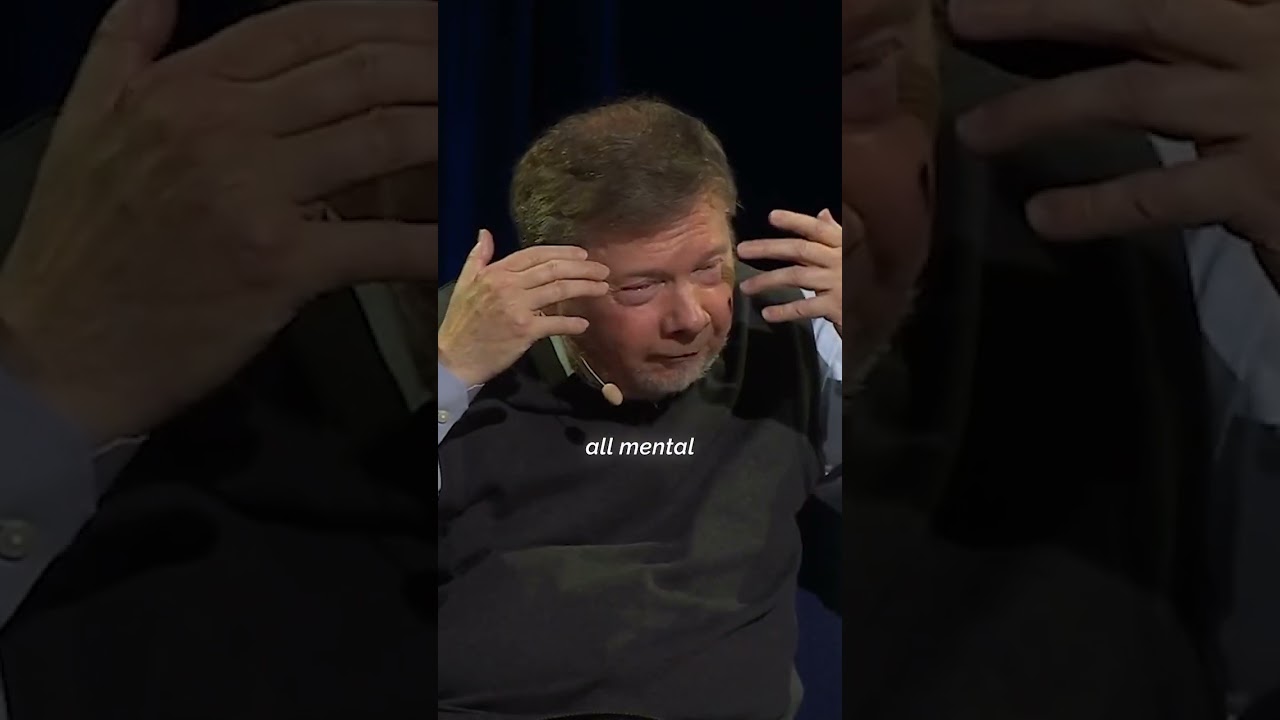
In a November 2019 talk at the University of Toronto, Sadhguru addressed pressing mental health issues among young people through the lens of yoga and spiritual practice. Rather than treating mental health as purely psychological or pharmacological, he framed psychological distress as a signal that one's inner physiology and consciousness are out of alignment. His approach centers on the premise that youth need practical tools for self-awareness—not ideology or imposed beliefs—so they can take responsibility for their own wellbeing. The talk ranged across topics like stress management, purpose-finding, relationships, and the role of technology, grounding each response in yoga philosophy while acknowledging the real pressures university students face.
What Does Mental Health Actually Mean in a Yoga Context?
Sadhguru distinguishes between mental health as absence of dysfunction and mental health as an active capacity to engage meaningfully with life. In the yoga worldview, the mind is not separate from the body—it is an instrument shaped by one's inner physiology, diet, sleep, breathing patterns, and levels of physical tension. When students report anxiety, depression, or a sense of meaninglessness, Sadhguru does not treat these as purely neurochemical problems requiring only medication, nor as moral failings. Instead, he points to a fundamental misalignment: the young person may be running their nervous system too fast, not sleeping properly, eating denatured foods, or sitting in postures that compress their spine and restrict breathing.
This perspective is pragmatic rather than anti-medical. Sadhguru acknowledges that some conditions require professional intervention, but he argues that many cases of mild to moderate depression and anxiety in young people reflect a lifestyle that is fundamentally out of sync with the human body's design. A person who has poor posture, shallow breathing, a chaotic sleep schedule, and constant digital stimulation is creating the biochemical conditions for mental distress. Yoga offers a direct, embodied pathway to reset these conditions.
Why Are Young People Struggling with Purpose and Direction?
A recurring theme in youth-focused questions is the sense that many students feel lost—unsure what to do after graduation, unclear about their calling, or anxious that their choices will be wrong. Sadhguru addresses this by separating purpose from predetermined career paths. He emphasizes that purpose is not something external to find, but a quality of engagement you bring to whatever you do. The problem many youth face is that they are pursuing goals set by family, society, or comparison to peers rather than by genuine inclination.
For this reason, Sadhguru consistently recommends meditation and self-inquiry as the starting point. Before choosing a career, you need to understand who you are—not your name, degree, or nationality, but the texture of your consciousness, what energizes you, what depletes you, and what genuinely matters to you. He suggests that young people spend time in practices like Isha Kriya, a meditation taught at his organization, which trains attention and clarifies the mind. Only from this quieter, more settled place can genuine choice emerge. Many youth, he implies, are running so fast and staying so stimulated that they never have a chance to listen to themselves.
How Does the Body Shape Mental and Emotional States?
A cornerstone of Sadhguru's teaching is that the mind cannot be separated from the body's state. He frequently mentions that if you change your posture, breathing, and movement, your mental state follows automatically. This is not metaphorical; it is physiology. A person who sits hunched, breathes shallowly, and tenses their shoulders is literally restricting blood flow to the brain and activating stress hormones. A person who sits upright, breathes deeply, and moves with ease is creating the opposite biochemical environment.
For young people struggling with mood and motivation, Sadhguru recommends basic practices: ensuring quality sleep, moving the body regularly (not just gym workouts, but also practices like yoga), eating whole foods rather than processed ones, and practicing conscious breathing. He often notes that most people in the modern world are "90% dead"—moving through their days with minimal aliveness because their nervous systems are contracted and their attention is fractured. Even simple practices like taking a few conscious breaths or stretching the spine can shift this state. Yoga is not presented as something esoteric or religious; it is a technology for optimizing the body-mind system.
What Role Does Technology and Digital Overload Play in Youth Distress?
In discussions with university students, the question of social media, smartphones, and constant connectivity inevitably arises. Sadhguru does not demonize technology itself, but he is clear-eyed about its psychological costs when used without awareness. The human nervous system evolved for face-to-face interaction, natural light cycles, and periods of rest. Modern technology—designed to be addictive and to capture attention—is radically out of sync with this biology.
A student who spends hours on social media is not just wasting time; they are training their attention into fragmentation and their nervous system into hyperarousal. The constant comparison with curated versions of others' lives fuels inadequacy and anxiety. Additionally, the blue light from screens disrupts circadian rhythms and melatonin production, degrading sleep quality. Sadhguru's recommendation is not to abandon technology, but to use it consciously and with clear boundaries. He suggests that young people ask themselves: "Is technology serving me, or am I serving technology?" A practical step is to create phone-free times and spaces—especially before sleep.
How Can Young People Build Resilience and Inner Stability?
Rather than treating resilience as a psychological trait that some have and others lack, Sadhguru presents it as a skill that can be developed through practice. Inner stability comes from a nervous system that is not constantly reactive. Many young people are reactive because they have no internal anchor—they are buffeted by external events, peer opinions, and their own unstable moods. Meditation and yoga create an internal reference point: you experience a state of being that is independent of circumstances.
One of the practices Sadhguru emphasizes for young people is Shambhavi Mahamudra, a simple eye-gazing meditation that trains the nervous system to settle and the mind to stabilize. When practiced regularly, such techniques create measurable changes in stress hormones and immune function. The student who meditates even 12 minutes a day builds a foundation of inner calm that makes external stressors less destabilizing. This is not about achieving a blissful state or becoming detached from life; it is about maintaining a baseline of internal stability so you can respond rather than react.
What About Relationships, Dating, and Social Pressures Among Youth?
University life often brings intense social and romantic pressures. Students question whether they should be in relationships, how to navigate heartbreak, and how to handle the comparison culture around dating and social status. Sadhguru's framing is that most relationship problems stem from a lack of self-knowledge. A person who does not understand their own psychology tends to unconsciously project expectations and needs onto partners, leading to conflict and codependency.
His guidance is that before seeking a relationship, develop a strong internal foundation. This does not mean waiting until you are "perfect," but it means having enough self-awareness to see your patterns and enough stability to relate to another person without constant neediness or drama. Relationships thrive when both people are grounded in themselves. He also emphasizes that the intensity of youth emotions—whether falling in love or experiencing heartbreak—is real and should not be dismissed, but it is also temporary. The practices that stabilize the nervous system help you weather these emotional storms without being swept away.
Is There a Role for Belief and Philosophy, or Is Practice Primary?
Sadhguru is notably skeptical of ideology and belief systems, even spiritual ones. He repeatedly tells young people that he is not asking them to believe anything. Instead, he offers practices—meditation, yoga postures, breathing techniques—that produce measurable, direct results. A student does not need to believe in yoga philosophy to benefit from sitting upright with a straight spine and breathing deeply. These are empirical, biological changes.
This pragmatic approach resonates with students because it respects their intelligence and skepticism. Rather than asking them to adopt a worldview, Sadhguru invites them to experiment. Try meditation for 40 days and observe the changes in your sleep, mood, and focus. Try eating whole foods for a month and notice how you feel. Try practicing yoga and see if your anxiety decreases. If it works, there is no need to believe in it—you have evidence. This evidence-based approach to spiritual practice is particularly valuable for young people navigating a world of competing ideologies.
Where to Go From Here
For university students and young people drawn to this talk, the first practical step is to select one practice and commit to it for at least 40 days: a simple meditation like Isha Kriya, a few minutes of conscious breathing, or a basic yoga asana sequence. Measure the effects yourself—sleep quality, mood, focus, energy—and let experience be your guide rather than belief or skepticism. Simultaneously, audit your lifestyle: sleep patterns, diet, phone use, and posture. Small changes in these areas often produce large shifts in mental state.
Beyond personal practice, engage with questions of purpose and direction through inquiry and reflection rather than pure intellect. What activities cause you to lose track of time? What would you do if you had no external pressure? What genuinely matters to you? These questions are best answered from a settled, meditative state rather than from the frantic, reactive mind. Finally, seek community and guidance—whether through meditation groups, yoga classes, or mentors who have stability and clarity—because isolation and comparison tend to amplify confusion and distress.
Sadhguru's core message to youth is that you have far more agency over your psychological and physical state than you likely realize. The tools exist; they are ancient and also scientifically validated. The invitation is not to believe, but to experiment and discover for yourself.