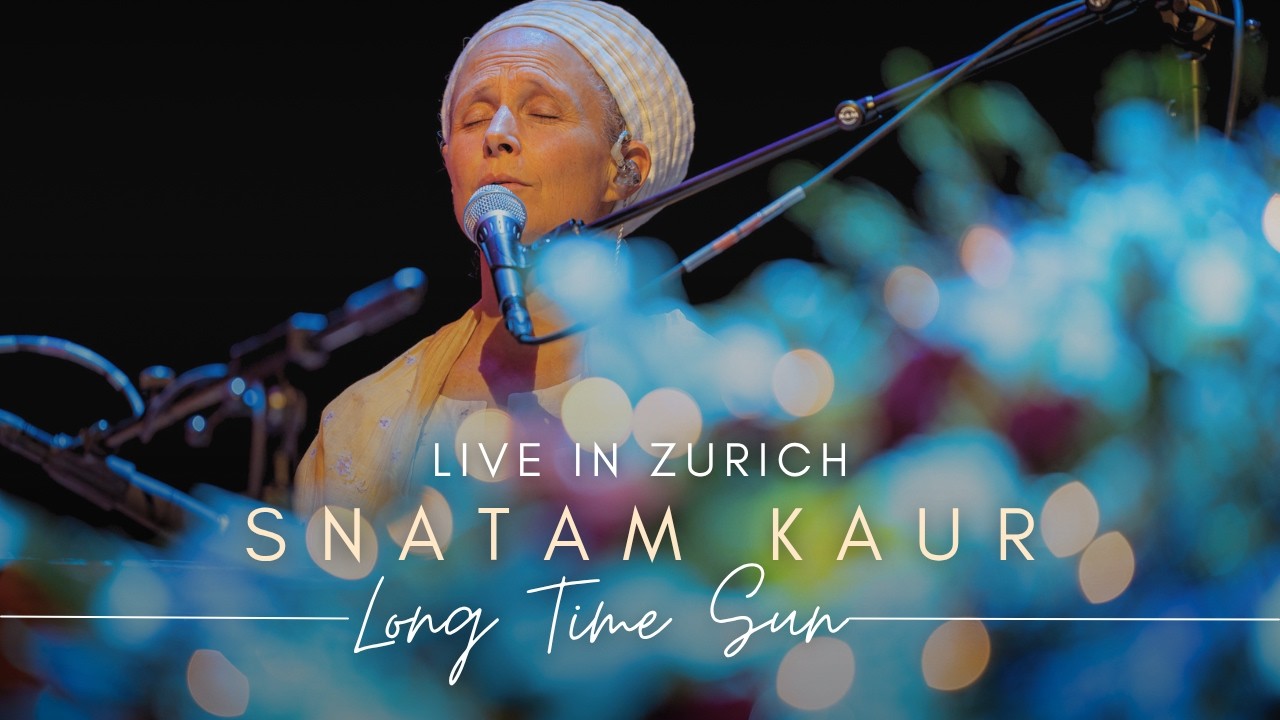
"Akaal," the debut single from Snatam Kaur's album Nirankaar, is a sacred Sikh mantra meaning "beyond or without death." The piece serves as a spiritual tool for helping loved ones who have passed transition toward the Infinite, while simultaneously supporting the living in tuning into their own eternal soul vibration and moving beyond the fear and limitation that death represents. Through chanting and meditation on Akaal, practitioners connect with the deathless nature of consciousness itself, finding love and peace in that realization.
What Does the Mantra "Akaal" Mean?
The Sanskrit-origin Sikh mantra "Akaal" translates literally to "beyond or without death." In Sikh spiritual tradition, this mantra carries profound significance as a statement of ultimate reality—the recognition that consciousness, soul, and the Infinite exist beyond the temporal boundary of physical death. Unlike many spiritual mantras that focus on achieving a specific state or calling for divine blessing, Akaal functions as a statement of fact about the nature of existence itself: that which is truly real transcends mortality.
The mantra works not through wishful thinking or metaphorical abstraction, but through direct resonance with what practitioners understand to be the soul's true nature. When chanted or sung, the vibration of Akaal is believed to align consciousness with this eternal dimension, bypassing the mind's habitual attachment to finitude and fear.
How Is Akaal Used for Those Who Have Passed?
One of the most direct applications of Akaal chanting is as a spiritual support for loved ones who have left their bodies. In Sikh tradition, the moment of death marks a transition rather than an ending—the soul continues its journey beyond the physical form. Akaal is chanted during this time to help those who have passed connect more directly with the Infinite and to support their soul's journey beyond the material plane.
This practice rests on the understanding that consciousness does not depend on the physical body for its existence or its access to divine reality. By chanting Akaal, family members and practitioners create a vibrational field that supports the departed soul's attunement to higher consciousness. The mantra serves as a spiritual bridge, affirming that the loved one's essential nature—their soul—remains untouched by bodily death and continues to exist within the Infinite.
What About Support for Those Left Behind?
Chanting Akaal is equally significant for the living. When someone loses a loved one, grief often manifests as a sense of separation and finality. The practice of chanting Akaal helps those left behind shift their consciousness from the loss of the physical body to recognition of the soul's continued existence. In tuning into the "soul vibration of deathlessness," survivors align themselves with the same eternal consciousness their loved one has returned to, dissolving the sense of ultimate separation.
This is not a process of denial or spiritual bypass of grief. Rather, it is a means of processing loss by recognizing a deeper continuity. The mantra allows grief to transform into love that transcends the boundary between life and death—acknowledging that the relationship and connection continue at the level of soul.
How Does Akaal Help Move Beyond Fear of Death?
Beyond its application during bereavement, Akaal serves a broader spiritual function: helping practitioners move beyond the limits of death consciousness. Most human beings live with an underlying existential anxiety rooted in mortality—the knowledge that the physical body will one day cease to function. This awareness, often unconscious, shapes decisions, relationships, and how we inhabit our lives.
Chanting Akaal creates a direct experience of consciousness that exists beyond death. Through sustained practice, the nervous system and mind begin to resonate with a frequency of existence not dependent on the biological body. This doesn't deny the reality of physical death; rather, it contextualizes it within a larger framework of eternal soul existence. Fear of death loses its grip when one's consciousness touches, even briefly, a dimension that is genuinely beyond death.
This shift in consciousness has practical implications. When the existential dread of mortality relaxes, people often experience greater peace, deeper love, and clearer purpose. The anxiety that subtly constricts the heart releases, allowing for more authentic living.
What Is the Musical Approach to "Akaal"?
Snatam Kaur's "Akaal" from the Nirankaar album is a collaboration that brings together multiple skilled musicians and producers. Ram Dass Khalsa contributes piano and vocals, Grecco Buratto provides guitar and vocal harmonies, and Sukhmani offers percussion and backing vocals. Snatam herself plays harmonium alongside her lead vocals. This ensemble arrangement transforms the mantra into a full musical expression rather than a simple chant.
The use of multiple instruments—strings, piano, acoustic and electric guitars, tabla, and trumpet (arranged by Alphonso Horne)—creates a sonic landscape that supports the listener's meditation on the meaning of Akaal. Music serves as a vehicle for the mantra's vibration, making it more accessible and emotionally resonant than a bare recitation. The combination of traditional instruments (like harmonium and tabla) with contemporary production creates a bridge between ancient spiritual practice and modern sensibility.
What Makes This Album Context Important?
"Akaal" appears as the debut single from Nirankaar, Snatam Kaur's new album. The album title itself, meaning "without limits" or "infinite" in Sanskrit, suggests a thematic coherence: all eight tracks likely explore aspects of consciousness that transcend ordinary limitation. "Akaal" sets this exploration by directly addressing perhaps the most fundamental human limit—death itself.
By positioning "Akaal" as the opening statement of the Nirankaar album, Snatam establishes a foundational truth: liberation from fear and limitation begins with the soul's recognition of its own deathlessness. The subsequent tracks on the album can then build upon this realization, exploring other dimensions of infinite consciousness without the underlying anxiety that mortality usually creates.
How Can One Begin Practicing With This Mantra?
Engaging with "Akaal" does not require specialized training or belief in any particular religious framework. The mantra works through the principle of vibrational resonance—the repeating of a sound pattern that aligns consciousness with its meaning. One can begin by listening to Snatam Kaur's musical rendition of "Akaal" and allowing the vibration to work through hearing. This alone creates some effect, as the consciousness naturally resonates with repeated sacred sound.
More active practice involves chanting the mantra oneself, either aloud or silently. Chanting aloud creates stronger physical and energetic effects, as the sound vibration moves through the body and nervous system. Silent chanting allows for integration during meditation. A simple practice might involve sitting quietly, mentally repeating "Akaal" with each breath, holding the awareness that this sound represents the eternal nature of one's soul.
For those supporting someone who is dying or has recently passed, chanting Akaal in their presence or on their behalf is a direct application. The vibration reaches consciousness regardless of whether the person is in a body or not, supporting the soul's transition and the family's processing of grief.
Where to Go From Here
Understanding the mantra "Akaal" is one entry point; sustained practice is another. Snatam Kaur offers guidance through her online school at www.kirtanandkundalini.com, where students can deepen their understanding of kirtan, mantra, and kundalini practices. Her website www.snatamkaur.com provides access to her full catalog of music and tour dates for those interested in experiencing these practices in community settings.
The exploration of death consciousness in spiritual practice is neither morbid nor escapist. Rather, it is profoundly liberating. By directly encountering and transcending the fear of death through practices like Akaal chanting, practitioners free themselves to live with greater authenticity, love, and purpose. The soul vibration of deathlessness is not a distant goal; it is the actual nature of consciousness waiting to be recognized and lived.