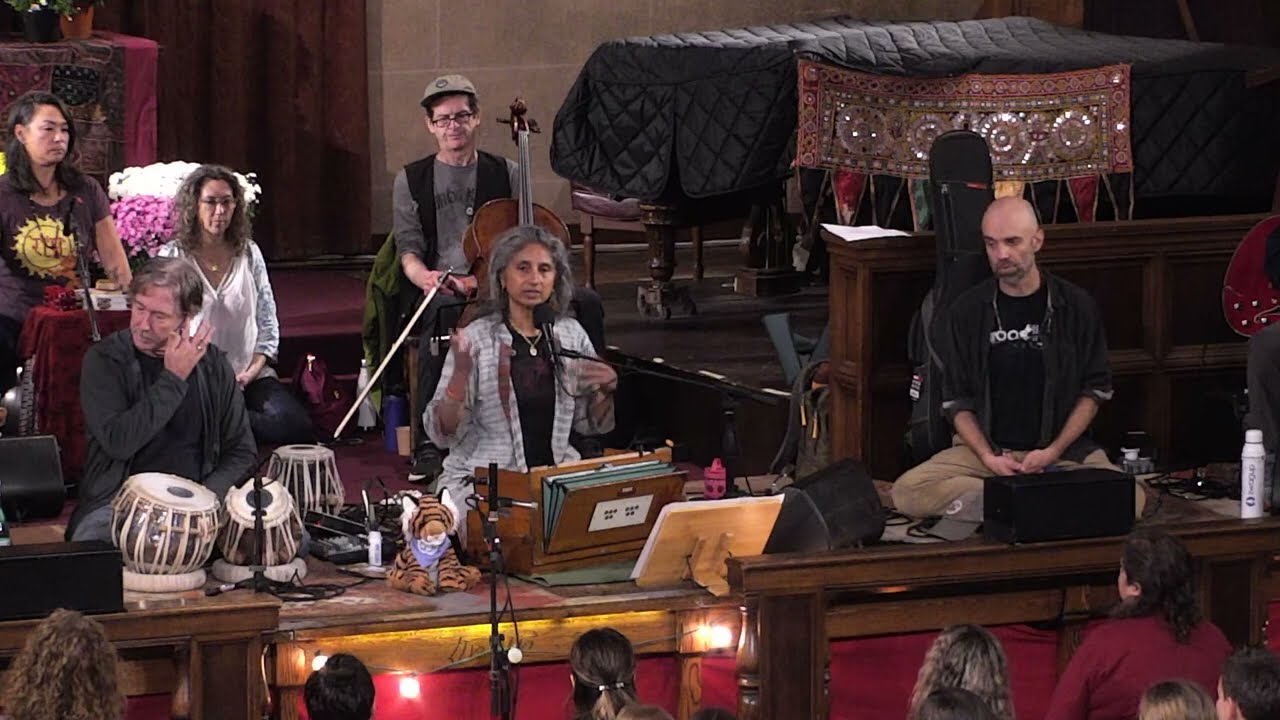
Ayla Nereo's "Wheel of Time" is a meditative composition that weaves together themes of vocal empowerment, cyclical learning, and spiritual homecoming. The song centers on four core invocations: the strength of one's voice, the lightness of one's step, the lessons embedded in time itself, and the guidance of a spiritual presence. Through breath-work language and call-and-response imagery, the piece articulates a path where the singer surrenders to being guided toward an interior "home"—understood not as a physical destination but as an alignment with one's truest self.
What Does It Mean to Find Strength Through Voice?
The opening line—"May my voice be strong"—is not merely a vocal affirmation. In contemplative practice, voice is the vehicle through which intention, presence, and inner truth move into the world. Nereo positions voice strength as a spiritual act, one bound up with authenticity and clarity of expression. When she sings this invocation, she is asking for the capacity to speak and sing from a place of genuine power rather than force or strain.
This mirrors teachings in many traditions about *vāk* (Sanskrit for speech or sound) as a creative and transformative force. The voice carries not just words but vibration, resonance, and the subtle energy of consciousness. Strengthening one's voice, in this framework, means cultivating the capacity to transmit one's truth with authority and presence. It is less about volume and more about coherence—the alignment of inner intention with outer expression.
How Does Breath Become a Spiritual Teaching Tool?
Throughout "Wheel of Time," breath is the organizing principle. The song repeats the phrase "as a breath be taken, given" and "as a breath be being, breathing," creating a loop that mirrors the autonomic rhythm of existence itself. This is deliberate pedagogy. In yoga, pranayama (breath practice), and contemplative traditions across cultures, breath is the bridge between conscious and unconscious processes, between mind and body, between control and surrender.
By anchoring the song in breath language, Nereo teaches listeners that spiritual learning is not intellectual but somatic—it happens in the body, in the rhythm of inhalation and exhalation. The breath does not belong to us; we belong to the breath. This surrender—from "taking" and "giving" breath to simply "being breathing"—marks a progression from willful practice to spontaneous presence. The lessons Nereo sings of come not from study alone but from presence to the continuous cycle of breathing, living, and returning.
What Is the "Wheel of Time" and How Does It Teach?
The title itself invokes cyclical time rather than linear progression. A wheel returns to where it began; it has no fixed destination. In many spiritual traditions—Hindu, Buddhist, and indigenous cosmologies—time is understood as cyclical, not as a march toward a predetermined endpoint. "Wheel of Time" suggests that learning is not about arrival at a final truth but about deepening one's relationship to the eternal present moment as it cycles through seasons, breaths, and lifetimes.
When Nereo sings "may my learning come on this wheel of time," she is asking for the capacity to extract wisdom from the very cycle she is part of—not to transcend it but to learn from it as it unfolds. This reframes learning from an external acquisition (accumulating facts) to an internal attunement (recognizing patterns, lessons, and guidance that are always present). The wheel teaches by repetition, by return, by the unforced revelation that comes when we align with natural cycles rather than resist them.
How Does the Song Invoke Spiritual Guidance?
The chorus shifts into petition: "Come and be my guide / walking by my side." Here, Nereo addresses an unseen presence—what some might call grace, intuition, a teacher, or an aspect of one's own awakened consciousness. The request is specific: not to be lifted out of difficulty or to be granted wishes, but to have companionship in the walk itself. "Walking by my side" implies presence without intrusion, support without control.
This is consistent with the contemplative understanding that spiritual guidance is not about being told what to do but about being held in awareness while doing it. The guide walks *by* the side, not ahead commanding or behind pushing. The singer remains the agent, but no longer alone. This form of prayer or invocation honors both human agency and the recognition that humans cannot navigate the depths alone.
What Does Calling "Me Home" Mean in a Spiritual Context?
The refrain "calling me home" appears repeatedly, gathering force and resonance. Home, in spiritual language, is rarely the literal dwelling place. It refers instead to a state of fundamental belonging, alignment, and return to one's true nature. The Hindu concept of *moksha* (liberation), the Buddhist notion of original nature, the Christian mystic's union with the divine—these are all expressions of "coming home."
Nereo's repetition of this phrase—"hear it calling me home," "calling me home," "calling me listening," "calling my soul"—performs a kind of sonic incantation that gradually softens the boundary between the listener and the called. By the song's end, "calling me home" is less a prayer directed outward and more a recognition of something already present, already calling. The song enacts the return it invokes.
How Does Repetition Function as a Spiritual Practice?
The song structure itself is repetitive, cyclical, almost mantra-like. Verse phrases circle back: "as a breath be taken given / taken given," "here calling me / calling me," "being breathing / being breathing." This is not lazy songwriting but deliberate use of the mind's natural response to repetition. When a phrase repeats, the thinking mind eventually stills, and a deeper recognition can emerge. The repetition induces a state where meaning shifts from semantic (what the words denote) to resonant (what the words activate in the body and psyche).
This technique is found in mantra traditions, in the psalms of various religions, in the work of minimalist composers like Steve Reich. Repetition is a technology for bypassing conceptual thought and moving directly into felt experience. In Nereo's hands, the repeating lines about breath, guidance, and homecoming become a vehicle for direct experience rather than information to be processed.
Where to Go From Here
For those moved by "Wheel of Time," several paths open. First, listen to the song repeatedly in a meditative context rather than as background music. Notice how the repeated phrases work on your nervous system, how your body responds to the invitation to breathe, to walk, to be guided. Second, explore Ayla Nereo's broader work through her courses "Meeting the Muse" and "Empowered Voice," both of which deepen the integration of vocal practice, creative expression, and spiritual development. Third, consider the song as an invitation to examine your own relationship to voice, breath, guidance, and home—not as abstract concepts but as living practices. What does it mean for *your* voice to be strong? What guidance are you already receiving that you have not yet named? What calls you home?