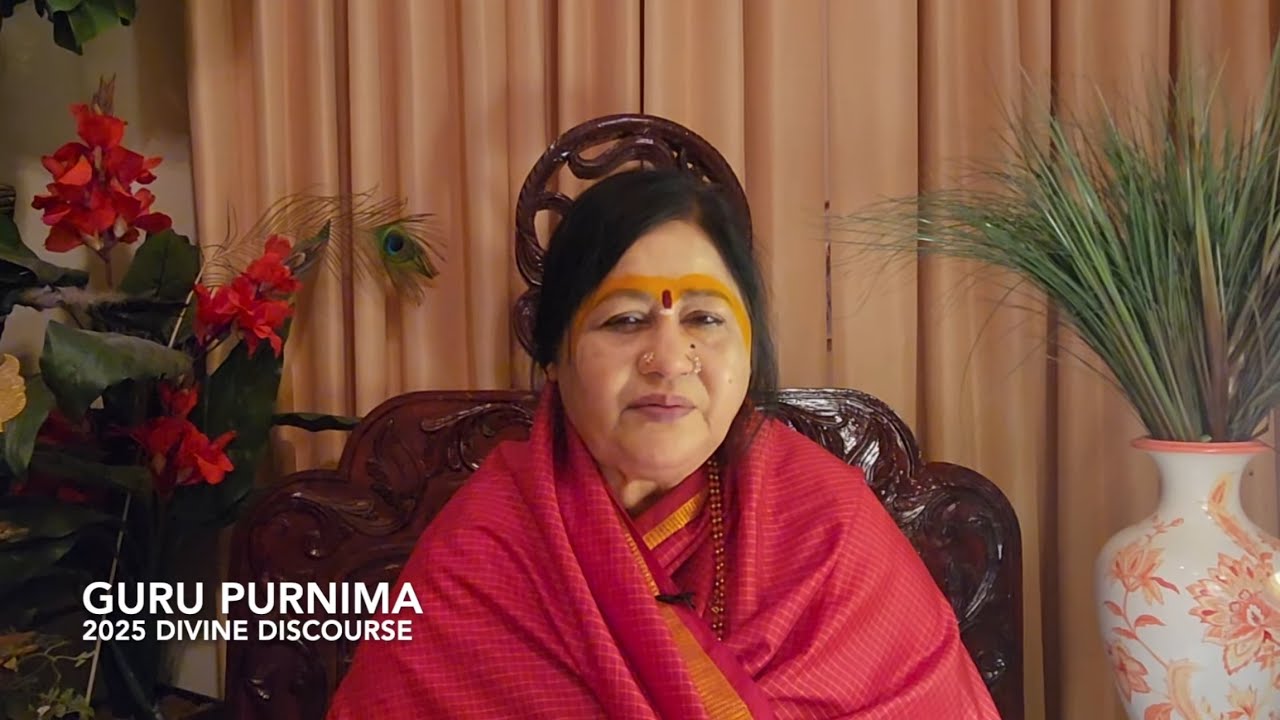
Sri Karunamayi's discourse on Samputa Sri Sukta (Episode 2) reveals how this sacred Vedic hymn serves as a primary tool for worshiping Sri Mahalakshmi Devi and attracting multiple forms of prosperity—material wealth, spiritual advancement, knowledge, protection from calamity, and liberation. Through detailed exploration of the mantra's structure, the deity's cosmic forms, and the vibrational power embedded in the Sanskrit verses, Karunamayi demonstrates that Sri Sukta is not merely devotional praise but a precise spiritual technology grounded in Vedic cosmology and the interconnection between sound, consciousness, and material manifestation.
What Makes Sri Sukta Central to Mahalakshmi Worship?
The Sri Sukta occupies a unique position within Hindu devotional and Vedic practice as the primary hymn dedicated to Sri Mahalakshmi Devi. According to Karunamayi, Sri Sukta is not incidental praise but rather a comprehensive map of the deity's divine attributes and the mechanics of how abundance flows through the cosmos. The mantra begins with invocations like "Hiranyavarnaam harineem suvarnarajatasrajaam" (the golden-hued one who wears ornaments of gold and silver), which are not merely poetic descriptions but precise articulations of the divine form's resonance and power. Each word carries vibrational frequencies that attune the chanter's consciousness to Mahalakshmi's blessing force.
Karunamayi emphasizes that Mahalakshmi is not confined to material wealth alone. She is described as Brahmajnanandayini (bestower of Brahmic bliss), Amritavarsini (showerer of nectar/immortal knowledge), and Mokshapradayini (grantor of liberation). The Sri Sukta thus addresses multiple dimensions of human flourishing: material prosperity, intellectual illumination, spiritual advancement, and ultimate liberation. This multiplicity means that sincere practitioners of Sri Sukta are not pursuing mere monetary gain but engaging with a complete system of dharmic prosperity that honors both worldly responsibility and transcendental freedom.
How Does Sound Vibration Create Prosperity in Sri Sukta Chanting?
A central insight from Karunamayi's teaching is that the Sanskrit phonemes and meter of Sri Sukta are not arbitrary aesthetic choices but carry intrinsic creative power. The Vedas themselves are understood as eternal sound forms (shabda brahman)—meaning that the vibrational structure of the mantra itself participates in the creative force that generates the material and subtle universes. When a sincere devotee chants Sri Sukta with proper intention and attention, they are not merely making requests to a distant deity but aligning their own subtle body, mind, and life-force with the frequencies through which Mahalakshmi operates.
Karunamayi describes how the mantra creates a kind of resonance chamber within the practitioner's consciousness. The regular, meditative repetition of phrases like "Om Sri Maataa" (Om, Mother of all) activates dormant capacities for receptivity and magnetism. The solar and lunar channels within the subtle body are purified and strengthened, enabling the flow of grace. This is not metaphorical but understood within traditional Tantric and yogic anatomy as actual energetic reorientation. Through consistent practice, the chanter develops what might be called divine magnetic attraction—a natural drawing of resources, opportunities, relationships, and knowledge toward themselves.
What Are the Specific Forms of Prosperity That Sri Sukta Grants?
Karunamayi's discourse distinguishes between various categories of prosperity that Sri Sukta bestows. The first is dhana sampada—material wealth and resources. This is not framed as selfish accumulation but as the capacity to fulfill one's dharmic duties, support one's family, engage in charitable giving, and participate fully in society. The second is vidya (knowledge and intellectual clarity), which Mahalakshmi grants as Saraswati-swarupini (embodied form of wisdom). A sincere practitioner finds their mind becomes clearer, their capacity for learning increases, and their ability to discern truth from falsehood sharpens.
The third form is rogya (health and vitality). Mahalakshmi's grace extends to the physical body and life-force, protecting from illness and decay. Karunamayi notes that many who practice Sri Sukta report increased energy, better health outcomes, and a general sense of physical and vital well-being. The fourth category is kshema (protection and safety). The mantra creates a shield of divine blessing that guards the practitioner and their loved ones from accidents, negative influences, and calamitous circumstances. The fifth is sukham (peace and contentment), an inner satisfaction that arises independent of external circumstances—the capacity to remain balanced whether fortune flows abundantly or temporarily restricts.
Finally, there is the highest form of prosperity: moksha (spiritual liberation). Karunamayi emphasizes that Sri Sukta, though often associated with material blessing, ultimately leads the sincere seeker toward freedom from the cycle of birth and death. As described in the mantra, Mahalakshmi is Brahmavidya-adhikarinee (mistress of Brahmic wisdom), meaning she grants not just worldly success but the ultimate realization of one's true nature as infinite consciousness.
What Is the Cosmic Structure Revealed in Sri Sukta?
Karunamayi's exposition reveals that Sri Sukta is not merely devotional but cosmological—it encodes a precise map of how the divine manifests through creation. The mantra describes Mahalakshmi as residing in and as the cosmic centers of power: the solar orb (surya mandala), the lunar orb (chandra mandala), the heart chakra, and ultimately in the transcendent void beyond all manifestation. The repeated invocation of these sacred centers is not poetic fancy but a technology for drawing the practitioner's consciousness through the same subtle anatomy that the goddess herself traverses.
The mantra speaks of Mahalakshmi's form as endlessly luminous and radiant—dedeepyamana (blazing, resplendent). This radiance is understood as the actual light of consciousness itself, the awareness that illuminates all perception. By chanting and meditating on this luminosity, the practitioner gradually recognizes that the same light dwelling in Mahalakshmi dwells equally within their own heart. The external worship of the goddess becomes internalized as a recognition of one's own divine nature.
How Does Regular Practice of Sri Sukta Transform Life Over Time?
Karunamayi teaches that Sri Sukta is not a transactional prayer—give this many repetitions, receive this amount of benefit. Rather, it is a long-term cultivation practice that gradually shifts the practitioner's relationship to desire, action, and grace. In the early stages, material benefits may arise naturally as one's consciousness becomes more aligned with the frequencies of abundance. Doors open, opportunities appear, and resources flow more easily. This is not magical thinking but a natural consequence of inner attunement: a mind calibrated to divine frequencies naturally makes better decisions and attracts aligned circumstances.
Over months and years, the deeper transformation emerges. The practitioner develops genuine gratitude for all they receive, recognizing each gift as Mahalakshmi's grace rather than personal achievement. Ego-driven grasping gradually dissolves. A profound sense of contentment arises independent of external circumstances—the awareness that Mahalakshmi's greatest blessing is to fulfill one's legitimate needs while freeing one from compulsive wanting. The mind becomes naturally generous, inclined toward dharmic action and service to others. Finally, for those who persist in sincere practice, a radical shift in identity occurs: the recognition that one is not a separate ego desperately seeking prosperity but a manifestation of the divine consciousness that animates all abundance.
What Practices Maximize the Potency of Sri Sukta Chanting?
Karunamayi does not present Sri Sukta as effective through rote repetition alone. The mantra's power is amplified through several supporting disciplines. First is samiddhita—the energy of the heart. Chanting with genuine devotion, with the sincere intention to connect with Mahalakshmi's grace rather than to manipulate or extract benefit, creates far more potent results. Second is shuddha manas (pure intention). The practitioner should clarify their deepest intention: Is this for personal greed, or for the capacity to serve, to protect loved ones, to fulfill dharma? Mahalakshmi responds to the quality of the heart's desire.
Third is consistency and regularity. Karunamayi emphasizes that unlike occasional prayers offered in crisis, Sri Sukta practice works through daily, sustained engagement. Many traditions recommend chanting the full Sri Sukta (all 15 verses) at least once daily, ideally during brahma muhurta (the sacred hours before dawn). This consistency creates an accumulation of vibrational imprint in one's subtle body and in the field around the practitioner. Fourth is correct pronunciation and understanding of the meaning. Chanting with awareness of what the words signify—imagining the form of Mahalakshmi, contemplating her attributes—exponentially increases the mantra's effect compared to mechanical repetition.
Finally, there is yagna bhava (the spirit of sacred offering). The practitioner approaches the mantra not as a demand but as an offering to the divine. Each repetition is given to Mahalakshmi as an expression of love and surrender. This shift from grasping to offering fundamentally transforms the energy of the practice and opens the heart to genuine grace.
Where to Go from Here
For those drawn to Sri Sukta practice after encountering Karunamayi's teaching, the path forward involves several integrated elements. First, obtain a reliable Sanskrit text and transliteration of the full Sri Sukta, ideally with a word-by-word English meaning. Many free resources are available online; recorded versions by accomplished chanters can serve as models for proper pronunciation. Second, establish a daily practice time, preferably early morning, and commit to chanting the mantra for at least 40 days—a traditional span believed to establish a new energetic pattern. Some practitioners extend this to 108 days or even continue indefinitely.
Third, combine external chanting with internal visualization. As you chant, imagine the form of Mahalakshmi as radiant light, seated in the center of your heart, showering grace and blessings upon you and all beings. Allow any sense of sincere gratitude, surrender, or reverence to arise naturally. Fourth, study the deeper meaning of the mantra through commentaries by authentic teachers. Karunamayi's own detailed breakdown of each verse, available in the full discourse, provides profound insights into the cosmic and psychological significance of every phrase. Finally, notice with patient awareness how your life shifts over weeks and months—not just in external circumstances but in your inner relationship to desire, gratitude, peace, and the recognition of grace operating through all events.