
EveryEvent Seattle

Alle Events durchsuchen

Find every event in Seattle

events

Concerts & Live Music
Festivals
Sports & Recreation
Food & Drink
Arts & Culture
Community
Family & Kids
Nightlife
Comedy
Theater
Beliebte Reiseziele
BaliSedonaLos AngelesCosta RicaNew YorkSan FranciscoAustinMiamiJoshua TreeTulum
Alle Kategorien anzeigenAlle Reiseziele anzeigen

Alle Funktionen entdecken

Leistungsstarke Tools für Ihre Veranstaltungen

Plattform-Funktionen

Intelligente dynamische Preisgestaltung
Ticket-Kategorien
Sitzplatzreservierung
Warenkorbabbruch-Wiederherstellung
Besucher-Wiedergewinnung
Spenden & Staffelpreise
Affiliate-System
Ticket-Scanner
Rabattcodes
Individuelle Fragen
Ticket-Teilen
Upsells & Extras
Analysen & Berichte
E-Mail-Sequenzen
Warteliste / Benachrichtigen / Erinnern
Entdecken
Discovery HubArtists & PerformersVenuesKnowledge Base
Alle Funktionen anzeigenÜber uns
PreiseBlog
Language
Saved events
Alle Veranstaltungen durchsuchen

events

Concerts & Live MusicFestivalsSports & RecreationFood & DrinkArts & CultureCommunityFamily & KidsNightlife

Beliebte Reiseziele

BaliSedonaLos AngelesCosta RicaNew YorkSan Francisco

Entdecken

Discovery HubArtists & PerformersVenuesKnowledge Base

Plattform-Funktionen

Intelligente dynamische PreisgestaltungTicket-KategorienSitzplatzreservierungWarenkorbabbruch-WiederherstellungBesucher-WiedergewinnungSpenden & StaffelpreiseAffiliate-SystemTicket-ScannerRabattcodesIndividuelle FragenTicket-TeilenUpsells & ExtrasAnalysen & BerichteE-Mail-SequenzenWarteliste / Benachrichtigen / Erinnern
Alle Funktionen anzeigenÜber uns
PreiseBlog
AnmeldenRegistrierenVeranstalter
  • Browse All Events
  • Concerts & Live Music
  • Festivals
  • Sports & Recreation
  • Food & Drink
  • Arts & Culture
  • Community
  • Family & Kids
  • Nightlife
  • Alle Kategorien →
  • Portland
  • Vancouver, BC
  • San Juan Islands
  • Olympic Peninsula
  • Leavenworth
  • All Destinations →
  • For Promoters
  • For Artists
  • For Venues
  • For Festivals
  • For Event Spaces
  • For Nonprofits
  • For Bloggers
  • For Speakers
  • Brand Ambassador
  • Case Studies
  • 350.000+ Käufernetzwerk
  • Warenkorbabbruch-Wiederherstellung
  • Intelligente dynamische Preisgestaltung
  • Ticket-Kategorien
  • Wiederkehrende Veranstaltungen
  • Sitzplatzreservierung
  • Affiliate-System
  • Warteliste / Benachrichtigen
  • Ticket-Scanner
  • Einbettungs-Widget
  • Event-Syndication
  • Nachrichten
  • Integrationen
  • Berichte
  • Alle Funktionen →
  • Über uns
  • Das Ökosystem
  • Blog
  • Glossar
  • Inspiration
  • Hilfe-Center
  • Kontakt
  • API-Dokumentation
  • Marken-Assets
  • Karriere
  • Presse
  • Nutzungsbedingungen
  • Datenschutzrichtlinie

Events

  • Browse All Events
  • Concerts & Live Music
  • Festivals
  • Sports & Recreation
  • Food & Drink
  • Arts & Culture
  • Community
  • Family & Kids
  • Nightlife
  • Alle Kategorien →

Getaways

  • Portland
  • Vancouver, BC
  • San Juan Islands
  • Olympic Peninsula
  • Leavenworth
  • All Destinations →

For Organizers

  • For Promoters
  • For Artists
  • For Venues
  • For Festivals
  • For Event Spaces
  • For Nonprofits
  • For Bloggers
  • For Speakers
  • Brand Ambassador
  • Case Studies

Funktionen

  • 350.000+ Käufernetzwerk
  • Warenkorbabbruch-Wiederherstellung
  • Intelligente dynamische Preisgestaltung
  • Ticket-Kategorien
  • Wiederkehrende Veranstaltungen
  • Sitzplatzreservierung
  • Affiliate-System
  • Warteliste / Benachrichtigen
  • Ticket-Scanner
  • Einbettungs-Widget
  • Event-Syndication
  • Nachrichten
  • Integrationen
  • Berichte
  • Alle Funktionen →

Unternehmen

  • Über uns
  • Das Ökosystem
  • Blog
  • Glossar
  • Inspiration
  • Hilfe-Center
  • Kontakt
  • API-Dokumentation
  • Marken-Assets
  • Karriere
  • Presse
  • Nutzungsbedingungen
  • Datenschutzrichtlinie
EveryEvent
© 2026 EveryEvent Seattle. Alle Rechte vorbehalten.
Inspiration

Hari Guna Gao: Singing theQualities of Divine Love

Jai Uttal
Jai Uttal
Mar 27, 2014
7 Min. Lesezeit

"Hari Guna Gao," from Jai Uttal's album Return to Shiva Station, is a devotional kirtan that guides practitioners to chant the divine qualities (guna) of Hari, Krishna, and Radha. The song encapsulates the core practice of bhakti—the yoga of devotion—by focusing on the names and virtues of these deities as a pathway to direct spiritual experience. Through intimate, unadorned musical arrangements, Uttal reveals how kirtan functions not as performance but as a portal to the heart of devotional spirituality.

Lesen · 8 Abschnitte

What Does "Guna Gao" Mean in the Context of Bhakti Practice?

"Guna" translates as "qualities" or "virtues," and "gao" means "sing." The imperative instruction embedded in the title—"Sing the qualities"—reflects a fundamental bhakti teaching: that chanting the names and attributes of the divine is a direct method for cultivating devotion. Rather than abstract meditation, the devotee engages in active praising, listing, and celebrating the characteristics of Hari, Krishna, and Radha. This practice assumes that by focusing attention on divine qualities—Krishna's playfulness, Radha's eternal surrender, Hari's grace—the devotee's own heart aligns with those virtues. The act of naming becomes an act of transformation.

How Do Krishna and Radha Function as Spiritual Archetypes?

In the lyrics "Hari Guna Gao, Radha Guna Gao, Krishna Guna Gao," each name represents a distinct dimension of the divine. Hari, one of Krishna's primary epithets, refers to the remover of obstacles and illusion. Krishna embodies the divine beloved, the cosmic player whose love is boundless and transcendent. Radha, Krishna's eternal consort, represents the exemplary devotee—the soul who loves without condition or expectation of return. In bhakti cosmology, their relationship is not romantic in the conventional sense but archetypal: it models the relationship between individual consciousness and universal consciousness, between the devotee and the divine. By singing their qualities, the practitioner is not merely celebrating mythology but actively rehearsing the emotional and spiritual stance of devotion itself.

What Is the Spiritual Function of the Mantra "Govinda Jaya Jaya Gopala Jaya Jaya"?

The refrain "Govinda Jaya Jaya Gopala Jaya Jaya / Radha Ramana Hari Govinda Jaya Jaya" functions as a victory chant and acknowledgment of divine sovereignty. "Govinda" (the cowherd, the remover of suffering) and "Gopala" (the protector) are names emphasizing Krishna's role as the divine caretaker. The repetition of "Jaya Jaya" (victory, victory) is not casual; in kirtan practice, repetition creates a rhythmic engagement of the mind and body that gradually moves the practitioner beyond ordinary thought into a state of absorption. "Radha Ramana" ("he who brings joy to Radha") seals the devotional framework: Krishna's divinity is known through His capacity to love and bring joy. The loop of this refrain—returning again and again to the proclamation of Krishna's victory and beauty—mirrors the cyclical nature of devotional consciousness, which deepens through reiteration rather than novelty.

Why Are Intimate, Unadorned Arrangements Central to This Kirtan?

Jai Uttal's decision to create "Return to Shiva Station" with what he describes as "unadorned, intimate arrangements that illuminate directly the spiritual heart of each composition" reflects a deliberate artistic and spiritual choice. Kirtan, at its core, is not performance art but congregational prayer. Elaborate production or virtuosic display can distract from the primary aim: the direct transmission of devotional feeling between singer and listener, and the activation of bhakti in the participant's own heart. By stripping away excess ornamentation, the essential melody and the names themselves come forward. The listener is invited not to admire the musicianship but to join in the chant, to feel the vibration of the divine names moving through their own body and mind. This approach honors the ancient principle that the names of the divine are self-effulgent; they do not require embellishment. What matters is the purity of intention and the sincerity of the chanter's heart.

How Does Kirtan Connect to the Broader Shiva Station Cosmology?

While "Hari Guna Gao" focuses on Krishna and Radha, it exists within the larger context of Return to Shiva Station, an album Uttal describes as reflecting "the power and mystery of Shiva, the dancing Lord of Transformation and Protector of Devotees, and His primordial home, Tibet's legendary Mount Kailash." Shiva and Krishna represent complementary aspects of non-dual spirituality in Hinduism. Shiva embodies transcendent awareness, the dissolution of the ego, and the transformative power that destroys illusion; Krishna embodies divine love, play, and the manifestation of consciousness in form. Together, they point to a complete spiritual path: Shiva shows the way of meditation and detachment; Krishna shows the way of love and engagement. "Hari Guna Gao" brings the seed of bhakti—the devotional heart—into sharp focus. By singing Krishna and Radha's qualities while anchored in the larger Shiva-centered cosmology, the practitioner learns that all paths—whether the way of transcendence or the way of devotion—lead to the same realization of the divine.

What Does It Mean That Radha and Krishna Are "Eternal Lovers"?

The lyric "Victory to Radha and Krishna, the eternal lovers" points to a paradox at the heart of bhakti theology. In conventional understanding, lovers are two beings in time, separated and seeking reunion. But Radha and Krishna represent a union that transcends time and duality. They are eternally together and eternally separated—both conditions hold simultaneously in the devotional imagination. This paradox reflects the non-dual insight central to Advaita Vedanta: the individual self (Radha/soul) and Brahman (Krishna/divine consciousness) are ultimately one, yet the devotional path honors the apparent separation in order to generate the emotional and spiritual intensity that leads to realization. By acknowledging them as "eternal lovers," the kirtan invokes the ecstatic longing that characterizes devotional practice—not the longing of absence but the longing that arises when one is in the presence of supreme beauty and infinite love.

How Does Singing Divine Qualities Foster Inner Transformation?

In bhakti philosophy, there is a principle: you become what you meditate upon. When the devotee sings "Hari Guna Gao," they are not merely listing Krishna's virtues externally; they are actively inviting those qualities into their own consciousness. Each repetition of the divine names is a subtle rewiring of attention and intention. Over time, through consistent kirtan practice, the devotee's own nature begins to reflect the qualities they are chanting. If they sing the courage of Hari, the playfulness of Krishna, the devotion of Radha—they gradually embody these. The kirtan, then, is not praise directed at a distant deity but a progressive remaking of the self through conscious engagement with sacred sound and divine archetype. This transformation is not metaphorical or psychological alone; in the yogic understanding, the vibrational quality of sacred names directly affects the nervous system, the subtle energy channels, and the opening of the heart.

Where to Go From Here

For those new to kirtan and bhakti practice, "Hari Guna Gao" offers an accessible entry point. Listen repeatedly, allowing the melody and the names to become familiar. If you feel called, join in the chanting—you need not know Sanskrit or be musically trained. The practice is one of sincere participation, not perfection. Explore Jai Uttal's full Return to Shiva Station album to understand how "Hari Guna Gao" connects to the larger spiritual cosmology of Shiva and Krishna. Consider attending a live kirtan gathering in your area; the power of group chanting amplifies the individual experience. Read traditional bhakti texts such as the Bhagavad Gita, the Gita Govinda, or teachings on the yoga of devotion to deepen your understanding of why these particular divine qualities matter. Finally, approach kirtan not as cultural curiosity but as a genuine spiritual technology: commit to regular chanting over weeks and months, and observe what shifts in your own heart, energy, and relationship to the divine.

Jai Uttal
AutorJai Uttal

American kirtan singer, multi-instrumentalist, and pioneer of devotional sound in the West — one of the central figures, alongside Krishna Das, Snatam Kaur, and Deva Premal, in the…

Profil ansehenWebsite
Themen erkunden
KirtanBhakti-yogaKrishna-radhaSacred-chantingDevotion

Hast du Fragen?

Häufig gestellte Fragen

Singing the divine qualities (guna) of Krishna is a core bhakti practice that involves chanting the names and virtues of the deity as a pathway to direct spiritual experience. By focusing on these qualities—Krishna's playfulness, love, and grace—the devotee's consciousness gradually aligns with and embodies those same virtues, fostering inner transformation through sacred sound and intention.
In bhakti theology, Radha and Krishna represent an archetypal relationship that transcends time and duality. They embody the eternal union between the individual soul (Radha) and universal consciousness (Krishna), which simultaneously appears as separation to generate the longing and devotion that characterizes the spiritual path. Their relationship is not temporal romance but a non-dual paradox expressed through devotional emotion.
Unadorned arrangements serve the core purpose of kirtan: to transmit devotional feeling and activate bhakti in the listener's heart, not to display musicianship. By removing ornamental elements, the essential melody and divine names come forward, allowing listeners to focus directly on the spiritual power of the chant and to join in congregational prayer rather than passive listening.
Hari refers to the remover of obstacles and illusion; Krishna embodies the divine beloved and cosmic player; Gopala emphasizes the protective, caretaker aspect of the divine. Together, these names cover multiple dimensions of the divine—grace, love, and compassionate care—inviting the devotee to experience divinity from multiple angles through the act of chanting.
Mount Kailash, Shiva's legendary home in Tibet, represents the transcendent abode of consciousness itself. While "Hari Guna Gao" focuses on bhakti (the way of love), it exists within the larger cosmology where Shiva embodies transcendence and transformation. Together, they represent a complete spiritual path in which devotion and non-dual awareness work in concert to reveal the divine nature of reality.
In yogic understanding, the vibrational quality of sacred names affects the nervous system, subtle energy channels, and heart opening directly. Repeated chanting of divine names like "Govinda Jaya Jaya" creates rhythmic engagement that gradually moves the mind beyond ordinary thought into absorption, while simultaneously rewiring attention and intention toward spiritual consciousness.
Yes. Kirtan is a practice of sincere participation, not musical perfection or scholarly knowledge. The power lies in focused repetition, heartfelt intention, and the vibrational quality of the sacred names themselves. Regular listening and joining in the chanting—even imperfectly—activates the transformative effect of bhakti practice over time.
In bhakti philosophy, you become what you meditate upon. As you repeatedly sing Krishna's qualities—his playfulness, courage, and infinite love—those virtues gradually integrate into your own nature and consciousness. This is not merely psychological; the sacred sound, combined with devotional intention, directly reshapes your nervous system and spiritual awareness.

Weiterlesen

More from Jai

Alle anzeigen
How the Bauls of Bengal Broke My Sky: A Musician's Search
Inspire

How the Bauls of Bengal Broke My Sky: A Musician's Search

A chance encounter on a dirt path in West Bengal led to a musical awakening. Jai Uttal traces how the outcasts of Bengali culture transforme…

1 min read
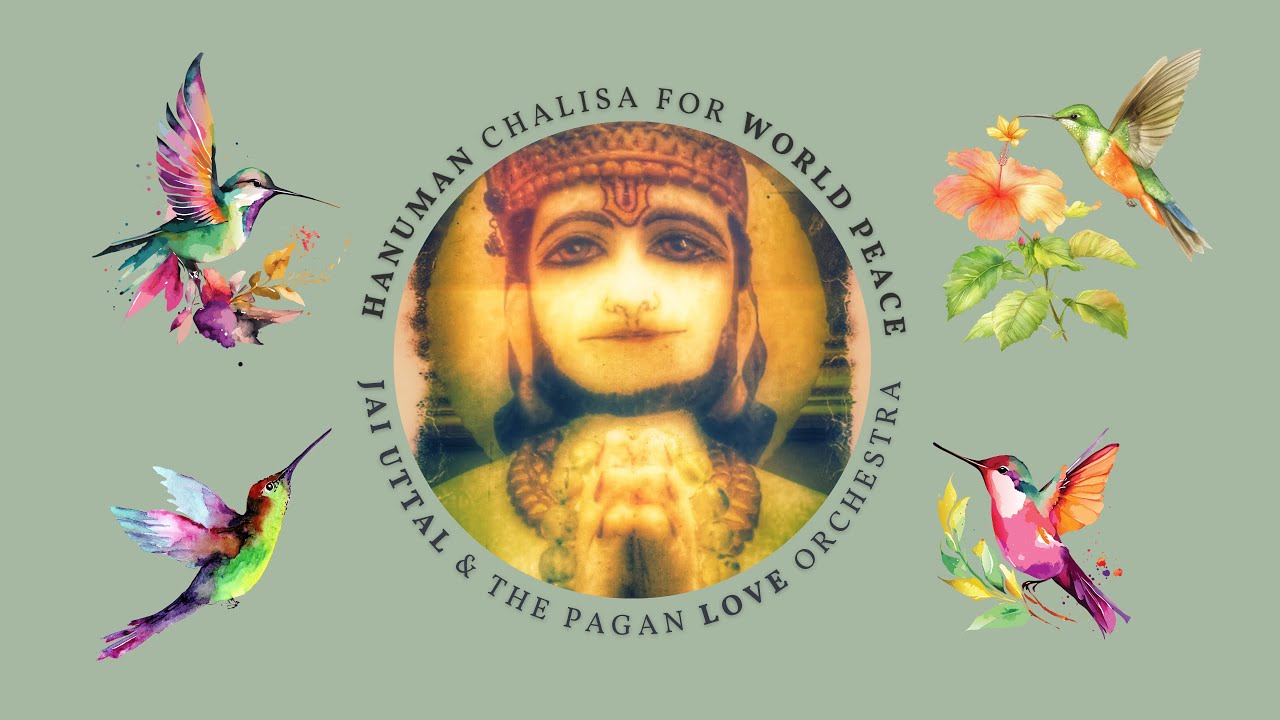
Hanuman Chalisa for World Peace: Ancient Chant for Modern Times
Inspire

Hanuman Chalisa for World Peace: Ancient Chant for Modern Times

Jai Uttal leads a devotional rendering of the Hanuman Chalisa, a 40-verse Sanskrit hymn invoking strength, clarity, and peace through kirtan…

1 min read
Yemaya Reimagined: Ocean Goddess Chant Unites Voices
Inspire

Yemaya Reimagined: Ocean Goddess Chant Unites Voices

A new duet celebrating the Yoruba ocean goddess brings together two voices in a healing chant born from serendipitous meeting in Costa Rica.…

1 min read
Ocean Goddess Rising: Two Voices Reimagine Yemaya
Inspire

Ocean Goddess Rising: Two Voices Reimagine Yemaya

Deva Premal and Ajeet unite in a devotional collaboration honoring Yemaya, the Yoruba ocean goddess, recorded in Costa Rica with arbutar acc…

1 min read

Weiter erkunden

Setze deinen Weg fort

Mehr Weisheit und Zusammenkünfte aus dem BrightStar-Verzeichnis.

Mehr Artikel

Durchstöbere die ganze Bibliothek an Lehren, Interviews und Leitfäden.

Zu allen Artikeln →

Lehrer & Künstler

Entdecke die Linien, Musiker und Wegbegleiter der bewussten Welt.

Künstler erkunden →

Event finden

Kirtan, Retreats, Klangbäder, Atemarbeit, Festivals — bald in deiner Nähe.

Events ansehen →
