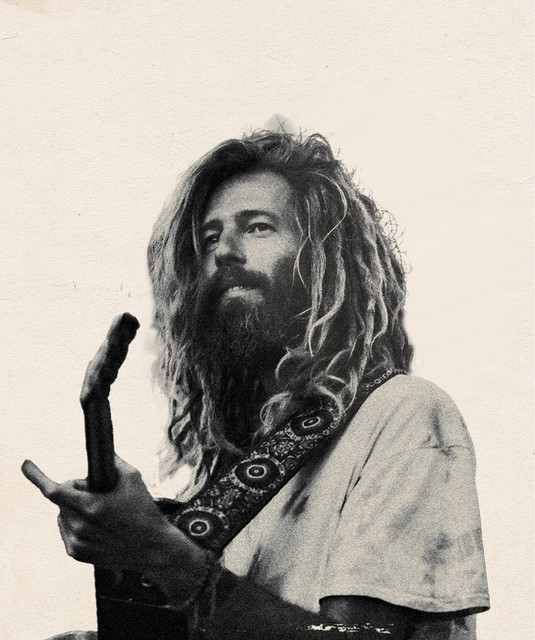
Aum Namah Shivaya is a sacred mantra with roots in Hindu philosophy that invokes the presence of Consciousness, Awareness, and the Joy of Existence. The mantra honors Shiva, the deity of destruction—not destruction as annihilation, but as the sacred principle that clears away what no longer serves, making space for renewal and new creation. In this live performance recorded in Zürich, the mantra is given contemporary musical expression through a full ensemble arrangement, demonstrating how ancient chants remain potent tools for spiritual invocation and collective elevation.
What Does Aum Namah Shivaya Mean?
Aum Namah Shivaya is a Sanskrit mantra composed of two primary elements: "Aum" (or Om), the primordial sound in Hindu and yogic philosophy, and "Namah Shivaya," which translates to "I bow to Shiva." Aum itself represents the vibration of ultimate consciousness—the foundational sound from which all creation emerges. Namah Shivaya extends this invocation by expressing reverence to Shiva, a principal deity in the Hindu trinity who embodies pure consciousness and supreme awareness.
The mantra functions as more than mere words or sounds. In bhakti (devotional) traditions, mantras are understood as vibrational keys that attune the practitioner's consciousness to specific cosmic principles. When chanted, Aum Namah Shivaya is believed to resonate with the frequencies of awareness itself, creating a bridge between individual consciousness and universal consciousness.
The Role of Shiva as the God of Destruction
One of the most misunderstood aspects of Shiva in Western spiritual contexts is the concept of destruction. In the Hindu cosmological framework, Shiva is not merely a god of annihilation or chaos. Rather, Shiva embodies the principle of cosmic dissolution and renewal—the necessary force that destroys what is no longer needed, clearing space for creation to begin anew.
This principle operates at multiple levels. In cosmic time, Shiva's dance (the cosmic dance of Nataraja) represents the cycles of universal creation, maintenance, and dissolution. In personal practice, invoking Shiva through Aum Namah Shivaya invites the capacity to release what no longer serves—old patterns, beliefs, attachments, and conditioning. By destroying the obsolete, space opens for authentic growth and the emergence of what is genuinely needed.
This understanding transforms the practice from one of mere devotion into a tool for conscious transformation. The practitioner isn't just honoring an external deity; they're aligning with an internal principle of wise discernment and necessary release.
How Does Mantra Work as a Spiritual Technology?
Mantras function through multiple mechanisms simultaneously. At the physiological level, chanting involves precise articulation of syllables, which activates specific nadis (energy channels) in the subtle body and engages the vagus nerve, shifting the nervous system toward parasympathetic activation. The rhythmic repetition of sound creates coherence in the brain, measurable through changes in brainwave patterns.
At the psychological level, mantras provide a focal point for attention. Rather than allowing the mind to wander through endless thought-streams, mantra gives the mind a singular anchor, gradually training awareness toward steadiness and one-pointed focus. This is why mantras are fundamental to many meditation practices across Hindu, Buddhist, and yogic traditions.
At the subtle or energetic level, specific mantras are believed to attune consciousness to particular cosmic principles. Aum Namah Shivaya, in this view, doesn't merely invoke Shiva as an external force—it attunes the practitioner's individual consciousness to the universal principle of Shiva, bringing the practitioner into alignment with awareness itself.
The repetition of the mantra, whether silently, whispered, or sung aloud, creates a recursive deepening of these effects over time.
The Power of Collective Chanting and Live Musical Expression
While the mantra's power exists whether chanted alone or in groups, collective chanting amplifies and compounds the effect. When multiple individuals vocalize the same mantra simultaneously, their individual vibrations harmonize, creating what might be described as a unified field of intention and resonance. This is one reason why kirtan (call-and-response chanting) and mantra singing have been central to spiritual communities for millennia.
In this live Zürich performance, Aum Namah Shivaya is given contemporary musical expression through a full ensemble: backing vocals, harmonium, drums, keys, and bass create a layered soundscape that honors both the tradition and the present moment. The arrangement doesn't dilute the mantra's power; rather, it meets the mantra where modern listeners are—making the ancient practice accessible and alive.
The live context adds another dimension: the presence of a gathering of people, all participating in or witnessing the invocation, creates a collective field. Each person present, whether actively chanting or simply receiving the sound, becomes part of a larger vibration.
Why Is This Mantra Considered Powerful?
Aum Namah Shivaya is considered powerful for several interconnected reasons. First, it invokes Consciousness and Awareness directly—the fundamental ground of existence in non-dual Hindu philosophy. By invoking Shiva, the practitioner aligns with the principle of pure consciousness that underlies all phenomena.
Second, the mantra encompasses the complete spiritual principle of transformation: consciousness, destructive wisdom (the principle of letting go), and renewal. This makes it a complete invocation—not partial or incomplete, but addressing the full spectrum of spiritual change.
Third, the mantra has been chanted for thousands of years, accumulating what might be called "spiritual momentum" or "resonant history." Ancient traditions hold that mantras gain power through generations of sincere practice and invocation. This accumulated resonance isn't mystical in a fuzzy sense; rather, it reflects how consciousness responds to intention amplified across time and community.
Finally, the mantra addresses the Joy of Existence itself. Beyond abstract philosophy, this suggests that connecting with the principle of Shiva—consciousness, awareness, and transformation—naturally brings one into alignment with the intrinsic joy or bliss that is said to be the nature of consciousness itself (sat-chit-ananda: existence-consciousness-bliss).
How Can Someone Practice With This Mantra?
For those new to mantra practice, several approaches exist. The simplest is to listen to recordings like this live performance, allowing the sound to work directly on consciousness without effortful participation. Passive listening to devotional chanting still produces measurable shifts in nervous system state and attentional capacity.
A more active approach involves chanting aloud. The practitioner simply repeats "Aum Namah Shivaya," either in rhythm with a recording or independently, for a chosen duration—typically 11, 21, 27, 108, or 1,000 repetitions. The number 108 holds particular significance in yogic and Hindu traditions, representing completion and wholeness.
Silent repetition, sometimes called japa, is another method where the mantra is repeated internally without audible vocalization. This is particularly useful in settings where external chanting isn't practical or appropriate.
The key principle across all methods is consistency and sincere intention. A sincere practice of five or ten minutes daily will, over time, create noticeable shifts in awareness, resilience, and clarity.
Where to Go From Here
For those drawn to explore this mantra further, experimentation is the best teacher. Listen to this recording multiple times, noting any subtle shifts in mood, energy, or awareness. If inclined, chant the mantra aloud for a set period—even five minutes—and observe the effects. Consistent practice over weeks and months will reveal the mantra's impact more clearly than intellectual understanding alone.
Exploring the broader context of Shiva philosophy, mantra, and kirtan through texts, teachers, or in-person gatherings will deepen understanding. The live performance format shown here represents one modern expression of an ancient practice—a living bridge between millennia-old wisdom and contemporary consciousness.