EveryEvent Seattle

Ver todos os Events

Find every event in Seattle

events

Concerts & Live Music
Festivals
Sports & Recreation
Food & Drink
Arts & Culture
Community
Family & Kids
Nightlife
Comedy
Theater
Destinos populares
BaliSedonaLos AngelesCosta RicaNew YorkSan FranciscoAustinMiamiJoshua TreeTulum
Ver todas as categoriasVer todos os destinos

Explorar todos os recursos

Ferramentas poderosas para expandir seus eventos

Recursos da plataforma

Precificação dinâmica inteligente
Categorias de ingressos
Lugares marcados
Recuperação de carrinho abandonado
Recuperação de visitantes
Doações e preço variável
Sistema de afiliados
Scanner de ingressos
Códigos de desconto
Perguntas personalizadas
Compartilhamento de ingressos
Upsells e adicionais
Análises e relatórios
Sequências de e-mail
Lista de espera / Notificar / Lembrar
Explorar
Discovery HubArtists & PerformersVenuesKnowledge Base
Ver todos os recursosSobre nós
PreçosBlog
Language
Saved events
Ver todos os eventos

events

Concerts & Live MusicFestivalsSports & RecreationFood & DrinkArts & CultureCommunityFamily & KidsNightlife

Destinos populares

BaliSedonaLos AngelesCosta RicaNew YorkSan Francisco

Explorar

Discovery HubArtists & PerformersVenuesKnowledge Base

Recursos da plataforma

Precificação dinâmica inteligenteCategorias de ingressosLugares marcadosRecuperação de carrinho abandonadoRecuperação de visitantesDoações e preço variávelSistema de afiliadosScanner de ingressosCódigos de descontoPerguntas personalizadasCompartilhamento de ingressosUpsells e adicionaisAnálises e relatóriosSequências de e-mailLista de espera / Notificar / Lembrar
Ver todos os recursosSobre nós
PreçosBlog
EntrarCadastrarOrganizadores de eventos
  • Browse All Events
  • Concerts & Live Music
  • Festivals
  • Sports & Recreation
  • Food & Drink
  • Arts & Culture
  • Community
  • Family & Kids
  • Nightlife
  • Todas as categorias →
  • Portland
  • Vancouver, BC
  • San Juan Islands
  • Olympic Peninsula
  • Leavenworth
  • All Destinations →
  • For Promoters
  • For Artists
  • For Venues
  • For Festivals
  • For Event Spaces
  • For Nonprofits
  • For Bloggers
  • For Speakers
  • Brand Ambassador
  • Case Studies
  • Rede de 350K+ compradores
  • Recuperação de carrinho abandonado
  • Precificação dinâmica inteligente
  • Categorias de ingressos
  • Eventos recorrentes
  • Lugares marcados
  • Sistema de afiliados
  • Lista de espera / Notificar
  • Scanner de ingressos
  • Widget incorporável
  • Distribuição de eventos
  • Central de mensagens
  • Integrações
  • Relatórios
  • Todos os recursos →
  • Sobre
  • O ecossistema
  • Blog
  • Glossário
  • Inspiração
  • Central de ajuda
  • Contato
  • Documentação da API
  • Recursos da marca
  • Carreiras
  • Imprensa
  • Termos de Serviço
  • Política de Privacidade

Events

  • Browse All Events
  • Concerts & Live Music
  • Festivals
  • Sports & Recreation
  • Food & Drink
  • Arts & Culture
  • Community
  • Family & Kids
  • Nightlife
  • Todas as categorias →

Getaways

  • Portland
  • Vancouver, BC
  • San Juan Islands
  • Olympic Peninsula
  • Leavenworth
  • All Destinations →

For Organizers

  • For Promoters
  • For Artists
  • For Venues
  • For Festivals
  • For Event Spaces
  • For Nonprofits
  • For Bloggers
  • For Speakers
  • Brand Ambassador
  • Case Studies

Recursos

  • Rede de 350K+ compradores
  • Recuperação de carrinho abandonado
  • Precificação dinâmica inteligente
  • Categorias de ingressos
  • Eventos recorrentes
  • Lugares marcados
  • Sistema de afiliados
  • Lista de espera / Notificar
  • Scanner de ingressos
  • Widget incorporável
  • Distribuição de eventos
  • Central de mensagens
  • Integrações
  • Relatórios
  • Todos os recursos →

Empresa

  • Sobre
  • O ecossistema
  • Blog
  • Glossário
  • Inspiração
  • Central de ajuda
  • Contato
  • Documentação da API
  • Recursos da marca
  • Carreiras
  • Imprensa
  • Termos de Serviço
  • Política de Privacidade
EveryEvent
© 2026 EveryEvent Seattle. Todos os direitos reservados.
Inspiration

Ang Sang Waaheguru: Living theDivine in Every Cell

Snatam Kaur
Snatam Kaur
Apr 28, 2023
7 min de leitura
Assistir · 5

Snatam Kaur introduces "Ang Sang Waaheguru," a Sikh mantra that translates as "The Divine God is living, breathing, dancing in every cell and every fiber and every limb of my being." The teaching emphasizes repetition throughout the day combined with genuine belief—not as positive thinking, but as a direct recognition of divine presence already inherent in all existence. The practice invites practitioners to move beyond intellectual understanding into embodied conviction.

Leitura · 7 seções

What Does Ang Sang Waaheguru Actually Mean?

The mantra Ang Sang Waaheguru is rooted in Sikh spiritual tradition. "Ang" refers to limbs or parts of the body. "Sang" means "with" or "in." "Waaheguru" is the name of God in Sikhism, often understood as "Wow God" or the wonder-filled divine. Together, the phrase translates to "The Divine God is living, breathing, dancing in every cell and every fiber and every limb of my being."

What distinguishes this mantra from generic affirmations is its specificity about location and aliveness. It is not merely declaring that divinity exists somewhere distant or abstract. Rather, it places the divine presence inside the body itself—in cells, fibers, and limbs. Snatam Kaur emphasizes the dynamic quality: the divine is not static or sleeping, but actively "living, breathing, dancing." This introduces movement, vitality, and presence into the spiritual assertion.

How Do You Practice This Mantra?

Snatam Kaur offers a direct instruction: say this mantra to yourself "several times throughout the day." The practice is intentionally simple and accessible—no special equipment, posture, or time commitment is required. You can repeat it while walking, working, or pausing for a moment of reflection.

The repetition serves multiple functions. First, it trains the mind to return again and again to this recognition of divine presence. Second, it gradually embeds the affirmation into your nervous system and awareness. Third, each repetition is an opportunity to deepen your relationship with the meaning, moving from words into lived experience.

The beauty of this practice is that it can be woven into ordinary life. You might say it while showering, during a commute, between meetings, or before sleep. There is no requirement for lengthy meditation or retreat—only the willingness to pause and speak the words with intention.

What Role Does Belief Play in This Practice?

Snatam Kaur identifies belief as the critical element: "and now the key is to believe it." This is not belief in the sense of wishful thinking or pretending something is true when you doubt it. Rather, it is an invitation to recognize and accept what is already true.

She frames this as a choice: "and I say why not let's believe it." This phrasing is crucial. She is not asking you to force belief or manufacture conviction through mental effort alone. Instead, she is suggesting that belief is available to you right now—that you can choose to align with it. It is permission to stop resisting what your deepest intuition already knows.

The repeated affirmation "I believe it, I believe it, I believe it" in the teaching is not mere recitation. Each iteration is a recommitment to accepting the truth of divine presence within and around you. This repeated affirmation helps dissolve the gap between intellectual understanding and embodied knowing.

How Does This Practice Connect to Presence and Embodiment?

By directing attention to "every cell and every fiber," the mantra anchors awareness in the body rather than in abstract thought. This is significant for spiritual practice. Many contemplative traditions recognize that true transformation happens not just in the mind, but through the integration of body, breath, and consciousness.

When you say "Ang Sang Waaheguru," you are simultaneously invoking divine presence and acknowledging your own body as a vehicle for that presence. You are not transcending the body or leaving it behind—you are sanctifying it. You are recognizing the body not as separate from spirit, but as a temple or expression of the divine.

This approach transforms how you might relate to physical sensation, pain, movement, and health. If the divine is dancing in every cell, then what arises in your body—including discomfort or limitation—is not something to reject or escape, but to meet with the awareness that it, too, participates in this sacred aliveness.

Why Would You Practice This Throughout the Day?

The instruction to repeat this mantra "several times throughout the day" rather than once during formal meditation has pedagogical value. Daily life is where we most often forget the presence of the divine. We become absorbed in tasks, worries, and self-concern. The mantra serves as a gentle interrupt—a bell or reminder that pulls attention back to what is truly happening.

By spreading the practice across the day, you are training your consciousness to remain anchored in this recognition regardless of circumstance. Whether you are joyful or frustrated, rested or exhausted, busy or idle, the mantra invites you to say: the divine is still living, breathing, dancing in every cell. This creates a steady thread of awareness that runs through all the variations of daily life.

Additionally, repetition throughout the day makes the practice sustainable. A single hour-long meditation session once a week may feel profound, but it is easy to forget its effects once you return to ordinary demands. Spreading the practice into small, frequent repetitions keeps it alive in your consciousness and helps it gradually transform your baseline awareness.

What Is the Spiritual Foundation of This Teaching?

The Sikh tradition from which this mantra emerges has long emphasized the presence of God in all creation and in the here-and-now. Sikhism teaches that the divine is not distant or requiring intermediaries, but directly accessible to all human beings. The concept of "naam" (the divine name) emphasizes that speaking and meditating on the divine name is itself a pathway to direct experience.

Snatam Kaur's teaching carries this lineage forward in an accessible form. She is not asking you to adopt a specific belief system, but inviting you to recognize something that she presents as self-evident: divinity is present. The mantra is simply a device to help you remember and integrate this recognition.

This approach is consistent with many non-dual or Advaita traditions across contemplative spirituality, which teach that separation between self and divine is illusory—that what you are seeking is already present, awaiting recognition rather than acquisition.

Where to Go from Here

If you are drawn to this practice, begin simple: choose one moment each day to pause and say "Ang Sang Waaheguru" with attention to your body and breath. Notice what happens over weeks of consistent repetition. Does your baseline sense of presence shift? Does your relationship to your body or to moments of difficulty change? Does the recognition of divine aliveness become more natural, less like an idea and more like lived experience?

You might also explore other Sikh teachings on naam simran (divine name meditation) and the concept of "Ik Onkar" (One Creator), which provide philosophical and spiritual context for this mantra. Additionally, consider how this practice complements other forms of embodied awareness—whether through yoga, breathwork, or simple mindful movement—since the mantra is specifically anchored in bodily presence.

The invitation Snatam Kaur offers is ultimately simple and radical: believe that you are a living expression of the divine, right now, in every fiber of your being. The mantra is both the reminder and the practice through which that belief becomes not something you hold, but something you are.

Transcript

[0:00] here's a beautiful Mantra that you can

[0:03] say to yourself several times throughout

[0:05] the day

[0:07] some

[0:09] waheguru

[0:11] and when you say it to yourself you're

[0:13] saying the Divine God is living

[0:16] breathing dancing in every cell and

[0:19] every fiber and every limb of my being

[0:23] and now the key is to believe it

[0:28] um

[0:31] and I say why not

[0:33] let's believe it

[0:37] I believe it

[0:39] I believe it

[0:42] I believe it

[0:44] oh

Snatam Kaur
AutorSnatam Kaur

Snatam Kaur is a world-renowned, Grammy-nominated devotional singer, touring musician, teacher, and author known for her luminous voice and the heartfelt depth of her music and tea…

Ver perfilSite
Explorar temas
Mantra-practiceSikh-spiritualityDivine-presenceEmbodimentConsciousness

Tem perguntas?

Perguntas frequentes

Ang Sang Waaheguru translates as 'The Divine God is living, breathing, dancing in every cell and every fiber and every limb of my being.' It is a Sikh mantra affirming that divinity is actively present within your body and being, not as a distant concept but as a living, dynamic presence.
Snatam Kaur recommends saying it to yourself several times throughout the day, woven into ordinary activities. This frequent repetition trains your awareness to remember divine presence amid daily life, rather than reserving the practice for formal meditation sessions.
No. While the mantra originates in Sikh tradition, it can be practiced by anyone who is willing to recognize or affirm the presence of the divine in all creation and in their own being, regardless of religious framework.
This mantra is not about creating something that isn't true or forcing belief. Instead, it invites you to recognize and accept what Snatam Kaur presents as already true—that the divine is already living and breathing in every cell. It is recognition rather than invention.
Yes. By directing attention to divine presence in every cell and fiber of your body, the practice cultivates a different relationship with your physical form—one of reverence and recognition rather than rejection or dissociation. This shift in awareness can support healing and embodiment.
Waaheguru is the Sikh name for God, often understood as 'Wow God' or expressing wonder and awe at the divine. It conveys the sense that the divine is magnificent and worthy of wonder, not a concept to be grasped intellectually but an experience to be lived.
Ang Sang Waaheguru is a form of nam simran (divine name meditation), which is a central Sikh practice. Nam simran involves meditation on the divine name as a pathway to direct experience and recognition of the divine presence pervading all existence.

Continuar lendo

More from Snatam

Ver Tudo
By Thy Grace: Snatam Kaur's Twenty-Five Years of Mantra
Featured

By Thy Grace: Snatam Kaur's Twenty-Five Years of Mantra

From a Colorado birth and a California childhood to a Grammy stage — Snatam Kaur marks 25 years of sacred chant with the By Thy Grace tour, …

1 min read
Long Time Sun: Kirtan and Blessing in Live Song
Featured

Long Time Sun: Kirtan and Blessing in Live Song

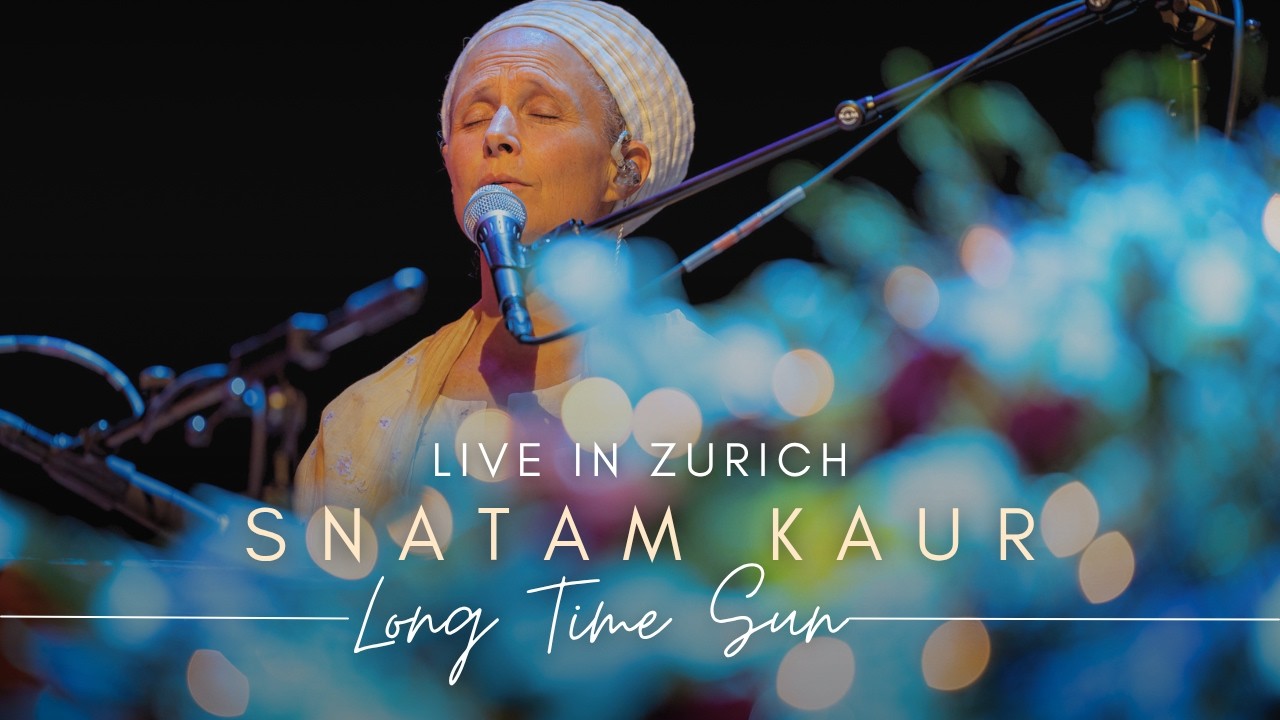
A live performance of the devotional blessing "Long Time Sun" recorded in Zurich featuring clarinet, three-part harmonies, and tabla.…

1 min read
How Sitting Still Proves You're Already Awakening
Featured

How Sitting Still Proves You're Already Awakening

Most people can't sit quietly without discomfort, but if you can, you're already further along spiritually than you realize. Eckhart Tolle e…

1 min read
The Missing Piece: How Real Thinking Creates Real Results
Featured

The Missing Piece: How Real Thinking Creates Real Results

Most vision boards fail because people skip the actual thinking. Eckhart Tolle reveals the rhythm that unlocks insight and the two distinct …

1 min read

Continue explorando

Continue sua jornada

Mais sabedoria e mais encontros de todo o diretório BrightStar.

Mais artigos

Explore a biblioteca completa de ensinamentos, entrevistas e guias.

Voltar a todos os artigos →

Professores e artistas

Conheça as linhagens, os músicos e os guias do mundo consciente.

Explorar artistas →

Encontre um evento

Kirtan, retiros, banhos de som, breathwork, festivais — acontecendo em breve.

Ver eventos →