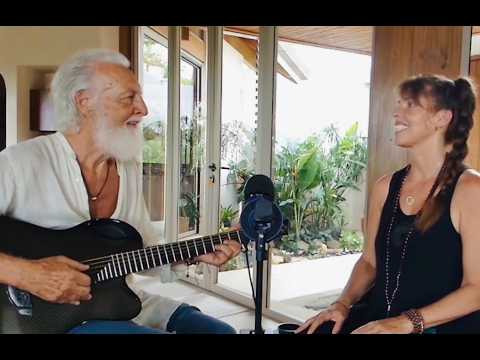
The Maha Mrityunjai mantra is one of the most powerful healing invocations in the Vedic tradition, a Sanskrit hymn addressed to Lord Shiva that seeks liberation from fear, death consciousness, and fragmentation of the self. Rather than seeking immortality of the physical body, this mantra works to dissolve the ego's attachment to separation and time, facilitating a shift into non-dual awareness where death—understood as the dissolution of fixed identity—becomes a doorway rather than an ending. The chanting of this mantra, particularly in the healing modality presented here, engages multiple layers of nervous system regulation, energetic alignment, and consciousness expansion simultaneously.
What Is the Maha Mrityunjai Mantra?
The Maha Mrityunjai mantra appears in the Rigveda and Yajurveda, two of Hinduism's oldest scriptural texts. It is addressed to Rudra (an ancient name for Shiva), the deity associated with transformation, dissolution, and regeneration. The mantra itself reads:
Om Tryambakam Yajaamahe
Sugandhim Pushti Vardhanam
Urvarukamiva Bandhanaan
Mrityor Mukshiya Maamritat
A direct translation reveals layers of meaning: "We worship the three-eyed Lord (Shiva), who is fragrant and nourishes all beings. As a cucumber releases from its stem, may he free us from death and grant us immortality." The "three eyes" reference Shiva's transcendent vision spanning past, present, and future—a consciousness not bound by linear time. The imagery of the cucumber separating from its vine describes a natural, organic release, not a violent or forced severance. This is essential: the mantra does not seek to fight death but to understand the mechanism of attachment that creates the fear of dissolution.
How Does This Mantra Address Mortality and Consciousness?
Most spiritual traditions recognize that the human being operates across multiple layers: physical, energetic, mental, emotional, and transcendent. The fear of death typically anchors in the physical body and the ego's identification with form. The Maha Mrityunjai mantra works at the energetic and consciousness level, not to deny the body's impermanence but to shift identification toward what in consciousness traditions is called the "witness"—the awareness that observes change without being changed by it.
In Vedantic philosophy, death is understood as a contraction of consciousness into a new form, not as annihilation. The mantra's invocation of Shiva—the destroyer in Hindu cosmology—acknowledges that dissolution is not a flaw but a necessary function of existence. Shiva represents the power that breaks down fixed structures, whether psychological patterns, cellular debris, or the hardened ego-self. By calling upon this force consciously through the mantra, the practitioner develops a relationship with transformation itself, rather than resisting it.
The phrase "grant us immortality" in the mantra does not refer to defeating death but to recognizing the eternal, deathless nature of consciousness itself. In Advaita Vedanta, the Self (Atman) is described as eternal and unchanging; what dies is only the temporary identity and the body. The mantra facilitates experiential understanding of this distinction.
What Are the Healing Properties of Chanting This Mantra?
Sound operates as a carrier of intention and consciousness. In Vedic science, mantras are not arbitrary; they encode specific frequencies and vibrational patterns designed to resonate with corresponding energy centers (chakras) and subtle body structures. The Maha Mrityunjai mantra, when chanted with awareness, engages multiple physiological and subtle body systems:
- Vagal Tone Regulation: The phonetic structure of the mantra stimulates the vagus nerve through vocal resonance. This activates the parasympathetic nervous system, shifting the body from a survival (fight-flight) state into a coherent, regenerative state. When the nervous system relaxes, the body's natural healing mechanisms—immune response, cellular repair, hormone balance—activate more efficiently.
- Heart Center Activation: The mantra specifically addresses Shiva, and in tantric physiology, Shiva consciousness resides in the heart center (Anahata chakra). Chanting brings awareness and prana (life force) to this location, strengthening the capacity for compassion, non-judgment, and witnessing.
- Dissolution of Energetic Blockages: Fear of death often creates chronic tension throughout the subtle body. This tension manifests as pain, stiffness, hormone dysregulation, and immune suppression. The Maha Mrityunjai mantra, through its association with Shiva's dissolving power, helps release these contracted patterns. The body experiences this as a gentle melting or opening, often accompanied by spontaneous sighs, yawning, or emotion release.
- Coherence Across Time Scales: The human body operates at multiple rhythms—heartbeat, breath, circadian cycles, seasonal patterns. When consciousness is fragmented by fear and denial of mortality, these rhythms become dysregulated. The mantra's vibrational frequency helps synchronize these multiple time scales, creating what neuroscientists call "coherence"—optimal efficiency of nervous system function.
How Does Chanting Maha Mrityunjai Relate to Spiritual Practice?
In the context of contemplative traditions, the Maha Mrityunjai mantra serves as both a psychological tool and a gateway to direct realization. Psychologically, it works with the unconscious fears that drive much human behavior. Many psychological schools recognize that unconscious death anxiety—what Ernest Becker called "terror management"—shapes everything from ambition to aggression to consumption. By bringing this fear into conscious relationship through the mantra, the practitioner stops being unconsciously driven by it.
At a deeper level, the mantra facilitates what Dzogchen Buddhism calls "recognition of the nature of mind." When the ordinary mind—constantly defending against change—relaxes into the rhythm and resonance of the chant, there arises a natural opening to what lies beyond the defended self. This is not dissociation or escape; it is clearer seeing. The witness that observes both the chanting and the chanter begins to become evident, and with it, the understanding that awareness itself is not threatened by any change or death.
In the Shiva Sutras, it is written that "the very basis of bondage is self-forgetting." The Maha Mrityunjai mantra, by invoking the Lord of consciousness, facilitates the opposite: remembrance of one's true nature. This remembrance is not intellectual belief but a felt, lived recognition.
Who Benefits from This Mantra, and How Is It Practiced?
Traditionally, the Maha Mrityunjai mantra has been used in several contexts:
- For physical healing: People facing serious illness have used this mantra as a complement to medical treatment, reporting both improved outcomes and greater peace regardless of the body's trajectory.
- For life transitions: During major changes—career shifts, relationship endings, relocations—the mantra helps one face the "little deaths" of ego identity that such transitions require.
- For aging: As the body's capacities change, the mantra supports graceful adaptation rather than resistance or denial.
- For spiritual maturation: At advanced stages of practice, when the ego's defenses have become transparent, the mantra facilitates the final dissolution into non-dual realization.
The practice involves either listening to the mantra being chanted (as in the healing modality of the Shuniya album) or actively chanting it oneself. Listening is particularly effective because it requires the nervous system to relax into receptivity. The listener does not need to produce the sound; the work is simply to allow the vibration to move through the body-mind. Many practitioners find that chanting 108 times (a number considered auspicious in Hindu tradition) creates a cumulative effect, building coherence across both the subtle and physical bodies.
The optimal time for practice is often early morning or evening, in a quiet space, either sitting upright or lying down in a receptive posture. Some practitioners combine the chanting with visualization—imagining Shiva, the three-eyed lord, dissolving all personal contractions and conditioning.
Where to Go from Here
The Maha Mrityunjai mantra is not a belief system but an experiential technology. Its validity lies not in theoretical agreement but in the direct felt shift in consciousness and well-being that results from sustained practice. Those new to the mantra might begin by listening to recordings (as on the Shuniya album) for 20-30 minutes daily for 40 days—a traditional practice period said to recondition both the nervous system and the subtle body. As comfort and familiarity grow, practitioners may begin chanting the mantra themselves, either aloud or silently, integrating it into meditation or daily life.
The ultimate purpose of any spiritual practice is not to escape death but to face it so directly and consciously that the fear that fuels ordinary behavior loses its unconscious power. In this freedom, authentic living becomes possible—choices made from wisdom rather than fear, actions flowing from compassion rather than self-protection. The Maha Mrityunjai mantra, in its ancient simplicity, addresses precisely this work of liberation.