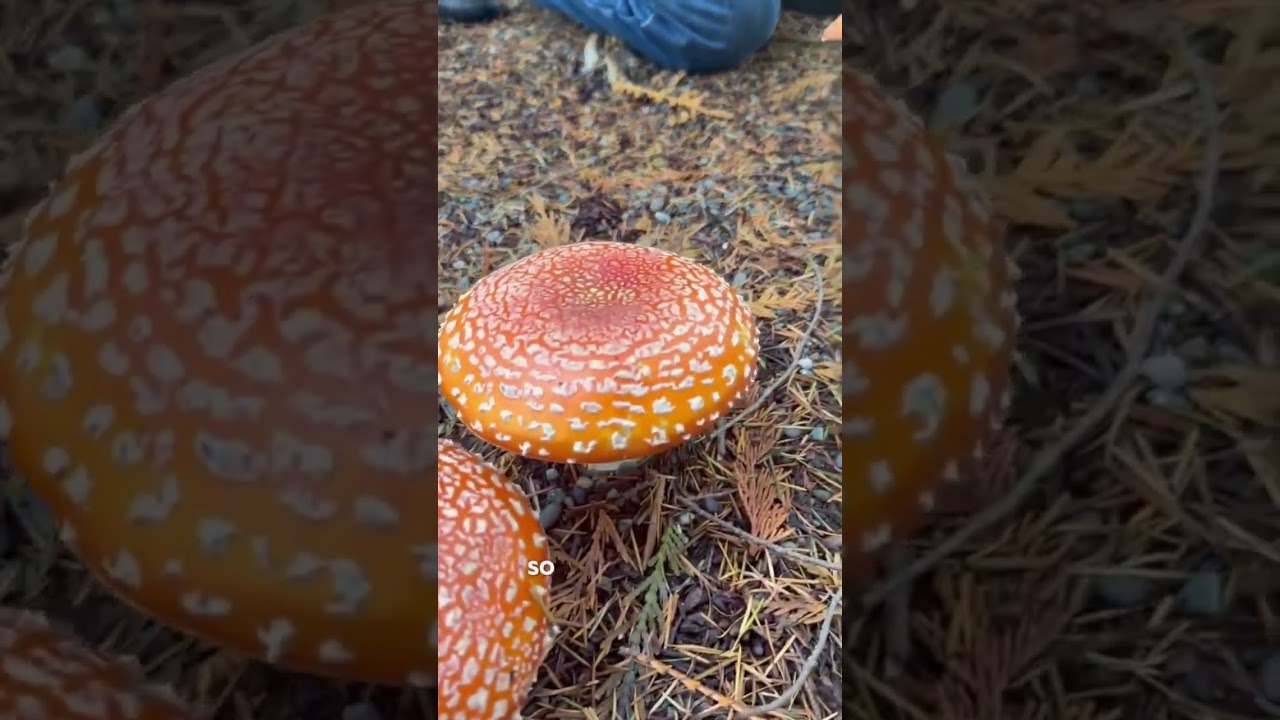
Paul Stamets presents a specimen-quality fruiting of Laetiporus conifericola, the Chicken of the Woods mushroom found on conifers in the Pacific Northwest. The talk clarifies the regional taxonomy: the conifer-specialist species bears the Latin name conifericola, while the eastern oak-dwelling variant is Laetiporus sulphureus (the sulfur shelf). This 31-second clip captures one of Stamets' most visually striking wild mushroom finds and serves as a practical field reference for identification in old growth forest habitat.
What Is Chicken of the Woods?
Chicken of the Woods is the common name for a group of bright, shelf-forming mushrooms in the genus Laetiporus, prized by foragers for their firm texture and mild flavor. The name derives from both appearance—the fruiting bodies resemble golden-orange chicken meat when fresh—and culinary properties. These mushrooms are saprophytic wood decomposers, breaking down dead and sometimes weakened living wood in forest ecosystems.
The genus contains several species with distinct geographic and host-plant preferences. Understanding which species you've found requires attention to location and the type of tree the mushroom is fruiting from, as this determines both identification and edibility safety (some people report gastric upset from certain Laetiporus species).
Regional Species: Conifericola vs. Sulphureus
Stamets emphasizes a critical taxonomic distinction in his observation. In the Pacific Northwest, Laetiporus conifericola is the species that fruits on conifers—Douglas fir, fir, spruce, and hemlock. The Latin epithet conifericola literally means "conifer-dweller." This is the dominant wild form foragers encounter in western North America's old growth forests.
By contrast, on the eastern side of the continent and on hardwoods like oak, the species is Laetiporus sulphureus (also called the sulfur shelf or sulfur tough). Stamets notes both common and Latin names for this eastern oak variant, underscoring that regional and host-plant information is not incidental detail—it is fundamental to correct identification.
This distinction matters for foragers: while both are edible when properly cooked, some individuals report digestive sensitivity to L. sulphureus more frequently than to L. conifericola. Knowing which species you're harvesting adds a layer of safety and informed practice to foraging.
Why Old Growth Habitat Matters for Fruiting
Stamets found this specimen in old growth forest, an ecological context that shapes where and how Chicken of the Woods fruiting occurs. Old growth stands contain abundant dead wood, fallen trees, and standing snags—the primary substrate for saprophytic fungi like Laetiporus. The stable microclimate, humidity, and lack of disturbance in mature forests support robust and consistent fruiting.
The presence of a "fantastic fruiting" in old growth is not accidental; it reflects the mushroom's ecological niche. As forest management practices increasingly fragment and clear old growth habitat, the abundance and seasonal reliability of wild mushroom fruiting in such areas also declines. Stamets' documentation of this specimen implicitly highlights the value of preserving intact forest ecosystems not only for biodiversity but for the fungi and fruiting bodies that sustain both ecological function and human foraging traditions.
Identifying Prime Fruiting Condition
Stamets describes this fruiting as "one of the nicest fruitings I've ever seen," a statement grounded in decades of field observation. What makes a fruiting "prime" for identification and harvest?
- Color: Bright golden-orange to red-orange, with minimal browning or age discoloration.
- Structure: Firm, shelf-like brackets with intact pores or gill-like undersurfaces, not waterlogged or collapsing.
- Size: Large enough to offer multiple harvest windows and clear morphological features for confident ID.
- Absence of heavy parasitism: No dense insect colonization, mold, or competing fungal growth that obscures the mushroom's own texture and form.
- Timing: Fruitings photographed early in their maturation (before spore release becomes heavy) preserve fine detail and visual appeal.
Stamets remarks that documenting this fruiting "especially with a camera" was rewarding—the specimen's size, color, and condition made it an ideal subject for visual reference. Such documentation serves the broader mycological community, offering a baseline image against which less-experienced foragers can compare their own field finds.
The Role of Visual Documentation in Mycology
The brief talk underscores an often-overlooked aspect of field mycology: the importance of photography and visual record-keeping. A single high-quality image of a prime fruiting, taken in natural light and showing both the top and underside of the mushroom, becomes a teaching tool for years.
For Laetiporus conifericola, visual markers include the bright orange-red coloring, the characteristically soft pores (often described as yellow to orange on the underside), and the shelf-like growth form. When combined with contextual information—the host tree (conifer), the ecosystem (old growth forest), the season (typically summer into fall for western conifers)—these visual cues allow foragers to distinguish L. conifericola from look-alikes and from the eastern L. sulphureus.
Where to Go From Here
For foragers and mycology enthusiasts, this sighting invites several directions of deeper learning:
- Regional field guides: Consult Pacific Northwest-specific mushroom guides that emphasize Laetiporus conifericola and its host trees and seasonal patterns.
- Comparative species study: Examine images and descriptions of Laetiporus sulphureus and other orange shelf fungi (such as Cerioporus species) to sharpen identification confidence.
- Habitat documentation: Spend time in old growth or mature conifer forests, noting where fruiting occurs and the specific trees and microhabitats that support it.
- Culinary and medicinal exploration: If you harvest L. conifericola, document your own taste, texture, and digestive response to build a personal baseline for edibility assessment.
- Ecological engagement: Learn about old growth forest management and conservation, recognizing that mycological abundance is tied to forest integrity and age structure.
- Photography practice: Develop field photography skills to capture mushroom fruitings in good light and detail, creating a personal reference library and contributing to collective knowledge.
Stamets' brief moment of documentation—capturing and presenting a single exceptional fruiting—embodies a mycological ethos: close observation, precise naming, ecological awareness, and a willingness to share knowledge. The Chicken of the Woods is abundant in many regions; learning to see, identify, and respectfully harvest it deepens both foraging skill and an understanding of forest ecology.