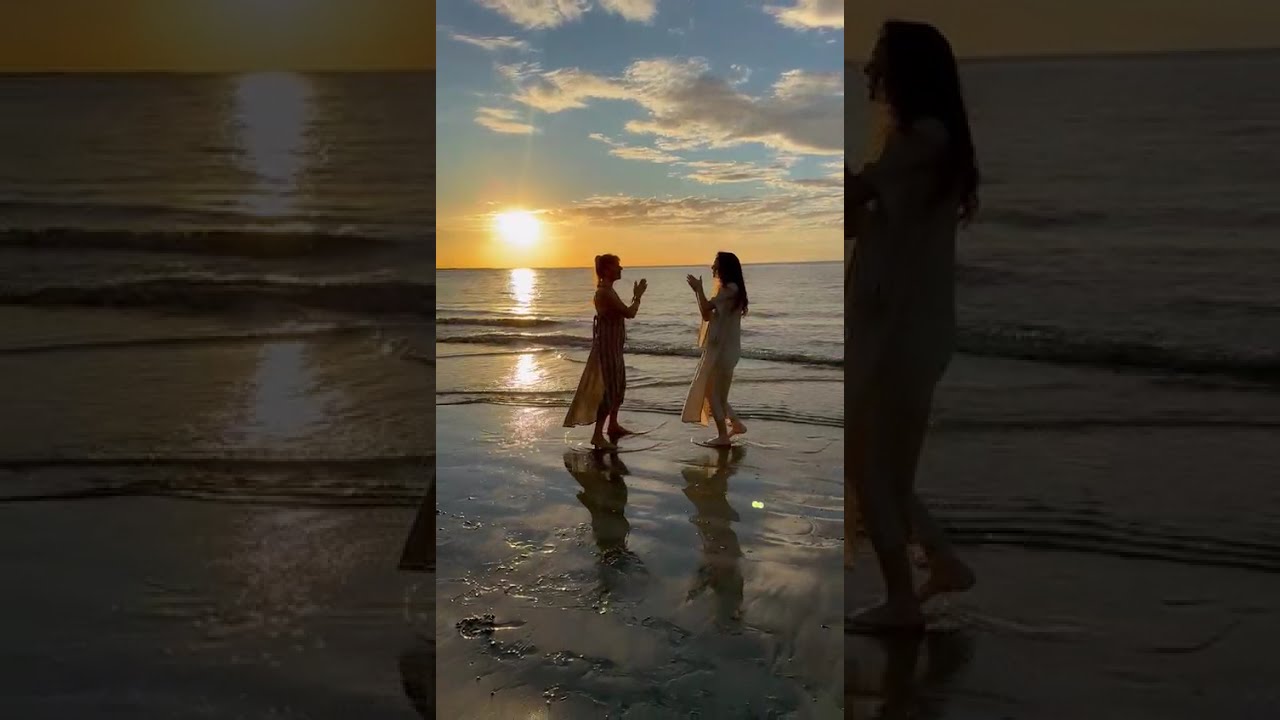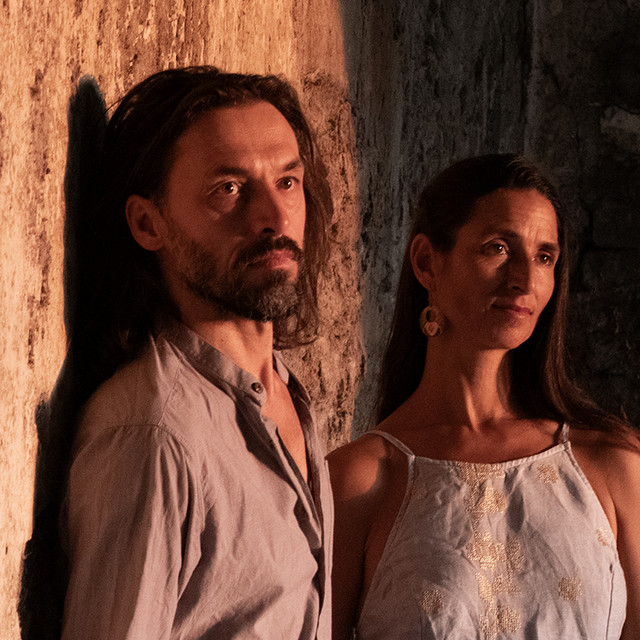
Mirabai Ceiba, the collaborative ensemble of Angelika Baumbach, Markus Sieber, and Bogdan Djukic, deliver a meditative live performance of "Agua de Luna" (Moon Water)—the title track from their 2019 album of the same name—at Union Chapel in London. The performance showcases the group's signature blend of devotional vocals, traditional South American instruments (harp and ronroco), and contemporary acoustic arrangements, creating an intimate sonic experience within a historic sacred venue. This recording documents a moment of collective musical practice centered on spiritual listening and sound healing.
Who Is Mirabai Ceiba and What Do They Create?
Mirabai Ceiba is not a soloist but a collaborative ensemble rooted in the practice of devotional music and world spiritual traditions. The core ensemble consists of Angelika Baumbach on vocals and harp, Markus Sieber on ronroco and vocals, and Bogdan Djukic on guitar and vocals. The group's name references both the Hindu saint-poet Mirabai—known for devotional ecstatic singing—and the ceiba tree, a sacred plant in Amazonian indigenous cosmology, signaling the ensemble's commitment to blending contemplative spiritual practice with ecological consciousness and cross-cultural musical language.
Rather than performing pop music with spiritual themes, Mirabai Ceiba creates intentional sound experiences designed to invite deeper listening and meditative presence. Their work draws from kirtan traditions (Hindu devotional call-and-response singing), South American indigenous music practices, and Western contemporary composition. The result is neither world music fusion nor new-age background music, but rather a sophisticated approach to using sound as a vehicle for inner work and collective resonance.
What Is the Agua de Luna Album and Its Context?
"Agua de Luna" translates literally as "moon water"—a poetic title that suggests both the reflective, receptive quality of water under moonlight and the feminine, yin energy associated with lunar consciousness in many contemplative traditions. Released in 2019, the album marks a significant artistic statement from Mirabai Ceiba, consolidating years of live performance practice into a carefully crafted studio and live recording document.
The album's creation involved collaboration with audio engineer Zsolt Bognar and mixing/mastering by Markus Sieber, ensuring that the subtle dynamics of acoustic instruments—particularly the harp and ronroco—are rendered with clarity and depth. The production choices prioritize the integrity of the original performances and instruments rather than layering in electronic production, keeping the listener's attention on the quality of collective musical presence and the voice as a primary instrument of transmission.
Why Perform in a Sacred Space Like Union Chapel?
Union Chapel, located in the Islington neighborhood of London, is a historic independent chapel built in 1877 with strong roots in social justice and radical theology. Its acoustics, architecture, and spiritual residue make it an ideal venue for devotional music performance—the space itself becomes part of the sonic experience. By choosing to record this performance in such a space, Mirabai Ceiba acknowledges that devotional music is not simply entertainment or even therapy, but a practice of resonance with particular places and their histories.
Sacred space amplifies and contains the intention of musical practice. The chapel's wooden interior, high ceilings, and spiritual history create natural reverb and a palpable sense of containment that invites both performers and listeners into a more concentrated state of presence. This is not incidental to the music—it is integral to its function.
Understanding the Instruments: Harp, Ronroco, and Guitar
Mirabai Ceiba's instrumental palette is deliberately chosen to carry specific frequencies and cultural resonances. The harp, played by Angelika Baumbach, is one of humanity's oldest stringed instruments and carries associations with healing, celestial music, and the activation of subtle energy channels. In the context of devotional music, the harp's ability to produce harmonic overtones makes it particularly suited to inducing meditative states and facilitating inner listening.
The ronroco is a smaller relative of the charango (a traditional Andean stringed instrument made historically from armadillo shells). With its bright, percussive tone and its deep roots in South American indigenous and mestizo music traditions, the ronroco grounds the ensemble's work in a specific geographic and cultural lineage while also serving as a bridge between Western and non-Western musical forms. Markus Sieber's mastery of the ronroco allows it to function both rhythmically and melodically within the ensemble texture.
The guitar, in Bogdan Djukic's hands, provides harmonic support and rhythmic foundation while maintaining transparency—the guitarist's role is to enable rather than dominate, allowing space for vocal and harp-based melodic content to emerge clearly. All three musicians also sing, making the voice the true through-line of the ensemble's work.
The Role of Vocal Presence in Devotional Music
In traditions ranging from Indian kirtan to Sufi qawwali to Gregorian chant, the human voice carries spiritual intention and becomes a vehicle for transformation. Mirabai Ceiba's approach to vocals emphasizes clarity, presence, and emotional authenticity rather than technical virtuosity for its own sake. Both Angelika Baumbach and Markus Sieber sing with directness and vulnerability, inviting listeners into the emotional and spiritual texture of the song rather than dazzling them with technique.
The call-and-response structure common in devotional traditions is evident in Mirabai Ceiba's approach: one voice sings a phrase, another responds or harmonizes, creating a dialogue that mirrors the structure of conversation with the divine or with one's deepest self. This is not performance in the sense of entertainment transmission—it is practice in the sense of spiritual discipline and collective work.
How Does Live Recording Differ From Studio Recording?
The Union Chapel performance captures something essential about Mirabai Ceiba's work that studio recording alone cannot convey: the energy of a gathered space, the responsiveness of musicians to a live audience, and the particular acoustic signature of a specific room on a specific date. Live recording in a sacred space also documents the moment of practice itself—the musicians are not polishing a product for distant consumption but offering their presence to those who have chosen to gather.
The presence of an audience, even a quiet and receptive one, changes the energetic field of performance. Musicians become more attuned to subtlety, more careful with their intention, more aware of the responsibility to hold space for collective listening. The recording preserves this quality of attentiveness.
Where to Go From Here
If this performance resonates with you, explore Mirabai Ceiba's full Agua de Luna album through their official channels and on major streaming platforms. The band maintains an active touring schedule—visit mirabaiceiba.com for current dates and locations. If you're interested in the deeper roots of devotional vocal practice, investigate kirtan traditions, the teachings of Mirabai (the historical saint-poet), and the contemporary revival of these practices in conscious communities worldwide. For those drawn to the acoustic instrumentation, explore the individual musicians' backgrounds: Angelika Baumbach's harp work, Markus Sieber's ronroco mastery, and Bogdan Djukic's guitar contributions each merit deeper investigation. Consider seeking out live performances of devotional music in your own region—the practice of gathered listening remains one of humanity's most direct pathways to altered consciousness and collective healing.