EveryEvent Seattle

Sfoglia tutti i Events

Find every event in Seattle

events

Concerts & Live Music
Festivals
Sports & Recreation
Food & Drink
Arts & Culture
Community
Family & Kids
Nightlife
Comedy
Theater
Destinazioni popolari
BaliSedonaLos AngelesCosta RicaNew YorkSan FranciscoAustinMiamiJoshua TreeTulum
Vedi tutte le categorieVedi tutte le destinazioni

Esplora tutte le funzionalità

Strumenti potenti per far crescere i tuoi eventi

Funzionalità della piattaforma

Prezzi dinamici intelligenti
Categorie di biglietti
Posti assegnati
Recupero carrelli abbandonati
Recupero visitatori
Donazioni e prezzi variabili
Sistema affiliati
Scanner biglietti
Codici sconto
Domande personalizzate
Condivisione biglietti
Upsell e componenti aggiuntivi
Analisi e report
Sequenze email
Lista d'attesa / Notifica / Promemoria
Esplora
Discovery HubArtists & PerformersVenuesKnowledge Base
Vedi tutte le funzionalitàChi siamo
PrezziBlog
Language
Saved events
Sfoglia tutti gli eventi

events

Concerts & Live MusicFestivalsSports & RecreationFood & DrinkArts & CultureCommunityFamily & KidsNightlife

Destinazioni popolari

BaliSedonaLos AngelesCosta RicaNew YorkSan Francisco

Esplora

Discovery HubArtists & PerformersVenuesKnowledge Base

Funzionalità della piattaforma

Prezzi dinamici intelligentiCategorie di bigliettiPosti assegnatiRecupero carrelli abbandonatiRecupero visitatoriDonazioni e prezzi variabiliSistema affiliatiScanner bigliettiCodici scontoDomande personalizzateCondivisione bigliettiUpsell e componenti aggiuntiviAnalisi e reportSequenze emailLista d'attesa / Notifica / Promemoria
Vedi tutte le funzionalitàChi siamo
PrezziBlog
AccediRegistratiOrganizzatori di eventi
  • Browse All Events
  • Concerts & Live Music
  • Festivals
  • Sports & Recreation
  • Food & Drink
  • Arts & Culture
  • Community
  • Family & Kids
  • Nightlife
  • Tutte le categorie →
  • Portland
  • Vancouver, BC
  • San Juan Islands
  • Olympic Peninsula
  • Leavenworth
  • All Destinations →
  • For Promoters
  • For Artists
  • For Venues
  • For Festivals
  • For Event Spaces
  • For Nonprofits
  • For Bloggers
  • For Speakers
  • Brand Ambassador
  • Case Studies
  • Rete di 350K+ acquirenti
  • Recupero carrelli abbandonati
  • Prezzi dinamici intelligenti
  • Categorie di biglietti
  • Eventi ricorrenti
  • Posti assegnati
  • Sistema affiliati
  • Lista d'attesa / Notifica
  • Scanner biglietti
  • Widget incorporabile
  • Distribuzione eventi
  • Centro messaggi
  • Integrazioni
  • Report
  • Tutte le funzionalità →
  • Chi siamo
  • L’ecosistema
  • Blog
  • Glossario
  • Ispirazione
  • Centro assistenza
  • Contatti
  • Documentazione API
  • Risorse del brand
  • Carriere
  • Stampa
  • Termini di servizio
  • Informativa sulla privacy

Events

  • Browse All Events
  • Concerts & Live Music
  • Festivals
  • Sports & Recreation
  • Food & Drink
  • Arts & Culture
  • Community
  • Family & Kids
  • Nightlife
  • Tutte le categorie →

Getaways

  • Portland
  • Vancouver, BC
  • San Juan Islands
  • Olympic Peninsula
  • Leavenworth
  • All Destinations →

For Organizers

  • For Promoters
  • For Artists
  • For Venues
  • For Festivals
  • For Event Spaces
  • For Nonprofits
  • For Bloggers
  • For Speakers
  • Brand Ambassador
  • Case Studies

Funzionalità

  • Rete di 350K+ acquirenti
  • Recupero carrelli abbandonati
  • Prezzi dinamici intelligenti
  • Categorie di biglietti
  • Eventi ricorrenti
  • Posti assegnati
  • Sistema affiliati
  • Lista d'attesa / Notifica
  • Scanner biglietti
  • Widget incorporabile
  • Distribuzione eventi
  • Centro messaggi
  • Integrazioni
  • Report
  • Tutte le funzionalità →

Azienda

  • Chi siamo
  • L’ecosistema
  • Blog
  • Glossario
  • Ispirazione
  • Centro assistenza
  • Contatti
  • Documentazione API
  • Risorse del brand
  • Carriere
  • Stampa
  • Termini di servizio
  • Informativa sulla privacy
EveryEvent
© 2026 EveryEvent Seattle. Tutti i diritti riservati.
Inspiration

What is God? A MindfulnessApproach to the Divine

Thich Nhat Hanh
Thich Nhat Hanh
Jan 18, 2015
9 min di lettura
Guarda · 7

Thich Nhat Hanh answers the perennial question "What is God?" not through theology but through lived experience. God, he teaches, is not an abstract idea but everything—present in every breath, step, and moment of awareness. By cultivating mindfulness, concentration, and insight, we directly encounter the divine within the "kingdom of God" where we already dwell. This teaching removes God from the domain of belief and places it squarely in the realm of direct perception and embodied practice.

Lettura · 9 sezioni

Is God an idea or something real?

Thich Nhat Hanh begins by rejecting a common misconception: that God is primarily a concept or doctrine to be believed in. "God is not an idea or a notion," he says plainly. "God is very real." This distinction matters profoundly. If God were merely an idea, it could be debated, doubted, or intellectualized away. But Thich Nhat Hanh locates God in the realm of direct experience—something that can be encountered, touched, and known through presence rather than thought.

The teaching hinges on a radical reframing: you do not need to believe in God to encounter God. You need instead the three energies of meditation practice: mindfulness, concentration, and insight. When these three qualities are present in your being, "surely you can get in touch with God." This shifts the conversation from faith-based belief to practice-based realization. The divine becomes accessible not through doctrine but through the quality of your attention.

How does mindful breathing connect you to the divine?

Thich Nhat Hanh offers a deceptively simple gateway: conscious breathing. "When you stop thinking, when you breathe in mindfully and enjoy breathing in, you already get in touch with the God." The phrase "enjoy breathing in" is key—he is not describing grim or effortful practice but genuine delight in the simple fact of being alive.

He walks through the experience with specificity. As you breathe in consciously, several recognitions unfold in sequence: "I know that I'm alive, and to be alive is a wonderful thing." The body and mind reveal themselves as wonderful. Then perception expands: "I can get in touch with the sunshine, with the hills, with the sunflowers, with the water running from the water tap." Each element becomes vivid, real, and part of the singular reality he calls God.

This is not metaphor. Thich Nhat Hanh is describing an actual phenomenological shift that occurs when attention becomes concentrated and the mind settles into direct perception. The "wonders of life" he references—sunshine, water, breath itself—are not symbols of the divine; they are the divine becoming visible to consciousness.

What role does walking meditation play in realizing God?

Walking meditation extends the principle of breath work into movement and time. "When I do walking meditation, I recognize that the path leading uphill through the wood is filled of wonders." Each element of the natural world—grass, tiny flowers, insects, sunshine—becomes visible as wonder. "Everything is a wonder," he repeats, emphasizing that this is not a poetic exaggeration but a description of what mindful perception reveals.

More strikingly, he catalogs specific objects: "A pebble, a leaf, a flower, a butterfly. Everything is a wonder, and I can see God in everything." The teaching moves from abstract theology to the concrete sensory world. You can see God in a pebble, in dust, in another person. This means the divine is not confined to temples, prayers, or special moments—it is immanent, present in the grain of wood and the movement of an insect.

Walking meditation becomes a practice of encountering the kingdom of God with each step. "If you do walking meditation correctly, you see that you are walking in the kingdom of God, and if the kingdom is there, God is there also." The logic is simple: if the kingdom of God pervades all things, then God is accessible in every moment of attentive movement.

What does it mean that we are already in the kingdom of God?

This is perhaps Thich Nhat Hanh's most liberating claim. "We are really in the kingdom of God," he states. This is not a future reward or a distant realm to aspire toward. It is the actual condition of present reality. The kingdom is not something we must earn or achieve—we already inhabit it. What we lack is not the kingdom but the awareness to perceive it.

"Your body belongs to the kingdom of God. Your mind also. That flower, that stream of water, that tree—they all belong to the kingdom of God." The boundary between sacred and ordinary dissolves. A tree is not merely in the world; it belongs to God's kingdom. Your body is not separate from the divine; it is part of the kingdom's fabric.

This teaching has practical implications. If we are already in the kingdom, the spiritual task is not to achieve something distant but to wake up to what is already true. The practices of mindfulness, concentration, and insight are therefore not ways to create connection to God but ways to remove the veils—anger, fear, jealousy—that prevent us from perceiving our actual condition.

How does anger, fear, and jealousy block our connection to God?

Thich Nhat Hanh identifies a critical obstacle: emotional reactivity closes the door to God-realization. "If we are caught in our anger, in our fear, in our jealousy, we cannot get in touch with the kingdom of God." These emotional states are not sins to be punished; they are forms of ignorance. When the mind is contracted around fear or jealousy, its capacity for expansive, inclusive awareness diminishes. You cannot see the wonder in a pebble when your mind is consumed by resentment.

This explains why he identifies violence and suffering as symptoms of spiritual disconnection rather than moral failures. Those who harm others "suffer because they have not been able to get in touch with God." The teaching is not judgmental but diagnostic. Someone caught in violent action has lost touch with the underlying reality of interconnection and wonder. They see others as separate, threatening, or deserving of harm because they cannot perceive God in them.

The remedy is not punishment but renewed practice: "If they practice mindfulness, concentration and insight, they have a chance to realize they are in the kingdom of God." The path back to peace is always available—through the cultivation of the three energies that open perception.

What does it mean to see God in other people?

One of Thich Nhat Hanh's most transformative teachings follows directly: "You can see God in the other fellow, and if you see God like that, you are a happy person. You do not want to do any harm to yourself and you do not want to do any harm to the other people." This is not sentimental idealism. When you perceive the divine presence in another being, harming them becomes impossible—not because of moral rules but because the reality of interconnection becomes undeniable to you.

He specifies: even if another person is violent or suffering, the capacity to see God in them remains. This is radically different from condoning harm. It is the capacity to see through the suffering, the violence, the contraction to the deeper reality that person too inhabits. It is also an implicit teaching on compassion: if someone causes harm, they are demonstrating that they have lost touch with God. The response is not retribution but compassion directed at their spiritual blindness.

What practices help us get in touch with God in daily life?

Thich Nhat Hanh does not leave the teaching as abstraction. "In Plum Village you'll learn to walk in such a way, to sit in such a way, to eat in such a way, to take a shower in such a way that we can get in touch with the wonders of life that belong to the kingdom of God." The divine is encountered not only in meditation posture but in the ordinary rhythms of daily life.

This list—walking, sitting, eating, bathing—covers the basic movements of human existence. Each can become a doorway to God-consciousness if performed with full mindfulness and presence. Eating mindfully, you taste the miracle of nourishment. Showering mindfully, you feel water and temperature with direct awareness. These are not special practices reserved for retreats but ways of being that can be integrated into any life.

The teaching suggests that "wasting" life means living it on autopilot, caught in thought, unmindful of the kingdom in which we move. Learning to perform ordinary actions consciously is therefore a form of spiritual rescue—it recovers life from distraction and returns it to its fundamental aliveness.

How does this teaching expand beyond organized religion?

Thich Nhat Hanh's answer to "What is God?" is inclusive without being vague. He does not say "God means different things to different people" in a way that renders the concept meaningless. Instead, he points to a direct, shareable reality that transcends doctrinal boundaries. A Christian, a Buddhist, a person with no religious affiliation—all can step outside and feel the sun, breathe consciously, and encounter the wonder that Thich Nhat Hanh calls God.

This approach dissolves the conflict between religious and secular perspectives. It is not that God is metaphorical or that science renders the divine unnecessary. Rather, the divine is the web of interconnection, beauty, and presence that science also studies but that can only be fully known through the gateway of embodied awareness.

Where to go from here

The practical response to this teaching is to begin where Thich Nhat Hanh suggests: with the breath. Take a single conscious breath. Notice the aliveness it brings. Then expand: observe one object—a leaf, a stone, water—with full attention until its wonder becomes apparent. Notice the effect on your sense of connection and peace. If you see a person today, pause for a moment and ask yourself: can I perceive the divine in them? Not as a belief but as an invitation to deeper seeing. The kingdom of God is not somewhere else. You are walking in it now. The question is only whether you are awake to it.

Transcript

[0:00] (half bell)

[0:05] (Bell)

[0:24] (French)

[0:30] What is God?

[0:43] Difficult question

[0:45] (Laughter)

[0:46] but I will try

[0:52] I think that God is everything

[0:56] God is everything

[0:59] and...

[1:02] certainly God is not an idea

[1:07] or a notion

[1:09] God is very real

[1:12] and you can get in touch with God

[1:15] if you are mindful, concentrated and insightful

[1:22] when you come to Plum Village

[1:25] as a practitioner of meditation

[1:30] you cultivate the energy of mindfulness

[1:33] concentration and insight

[1:38] and if you have these 3 energies

[1:42] surely you can get in touch with God

[1:47] right in Plum Village

[1:49] when you go home you continue to get in touch with the God

[1:57] You know that when you... when you stop thinking,

[2:02] when you breathe in mindfully & enjoy breathing in

[2:09] you already get in touch with the God

[2:15] but when you breathe in like that you enjoy breathing in

[2:20] and you find out that breathing in is wonderful

[2:28] As I breathe in, I know that I'm alive

[2:36] and to be alive is a wonderful thing

[2:47] and as I breathe in I become very alive

[2:51] I see my body and my mind are wonderful

[2:57] and I can get in touch with the sunshine

[3:01] with the hills, with the sunflowers

[3:08] with the water running from the water tap

[3:15] and there's so many wonders of life in me and around me

[3:24] and when I do walking meditation

[3:29] I recognize that the path

[3:37] leading uphill through the wood is filled of wonders

[3:44] the grass, the tiny flowers, the insect, the sunshine. Everything...

[3:51] is a wonder

[3:56] a pebble, a leaf, a flower, a butterfly. Everything is a wonder

[4:03] and I can see God in everything

[4:08] you can see God in a pebble

[4:11] In a piece of dust

[4:14] in a butterfly

[4:16] in a sunflower

[4:23] you can see God in the other fellow

[4:29] and if you see God like that

[4:32] you are a happy person

[4:35] you do not want to do any harm to yourself

[4:38] and you do not want to do any harm to the other people

[4:44] even if they are violent even if they suffer

[4:49] they suffer because they have not been able to in touch with God

[4:56] but if they practice mindfulness, concentration and insight

[5:01] If they are mindful, concentrated, and insightful

[5:06] they have a chance to...

[5:10] to realize they are in the kingdom of God

[5:17] we are really in the kingdom of God

[5:20] and when we do walking meditation

[5:22] you walk in the kingdom of God

[5:28] if you do walking meditation correctly

[5:33] you see that you are walking in the kingdom of God

[5:37] and if the kingdom is there God is there also

[5:42] so you can get in touch with God and the kingdom of God

[5:45] with every breath and every step

[5:47] and that is what I do during walking meditation

[5:51] there're monks, nuns and lay practitioners who able to do so enjoy the kingdom of God

[5:58] it means to enjoy God

[6:00] so to me God is not an abstract idea

[6:04] but...

[6:08] something very real

[6:10] that you can encounter in every moment of your daily life

[6:16] your body belong to the kingdom of God

[6:19] your mind also

[6:21] that flower, that stream of water, that tree

[6:24] they're all belong to the kingdom of God

[6:27] and it's too bad

[6:29] if we are caught in our anger

[6:31] in our fear

[6:33] in our jealousy

[6:35] that we cannot get in touch with the kingdom of God

[6:44] and if we don't know how to

[6:48] get in touch with the kingdom of God and with God

[6:52] and then our life will...

[6:57] we will waste our life

[7:02] so in Plum Village you'll learn

[7:06] to walk in such a way

[7:07] to sit in such a way

[7:08] to eat in such a way

[7:11] to take a shower in such a way

[7:13] that we can get in touch with the wonders of life

[7:18] that belong to the kingdom of God

[7:19] and I will tell you

[7:21] everything

[7:22] belong to the kingdom of God

[7:23] including this lotus flower

[7:25] including this little boy

[7:31] we should continue to learn in order to understand this more deeply

[7:41] thank you

[7:48] (Bell)

[8:23] Subtitles by the Amara.org community

Thich Nhat Hanh
AutoreThich Nhat Hanh

Vietnamese Zen master, poet, and peace activist. Founded Plum Village in France and was central to the engaged Buddhism movement. His teachings on mindfulness, interbeing, and walk…

Vedi il profiloSito web
Esplora i temi
God-consciousnessMindfulness-practiceDivine-realityPresent-moment-awarenessWalking-meditation

Hai domande?

Domande frequenti

By cultivating mindfulness, concentration, and insight. Through practices like mindful breathing and walking meditation, you can directly encounter the divine—not as an abstract idea but as the real presence present in every moment. When you stop thinking and breathe consciously, you already access this connection.
The kingdom of God is your present reality, not a distant reward. Everything—your body, mind, trees, water, flowers—already belongs to the kingdom. The spiritual task is to wake up to what is already true through mindful awareness rather than to achieve something distant.
Yes. Thich Nhat Hanh teaches that you can perceive the divine in a pebble, a piece of dust, a butterfly, a sunflower, and any other element of nature or daily life. Through mindful attention, every object reveals itself as a wonder and a manifestation of God.
When you perceive the divine presence in another person, you naturally stop wanting to harm them. This is not rule-based morality but a direct recognition of interconnection. Even violent or suffering people contain the divine; their harm comes from losing touch with God-consciousness, not from being fundamentally different.
Anger, fear, and jealousy contract the mind and prevent you from perceiving the wonders around you. When caught in these emotional states, you cannot access the expanded awareness needed to recognize God in everything. The remedy is the practice of mindfulness, concentration, and insight.
Yes. Thich Nhat Hanh teaches that you can get in touch with the kingdom of God by performing any ordinary action—walking, sitting, eating, bathing—with full mindful awareness. Each daily activity becomes a doorway to the divine when done consciously.
No. His teaching points to a direct, shareable reality accessible to anyone regardless of religious background. A Christian, atheist, or Buddhist can all experience the wonder he describes by simply being present and attentive to breath, nature, and the present moment.

Continua a leggere

More from Thich

Vedi Tutto
Liberation Through Grief and Self-Worth in Buddhist Practice
Featured

Liberation Through Grief and Self-Worth in Buddhist Practice

Br. Phap Huu explores how recognizing our inherent goodness and learning to grieve openly within community liberates us from suffering and s…

1 min read
Living Gems Archive: Preserving Thích Nhất Hạnh's Dharma for the World
Featured

Living Gems Archive: Preserving Thích Nhất Hạnh's Dharma for the World

Living Gems is a searchable digital archive of Thích Nhất Hạnh's teachings, built by Plum Village to preserve and share the dharma globally …

1 min read
God Beyond the Sky: Rethinking Divine Nature
Featured

God Beyond the Sky: Rethinking Divine Nature

God is not an external judge deciding human suffering. Suffering itself becomes the mechanism through which consciousness awakens to itself.…

1 min read
Meditation Without Effort: Allow Rather Than Force
Featured

Meditation Without Effort: Allow Rather Than Force

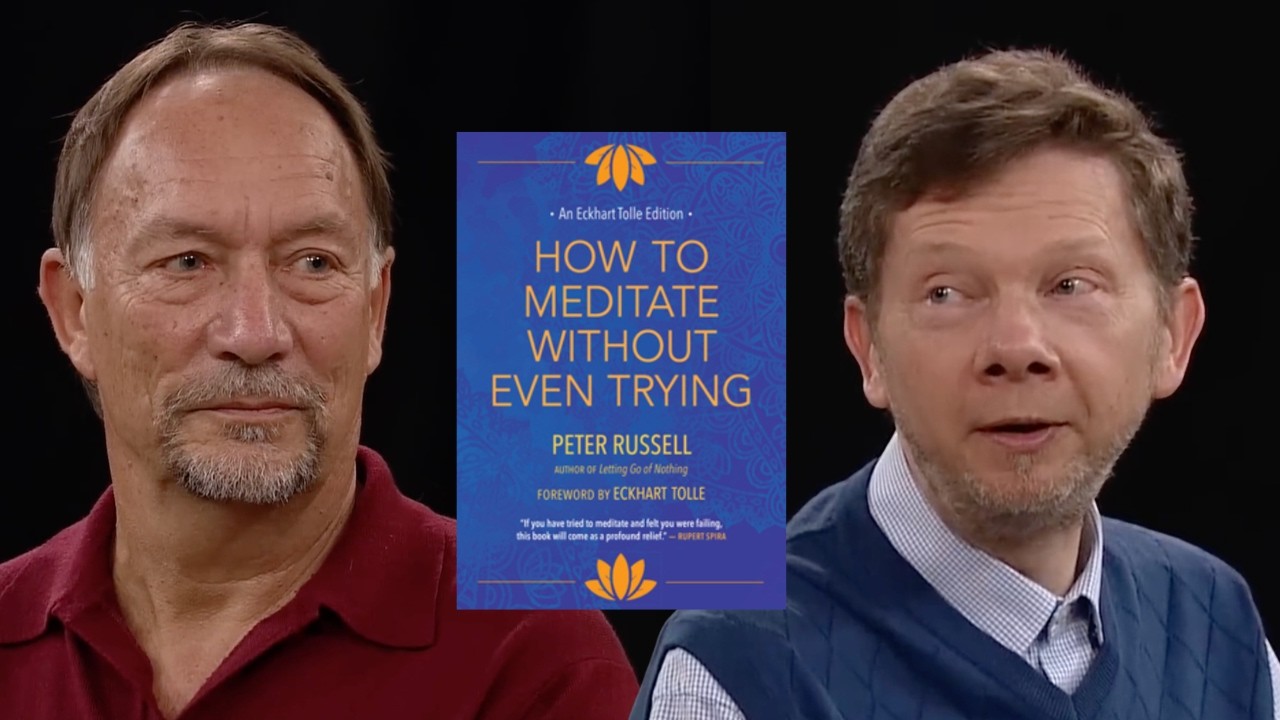
Eckhart Tolle and Peter Russell explore how releasing effort and embracing allowing transforms meditation from a struggle into a natural, pr…

1 min read

Continua a esplorare

Continua il tuo viaggio

Altra saggezza e altri incontri da tutta la directory BrightStar.

Altri articoli

Sfoglia l’intera raccolta di insegnamenti, interviste e guide.

Torna a tutti gli articoli →

Insegnanti e artisti

Esplora i lignaggi, i musicisti e le guide del mondo consapevole.

Esplora gli artisti →

Trova un evento

Kirtan, ritiri, sound bath, breathwork, festival: in arrivo presto.

Sfoglia gli eventi →