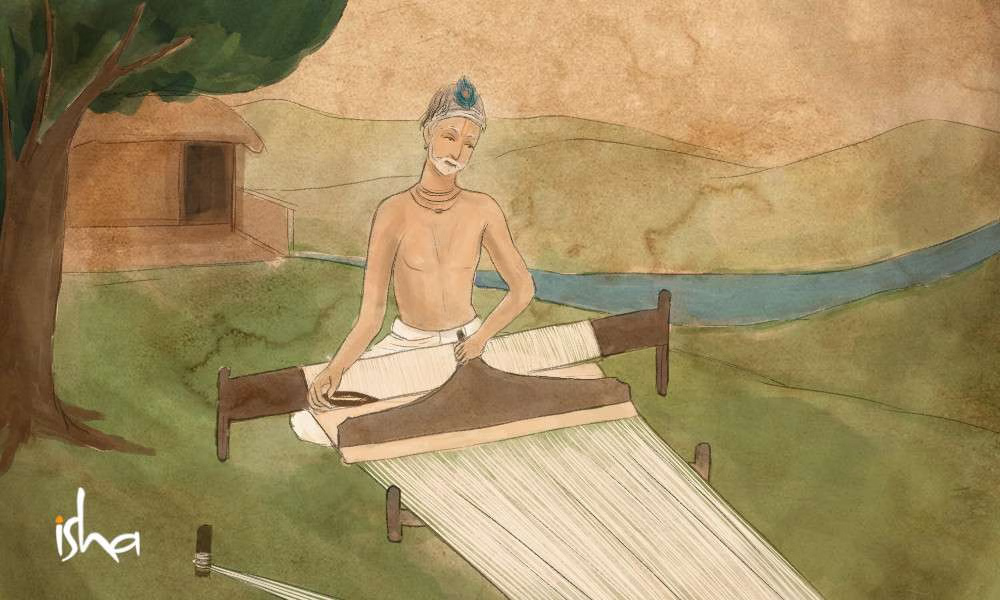
The Impermanence of the Instrument: A Reflection on Kabir's Wisdom
In the poignant words of Kabir, "If the strings snap and the keys slacken, then to dust must this instrument of dust return," we are reminded of the transient nature of our existence. This quote encapsulates the essence of impermanence, urging us to confront the reality that our physical forms and worldly attachments are fleeting. The imagery of an instrument, once vibrant and resonant, now reduced to dust, serves as a powerful metaphor for the human condition. Understanding this truth is essential, as it invites us to cultivate a deeper appreciation for life while we have it.
As we delve into Kabir's wisdom, we find that this reflection on impermanence is not merely a lament but a call to embrace the present moment. The inevitability of decay and dissolution is a universal truth that transcends cultural and temporal boundaries. Kabir, through his profound insights, encourages us to recognize the beauty in our ephemeral existence, urging us to seek a deeper connection with the divine that lies beyond the material. This exploration of the relationship between the body and the spirit invites us to ponder our own lives and the legacies we leave behind.
The image / the metaphor
The imagery in Kabir's quote is rich and evocative, painting a vivid picture of an instrument that has lost its vitality. The "strings" and "keys" symbolize the various aspects of our lives—our emotions, relationships, and experiences—that once vibrated with energy and purpose. The verbs "snap" and "slacken" convey a sense of decline and deterioration, suggesting that the very essence of our being can fade away. This imagery evokes a felt sense of loss, prompting us to reflect on the fragility of our existence and the inevitability of our return to dust.
Diving deeper into the metaphor, we can see that the instrument represents not just the physical body but also the mind and spirit. The "dust" to which we return signifies the material world, a reminder that our earthly attachments are ultimately transient. Kabir's choice of words invites us to consider the interplay between the physical and the spiritual, urging us to recognize that while our bodies may perish, the essence of who we are transcends this earthly existence. This duality encourages us to seek a deeper understanding of our true nature, one that exists beyond the limitations of the material world.
In the speaker's tradition
Kabir's teachings are deeply rooted in the bhakti tradition, which emphasizes devotion and love for the divine. Central to this tradition is the concept of *fana*, or the annihilation of the self, which aligns closely with the idea of impermanence. Just as the instrument must return to dust, so too must the ego dissolve in the presence of the divine. This dissolution allows for a deeper connection with the ultimate reality, fostering a sense of unity with all beings. Kabir's wisdom encourages us to embrace this process, recognizing that true liberation lies in surrendering our attachments to the material world.
In the context of bhakti literature, we can draw parallels to the *Bhagavad Gita*, where the impermanence of the body is discussed in relation to the eternal soul. In Chapter 2, Verse 20, Krishna explains that the soul is neither born nor does it die; it is eternal and unchanging. This perspective resonates with Kabir's message, inviting us to look beyond the physical realm and understand our true nature as spiritual beings. By acknowledging the impermanence of the body, we can cultivate a deeper sense of devotion and connection to the divine, ultimately leading us to a more profound understanding of our existence.
Living the teaching
Consider a modern scenario where this teaching resonates: a loved one facing a terminal illness. In the face of impending loss, the fragility of life becomes starkly apparent. This situation compels us to confront our own mortality and the impermanence of our relationships. By embracing Kabir's wisdom, we can approach this difficult time with a sense of acceptance, recognizing that while the physical body may fade, the love and memories shared transcend the limitations of time. This understanding allows us to cherish each moment, fostering deeper connections and a greater appreciation for the time we have together.
Another application of this teaching can be found in the realm of personal aspirations and achievements. In a society that often equates success with material gain, we may find ourselves caught in a relentless pursuit of goals that ultimately hold little lasting significance. Kabir's reminder of our return to dust invites us to reassess our priorities, encouraging us to seek fulfillment in experiences and relationships rather than transient accomplishments. By grounding ourselves in the present and recognizing the impermanence of our pursuits, we can cultivate a more meaningful existence, one that honors the essence of our being and the interconnectedness of all life.
A reflection
As we contemplate Kabir's profound words, we are invited to reflect on our own lives and the impermanence that surrounds us. What attachments or pursuits are we clinging to that may ultimately lead us away from a deeper understanding of our true selves? In recognizing the transient nature of our existence, how can we cultivate a greater sense of presence and appreciation for the moments we share with others? These contemplative questions encourage us to engage with the essence of Kabir's teaching, guiding us toward a more profound connection with both ourselves and the divine.



Join the BrightStar Community
Stay connected with daily inspiration, event announcements, and community wisdom