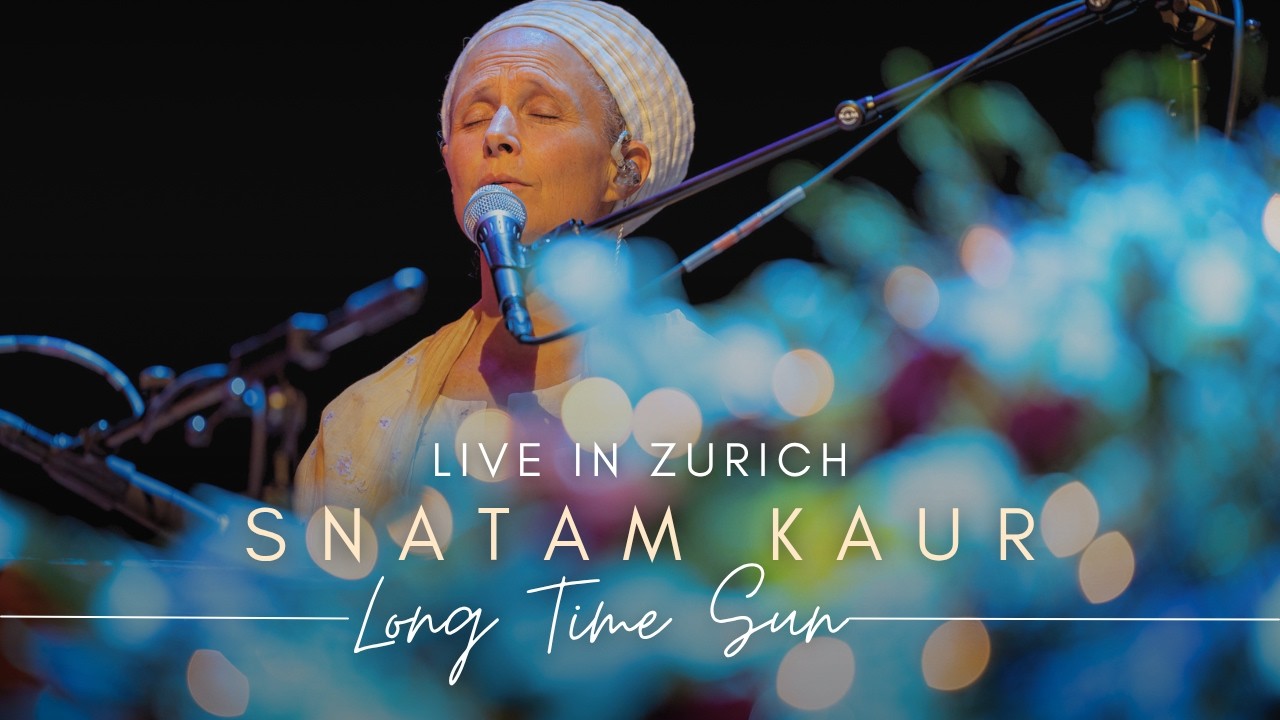
In this live Barcelona performance, Snatam Kaur performs "Caminando Hacia La Luz" (Walking Into the Light), a guitar-rich folk dance song from her album Heartflow that invites listeners to embrace change, find courage in the unknown, and align with the natural flow of their journey. The song is followed by a prayer for peace, light, and love for all beings. Rooted in the spiritual practice of kirtan and contemporary folk sensibilities, the performance demonstrates how sacred music can address universal themes of transformation and connection.
What does "Caminando Hacia La Luz" teach about embracing change?
The core message of "Caminando Hacia La Luz" centers on the courage required to move forward into unknown territory. The lyrics—translated from the English "Walkin' into the Light"—frame change not as loss or difficulty, but as a deliberate walk toward illumination. The opening verse states: "Con los pies en el suelo, oigo tu dulce sonido, caminando" (With my feet on the ground, I hear your sweet sound, walking). This grounding principle is essential: the song doesn't ask listeners to transcend reality or escape difficulty, but rather to stay rooted while remaining open to what comes next.
The chorus, repeated throughout the performance, creates a rhythmic affirmation: "Caminando hacia la luz, caminando hacia la luz" (Walking into the light, walking into the light). This repetition serves multiple functions. First, it anchors the listener in the present moment—the act of walking itself, not the destination. Second, it makes the concept accessible and singable, allowing the listener to internalize the message through their own voice and body. The guitar-rich arrangement supports this approach; the acoustic and electric guitars create a folk-music foundation that grounds the sacred content in everyday accessibility.
The second verse deepens this teaching: "Juntos de la mano, nunca más solos estamos caminando" (Hand in hand together, never alone we are walking). Here, the song shifts from individual transformation to collective movement. The insight that change is not a solitary burden but a shared human experience creates both comfort and accountability. We walk together, which means both that we are supported and that our choices affect others.
How does this song connect to the practice of kirtan?
Snatam Kaur is known for her work in kirtan—a devotional chanting and singing practice rooted in yogic and bhakti traditions—but "Caminando Hacia La Luz" represents an evolution of that practice into contemporary folk idiom. Rather than relying solely on traditional Sanskrit mantras or devotional forms, this song applies the principles of kirtan to themes of universal human experience: change, courage, connection, and light.
The call-and-response structure implicit in the song's form reflects kirtan's participatory nature. The repetitive chorus invites singing along; listeners are not passive observers but co-creators of the sound. This participatory element is crucial to Snatam Kaur's approach: music becomes a tool for collective transformation and alignment, not merely entertainment or artistic display.
The spiritual dimension is evident in the closing prayer, which follows the song: "Paz a todos, Luz a todos, Amor para todos" (Peace for all, Light for all, Love for all), followed by "Sat Naam," a mantra meaning "true name" in Punjabi. This ending situates the entire performance within a spiritual framework where the personal journey of embracing change is connected to universal wishes for the wellbeing of all beings. The prayer is not sectarian; it speaks in terms accessible to people across faith traditions while maintaining a clear devotional intention.
What role does the ensemble arrangement play in the song's message?
The live Barcelona performance features Snatam Kaur on vocals and harmonium alongside Grecco Buratto on acoustic and electric guitar, Ram Dass Khala on acoustic guitar, keyboards, and vocals, and Sukhmani Rayat on calabash and percussion. This ensemble approach mirrors the song's lyrical emphasis on walking together rather than alone.
The acoustic guitar carries much of the song's folk sensibility, creating a warm, accessible entry point for listeners unfamiliar with kirtan or spiritual music. The electric guitar adds dimension and movement, supporting the "get-on-your-feet-and-dance" quality described in the song's framing. The harmonium—traditionally associated with Indian classical music and kirtan—provides the spiritual anchor, maintaining connection to the devotional roots of the practice. The percussion and calabash ground the music in rhythm and embodied presence.
Crucially, this is not a solo performance. Snatam Kaur's voice is supported and sometimes echoed by the other vocalists. The arrangement demonstrates the principle embedded in the lyrics: we do not walk alone. Each musician holds a distinct responsibility while serving the larger whole, creating a sonic expression of interconnection and collective purpose.
How does the Spanish language deepen the song's accessibility?
The translation of "Walkin' into the Light" into Spanish as "Caminando Hacia La Luz" is more than a simple linguistic conversion. Spanish carries its own musicality and cultural resonance. The Barcelona performance—taking place in a Spanish-speaking region during May 2024—reflects Snatam Kaur's commitment to meeting communities in their language and cultural context.
The translation was created by Sumpuran Susana Gil Fernández Villarjubin Kaur specifically for this performance, indicating intentional localization rather than generic rendering. This matters because the song's message about embracing change and connecting with one's true journey becomes embedded in the listener's native language, making the teaching more direct and personal. When listeners can sing in their mother tongue, they access the words not as foreign concepts but as expressions of their own inner experience.
What does the journey metaphor reveal about spiritual practice?
The song's central image—walking into the light—works on multiple levels. Literally, it describes movement through space. Metaphorically, it suggests movement from darkness into clarity, from confusion into understanding, from isolation into connection. Spiritually, it aligns with many traditions' use of light as a symbol of enlightenment, truth, or divine presence.
But the song's particular genius lies in its refusal to romanticize this journey. It doesn't promise that walking into the light will be easy, transcendent, or transformative in a dramatic sense. Instead, it emphasizes the simple, grounded act of walking itself: "Con los pies en el suelo" (with feet on the ground). The walk happens in the material world, not in some ethereal realm. The light is not something distant to achieve but something already present, something you walk toward by moving steadily forward while staying rooted in present reality.
This teaching aligns with many contemplative traditions' emphasis on the integration of the spiritual and material, the transcendent and the everyday. You don't need to leave your body, your relationships, or your earthly life to find light. You find it by showing up fully in the life you're actually living and remaining open to what unfolds.
How does the closing prayer function as spiritual practice?
After the song concludes, Snatam Kaur offers a prayer in Spanish: "Paz a todos, Luz a todos, Amor para todos" (Peace for all, Light for all, Love for all). This prayer extends the teaching beyond the individual or community gathered to listen. It articulates a universal intention: that peace, light, and love reach all beings, not just those who hear this song or understand this language.
The prayer is followed by "Sat Naam," a Sanskrit mantra meaning "true name." This juxtaposition—Spanish prayer followed by Punjabi mantra—demonstrates the underlying principle of the entire performance: truth transcends language and cultural boundaries. Whether you call it peace, luz, or shanti; whether you locate it in Christian, Islamic, Hindu, Jewish, or secular frameworks, the reality being pointed toward is the same. The invocation of "Sat Naam" anchors this universal intention in the yogic tradition from which Snatam Kaur's practice emerges.
In the context of contemporary global spiritual practice, this closing prayer serves as an antidote to individualism. The teaching of the song—that we walk together—culminates in a concrete offering: blessing all beings with peace, light, and love. This is not passive sentimentality but active spiritual practice, extending the circle of care beyond the self and beyond national or linguistic boundaries.
What does the album Heartflow represent in Snatam Kaur's artistic evolution?
"Caminando Hacia La Luz" appears on Snatam Kaur's album Heartflow, which represents a continued integration of contemporary folk and spiritual music traditions. The album title itself—Heartflow—suggests movement and alignment with one's deepest intentions, mirroring the song's themes of embracing flow and change.
By creating an album that spans multiple languages (including Spanish) and musical genres (acoustic folk, kirtan, devotional singing), Snatam Kaur demonstrates that spiritual music need not exist in a separate category from accessible, engaging popular music. The distinction between "secular" and "sacred" music becomes less relevant when the underlying intention is transformation and connection. A folk dance song about embracing change can be as spiritually potent as a traditional mantra, provided the intention behind it is clear and the listener is invited to participate fully.
The Heartflow album, and specifically this performance and song, shows how the ancient practice of kirtan can evolve without losing its essence. The essence—call-and-response, repetition, collective singing, clear spiritual intention, and invitation to presence—remains intact while the cultural container transforms to meet contemporary listeners where they are.
Where to go from here
If this performance and song resonate with you, consider exploring Snatam Kaur's broader body of work through her online school at kirtanandkundalini.com, where she offers teachings on the intersection of kirtan, kundalini yoga, and contemporary music. Listen to the full Heartflow album to understand how "Caminando Hacia La Luz" fits within a larger artistic and spiritual vision. If you're drawn to the practice of kirtan as a tool for presence and transformation, seek out live performances in your area; the collective energy of group singing amplifies the practice's effectiveness. Finally, consider experimenting with the song's central practice yourself: the next time you face change or uncertainty, notice the difference between resistance and simply walking forward with feet on the ground, open to what emerges. The teaching is not intellectual but embodied—something to live into rather than merely understand.