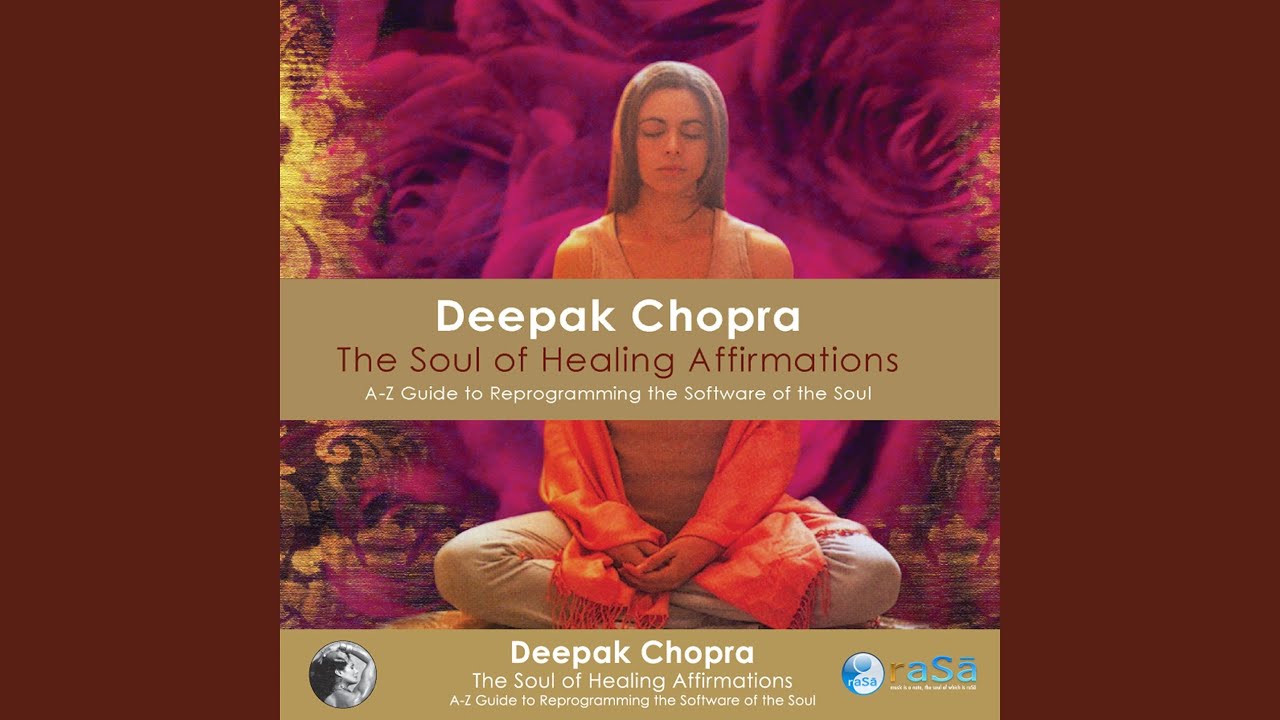
Deepak Chopra's "Lady of Silence—In Love With You" invites listeners into a meditation on the relationship between silence and love. The piece explores how spiritual presence, stripped of words and conceptual thought, allows for direct communion with the divine and deepens human connection. Rather than silence as absence, Chopra presents it as a fertile ground where authentic love and consciousness can emerge.
What Is the Relationship Between Silence and Love?
In many spiritual traditions, silence is not emptiness but fullness—a state of being so complete that words become unnecessary and even limiting. Chopra's work with this theme suggests that the deepest forms of love exist beyond language and thought. When the mind settles into silence, the usual filters and narratives that mediate relationships fall away, creating space for a more immediate, unfiltered connection with another person and with the sacred.
Love expressed through silence is not passive or cold. Rather, it is a form of presence so attentive and aware that it communicates everything without needing to say anything. This recalls the ancient notion of being "in love with" the divine—a state of devotion where the lover becomes completely absorbed in the beloved, no longer separate from what they adore. In silence, boundaries between self and other, lover and beloved, dissolve.
How Does Spiritual Stillness Deepen Presence?
Chopra's spiritual teaching emphasizes that consciousness itself is the ground of all being. When the mind becomes still—not forced or suppressed, but naturally settling into its own nature—awareness becomes sharper and more refined. This sharpened awareness is what allows genuine presence to emerge. Presence is not thinking about another person; it is being with them in a state of undivided attention.
In the absence of mental chatter, thought patterns, and the usual self-referential narrative, a different kind of communication becomes possible. This communication operates through resonance and attunement rather than through concepts and words. It is the language of energy, of vibration, of pure awareness recognizing itself in another form. This is why meditation and contemplative silence have been considered the pathways to intimacy in spiritual traditions across the world.
Can Silence Be a Form of Loving Expression?
In secular culture, silence can feel uncomfortable or even rejecting. Yet in the context of spiritual love, silence becomes an act of devotion. To be silent with someone—fully present, not distracted, not defending, not performing—is one of the most profound gifts one person can offer another. It says: "Your presence alone is enough. I do not need to fill this moment with words or concepts to validate it."
This quality of silence extends beyond romantic love to encompass spiritual devotion. The "Lady of Silence" in Chopra's work can be understood as the sacred feminine principle—the receptive, witnessing awareness that loves not by grasping or forcing, but by creating space and stillness in which all things can flourish. This is the love of the universe itself: unconditional, inexhaustible, and expressed most fully through presence rather than assertion.
What Does It Mean to Be "In Love With" the Divine?
Deepak Chopra's teaching draws from Bhakti yoga and devotional traditions in which the relationship between the individual soul and the cosmic consciousness is one of intimate love. To be "in love with" the divine is not metaphorical—it is to direct the deepest currents of one's being toward union with the sacred. This love is not earned or deserved; it is simply the natural response of consciousness recognizing itself.
In this state, the distinction between lover and beloved becomes irrelevant. The lover is no longer separate from what they adore. They realize that the divine is not distant or other, but the very ground of their own awareness. Silence becomes the language in which this realization is known and lived. It is not that words are forbidden; it is that in the deepest states of spiritual experience, words become inadequate to the task of expressing what is being experienced.
How Can Silence Be Integrated Into Daily Life and Relationships?
Incorporating silence into daily practice does not require retreating from the world. Chopra's approach to spirituality emphasizes that the sacred is woven into every moment of ordinary life. This means creating small pockets of silence within daily routines: sitting in stillness before beginning the day, offering full attention to someone without planning what to say next, or simply being present to the natural world without narrating it.
In relationships, silence can be practiced through deep listening—not waiting for one's turn to speak, but genuinely receiving another person's words and presence. It can also be expressed through silent prayer or meditation with loved ones, creating a shared field of awareness in which connection deepens below the level of verbal communication. Over time, such practices cultivate a baseline of stillness that informs all interactions, making them more authentic and more genuinely loving.
- Meditation as a gateway: Regular meditation trains the mind to access stillness, making silence increasingly natural and accessible throughout the day.
- Presence in listening: Offering full attention without the agenda of responding trains the nervous system to relax and connect.
- Nature as teacher: Spending time in natural settings attunes awareness to rhythms and patterns that operate beyond thought.
- Devotional practice: Prayer, mantra, or other contemplative traditions provide structured entry points into the experience of intimate connection with the sacred.
Where to Go From Here
Deepak Chopra's exploration of silence and love invites a fundamental shift in how we understand connection and spirituality. Rather than viewing silence as something to fear or fill, it becomes a doorway to deeper presence, clearer perception, and more authentic relationship with ourselves, others, and the cosmos. The "Lady of Silence" is an invitation to release the noise of ego and conditioning, and to discover the love that exists as the fundamental nature of consciousness itself. Those interested in deepening this exploration might investigate meditation practices from Vedantic or Bhakti traditions, explore Chopra's other teachings on consciousness and intuition, or engage in simple daily practices of mindfulness and attentive listening.