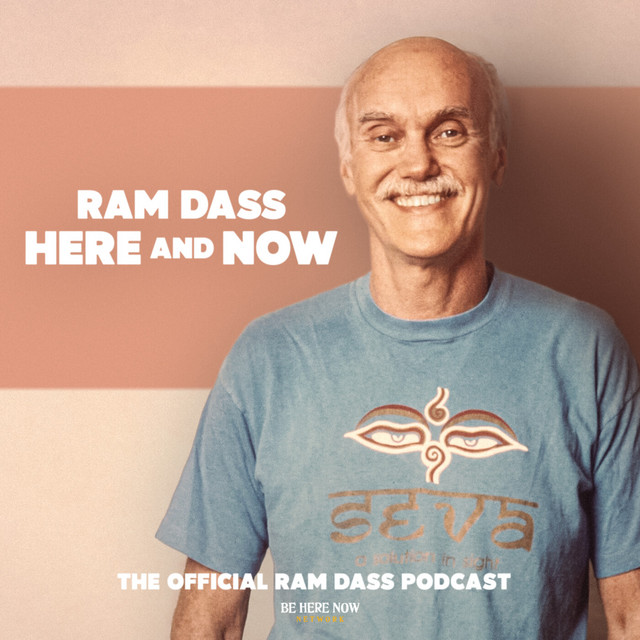
In a brief performance at Barcelona Hotel, Ram Dass covers Green Day's "Good Riddance (Time of Your Life)," using the song's lyrics as a springboard for reflection on life's turning points, the futility of questioning certain moments, and the paradoxical wisdom of accepting outcomes we cannot control. The performance distills a core spiritual teaching: not all of life's forks in the road need explanation.
What Makes a Moment a "Turning Point"?
Ram Dass performs the opening lines of Green Day's "Good Riddance": "another turning point, a fork stuck in the road." These lines, written by Billy Joe Armstrong in the 1990s, capture something that spiritual teachers have long recognized—that life presents us with moments of genuine choice and consequence. Not all moments feel weighty in the moment. Some turning points only become clear in retrospect, when we can see how a small decision branched into an entirely different life.
The song's framework treats these forks as natural features of existence, neither inherently tragic nor triumphant. Ram Dass, whose entire teaching trajectory pivoted on a single journey to India in 1967, understands this viscerally. The performance here is understated—a man with a guitar in a hotel room—but the choice to cover this particular song, at this particular time in his life, suggests an ongoing engagement with the theme of acceptance and direction.
Why We Don't Need to Ask Why
The next key moment in the performance captures the line "don't ask why, it's not a question." This lyric sits at the heart of spiritual maturity. The impulse to ask "why" is natural—we want narrative continuity, causal logic, a sense that events connect in a way that makes sense. But Green Day's songwriter, and Ram Dass in his teaching, suggest that some life events resist this kind of interrogation.
In Buddhist and Hindu philosophy, this relates to the concept of karma and acceptance of what cannot be known. We operate with incomplete information about our own past and its consequences. We cannot see all the causes that led to a particular fork in the road. The spiritual move is not to become passive or resigned, but to stop demanding that reality justify itself according to our need for explanation. Some things simply arrive. Some choices simply present themselves. The question "why" may be unanswerable precisely because it assumes a narrative logic that existence doesn't operate on.
The Paradox of "But In the End It's Right"
Ram Dass reaches the refrain: "but in the end it's right." This is not a promise that everything works out well. Rather, it suggests a deeper acceptance—that the path, once walked, becomes the only path one could have walked. This is not fatalism. It's something closer to what the Stoics called amor fati—love of fate, or the capacity to say yes to what has happened.
This teaching appears throughout Ram Dass's work. In Be Here Now, his foundational text, he emphasizes the power of accepting the present moment as it is, not as it should have been. The end of a road, once you've traveled it, has an integrity. You cannot stand at the end of your own path and say it was wrong, because that path is what made you who you are. To reject it retroactively is to reject yourself.
In the Barcelona Hotel performance, this acceptance comes through in the simplicity of the delivery. There's no grandstanding, no attempt to wring profound meaning from the song. Just a man singing words that carry weight because they name something true about how human beings experience time and choice.
A Brief Window Into Presence
The performance is only 46 seconds—a fragment, almost a throwaway. Yet it captures something essential about Ram Dass's later teaching work. He was not primarily interested in elaborate philosophical systems or abstract doctrine. He was interested in moments of genuine presence, in authenticity, in showing up as he was—a human being with limitations, humor, and a guitar, willing to engage with popular music because it spoke to real human concerns.
The casual setting—a Barcelona hotel, high school nostalgia embedded in the Green Day reference—suggests a man comfortable in the ordinary. The applause at the beginning and the trailing notes at the end frame the moment, but don't define it. What matters is the space between, where the performance itself lives.
Where to Go From Here
If this performance resonates, you might explore Ram Dass's fuller teachings on acceptance and surrender, particularly in texts like Journey of Awakening or his talks on karma and free will. Green Day's "Good Riddance" itself rewards deeper listening—it's a song about graduation, endings, and the grace of not knowing where you're headed. You might also consider where the forks in your own road have taken you, and whether you can practice saying "yes" to the path you're already on, rather than insisting it should have been different.