EveryEvent Seattle

Parcourir tous les Events

Find every event in Seattle

events

Concerts & Live Music
Festivals
Sports & Recreation
Food & Drink
Arts & Culture
Community
Family & Kids
Nightlife
Comedy
Theater
Destinations populaires
BaliSedonaLos AngelesCosta RicaNew YorkSan FranciscoAustinMiamiJoshua TreeTulum
Voir toutes les catégoriesVoir toutes les destinations

Explorer toutes les fonctionnalités

Des outils puissants pour développer tes événements

Fonctionnalités de la plateforme

Tarification dynamique intelligente
Catégories de billets
Places assignées
Récupération des paniers abandonnés
Récupération des visiteurs
Dons & Prix variables
Système d'affiliation
Scanner de billets
Codes promo
Questions personnalisées
Partage de billets
Ventes additionnelles & Options
Analyses & Rapports
Séquences d'emails
Liste d'attente / Notifier / Rappeler
Explorer
Discovery HubArtists & PerformersVenuesKnowledge Base
Voir toutes les fonctionnalitésÀ propos
TarifsBlog
Language
Saved events
Parcourir tous les événements

events

Concerts & Live MusicFestivalsSports & RecreationFood & DrinkArts & CultureCommunityFamily & KidsNightlife

Destinations populaires

BaliSedonaLos AngelesCosta RicaNew YorkSan Francisco

Explorer

Discovery HubArtists & PerformersVenuesKnowledge Base

Fonctionnalités de la plateforme

Tarification dynamique intelligenteCatégories de billetsPlaces assignéesRécupération des paniers abandonnésRécupération des visiteursDons & Prix variablesSystème d'affiliationScanner de billetsCodes promoQuestions personnaliséesPartage de billetsVentes additionnelles & OptionsAnalyses & RapportsSéquences d'emailsListe d'attente / Notifier / Rappeler
Voir toutes les fonctionnalitésÀ propos
TarifsBlog
ConnexionS'inscrireOrganisateurs d'événements
  • Browse All Events
  • Concerts & Live Music
  • Festivals
  • Sports & Recreation
  • Food & Drink
  • Arts & Culture
  • Community
  • Family & Kids
  • Nightlife
  • Toutes les catégories →
  • Portland
  • Vancouver, BC
  • San Juan Islands
  • Olympic Peninsula
  • Leavenworth
  • All Destinations →
  • For Promoters
  • For Artists
  • For Venues
  • For Festivals
  • For Event Spaces
  • For Nonprofits
  • For Bloggers
  • For Speakers
  • Brand Ambassador
  • Case Studies
  • Réseau de 350K+ acheteurs
  • Récupération des paniers abandonnés
  • Tarification dynamique intelligente
  • Catégories de billets
  • Événements récurrents
  • Places assignées
  • Système d'affiliation
  • Liste d'attente / Notifier
  • Scanner de billets
  • Widget intégrable
  • Diffusion d'événements
  • Messagerie
  • Intégrations
  • Rapports
  • Toutes les fonctionnalités →
  • À propos
  • L'écosystème
  • Blog
  • Glossaire
  • Inspiration
  • Centre d'aide
  • Contact
  • Documentation API
  • Ressources de marque
  • Carrières
  • Presse
  • Conditions d'utilisation
  • Politique de confidentialité

Events

  • Browse All Events
  • Concerts & Live Music
  • Festivals
  • Sports & Recreation
  • Food & Drink
  • Arts & Culture
  • Community
  • Family & Kids
  • Nightlife
  • Toutes les catégories →

Getaways

  • Portland
  • Vancouver, BC
  • San Juan Islands
  • Olympic Peninsula
  • Leavenworth
  • All Destinations →

For Organizers

  • For Promoters
  • For Artists
  • For Venues
  • For Festivals
  • For Event Spaces
  • For Nonprofits
  • For Bloggers
  • For Speakers
  • Brand Ambassador
  • Case Studies

Fonctionnalités

  • Réseau de 350K+ acheteurs
  • Récupération des paniers abandonnés
  • Tarification dynamique intelligente
  • Catégories de billets
  • Événements récurrents
  • Places assignées
  • Système d'affiliation
  • Liste d'attente / Notifier
  • Scanner de billets
  • Widget intégrable
  • Diffusion d'événements
  • Messagerie
  • Intégrations
  • Rapports
  • Toutes les fonctionnalités →

Entreprise

  • À propos
  • L'écosystème
  • Blog
  • Glossaire
  • Inspiration
  • Centre d'aide
  • Contact
  • Documentation API
  • Ressources de marque
  • Carrières
  • Presse
  • Conditions d'utilisation
  • Politique de confidentialité
EveryEvent
© 2026 EveryEvent Seattle. Tous droits réservés.
Inspiration

Earth Day Call to Action:Reframing Our Relationship With Nature

Paul Stamets
Paul Stamets
Apr 22, 2020
6 min de lecture
À regarder · 7

In this Earth Day message, Paul Stamets reframes the environmental crisis not as an abstract problem but as a war against our own biology and survival. He calls on citizen scientists to invent solutions that will serve future generations, emphasizing that humanity has achieved evolutionary success but now faces self-inflicted challenges. The core message: our relationship with nature is not separate from our own survival, and we possess the collective capacity to change course through optimism, courage, and action.

Lecture · 7 sections

Why Earth Day Matters as a Biological Reality

Stamets opens his Earth Day greeting by establishing a foundational premise: we are "fellow earthlings" on a planet we share as home. This language is deliberate. Rather than positioning humans as external managers of nature, he frames us as inhabitants embedded within it. Earth Day, in this framing, is not a symbolic gesture but a moment to "celebrate the gorgeousness of nature" and acknowledge "biodiversity" as evidence of our own evolutionary success.

This celebration masks an urgent subtext. Stamets recognizes that humanity faces genuine challenges, but he is specific about their origin: they are self-inflicted. This distinction matters. It means the problems are not inevitable, not the result of fixed natural law, but the product of human choice and action. By extension, they can be remedied by human choice and action.

What Does It Mean to Say War Against Nature Is War Against Ourselves?

The central premise Stamets articulates is stark: "the war against nature is a war against our own biology and survival." This is not metaphorical language. It reflects a biological reality that most environmental rhetoric fails to name directly. Our biology is not separate from nature—it is nature. Our immune system evolved through interaction with microbial ecosystems. Our nervous system adapted to natural light cycles, plant compounds, and the sensory environment of forests and soil. Our gut microbiome depends on biodiversity in food systems.

When we wage war on nature through monoculture, chemical saturation, habitat destruction, and the elimination of microbial diversity, we are simultaneously waging war on the biological systems that sustain us. Stamets' urgency stems from understanding this interconnection at a cellular, not just philosophical, level. The challenge is not that we might destroy an abstract "environment"—it is that we are dismantling the living systems we depend upon to function.

How Should We Reframe Our Priorities?

Stamets calls for a fundamental reframing of priorities. Rather than treating environmental action as something separate from human welfare, he positions it as identical to human welfare. This reframing is crucial because it dissolves the false choice between "economy" and "environment" or "progress" and "conservation." There is only survival or non-survival, thriving or decline. Every priority should be examined through the lens: Does this action support or undermine our biological future?

This reframing also shifts responsibility. It moves environmental action from the domain of guilt, sacrifice, and deprivation—do less, consume less, damage less—to the domain of creation, invention, and positive vision. If the war against nature reflects poor choices, then better choices can reflect better futures.

Who Are the Citizen Scientists and What Role Do They Play?

Stamets makes a direct call to "all citizen scientists" to "invent solutions that will carry us into the future." This is not a rhetorical gesture. Stamets has spent decades mobilizing non-professionals to collect data, run experiments, and develop practical applications in mycology and ecology. A citizen scientist is anyone equipped with curiosity, observation skills, and willingness to test ideas.

Why does Stamets emphasize citizen scientists rather than waiting for institutional solutions? Because "future generations depend upon us." The scale and speed of the challenges we face exceed the capacity of traditional scientific institutions working alone. Solutions must come from networks of people embedded in their own communities, understanding local problems, and capable of rapid iteration and experimentation. A farmer who observes how fungal networks improve soil resilience becomes a citizen scientist. A gardener who tracks pollinator visits to different plants becomes a citizen scientist. A person who experiments with local food production and shares results becomes a citizen scientist.

What Is the Connection Between Ancestors and Future Generations?

Stamets frames the challenge as a call from both directions in time: "our ancestors are calling out for us to step forward." This language suggests that the knowledge, resilience, and biological legacy passed to us by evolutionary history and human tradition carry obligation. We are not stewards of a blank slate; we are caretakers of an inheritance. At the same time, we face unprecedented challenges that require invention, not mere repetition of ancestral practices.

The symmetry is important: we owe something to ancestors (respect for their legacy) and something to future generations (a livable world). We stand at the bridge between these obligations. This is not a burden of guilt but a call to responsibility grounded in both memory and hope.

Can We Actually Do This Together?

Stamets' repeated refrain—"We can do this together" and "Let's do this"—is not motivational cheerleading. It reflects a practical recognition that the scale of transformation required is beyond individual effort but within collective capacity. The tone is not desperate; it is decisive. The challenges are real, but so is our capacity to respond.

His closing invocation—"optimism hope courage and kindness"—specifies the emotional and moral resources needed. Not blind positivity, but grounded optimism rooted in our evolutionary success. Not naive hope, but hope coupled with courage to take difficult action. Not grim sacrifice, but kindness as the foundation of how we treat each other and the living world as we navigate change.

Where to go from here

Stamets' Earth Day message is not primarily about what to do on a single day, though he mentions concrete actions: plant a tree, plant flowers for pollination, take children for nature walks. Rather, it is about recognizing that every choice—what we eat, what we grow, how we relate to living systems, what problems we choose to solve—is an act of war or an act of healing. The invitation is to choose healing, to recognize that this choice is not separate from our own survival, and to begin inventing solutions within your own sphere of influence. This might mean learning mycology, starting a garden, teaching children to observe nature, or developing new agricultural practices. The platform awaits those willing to step forward.
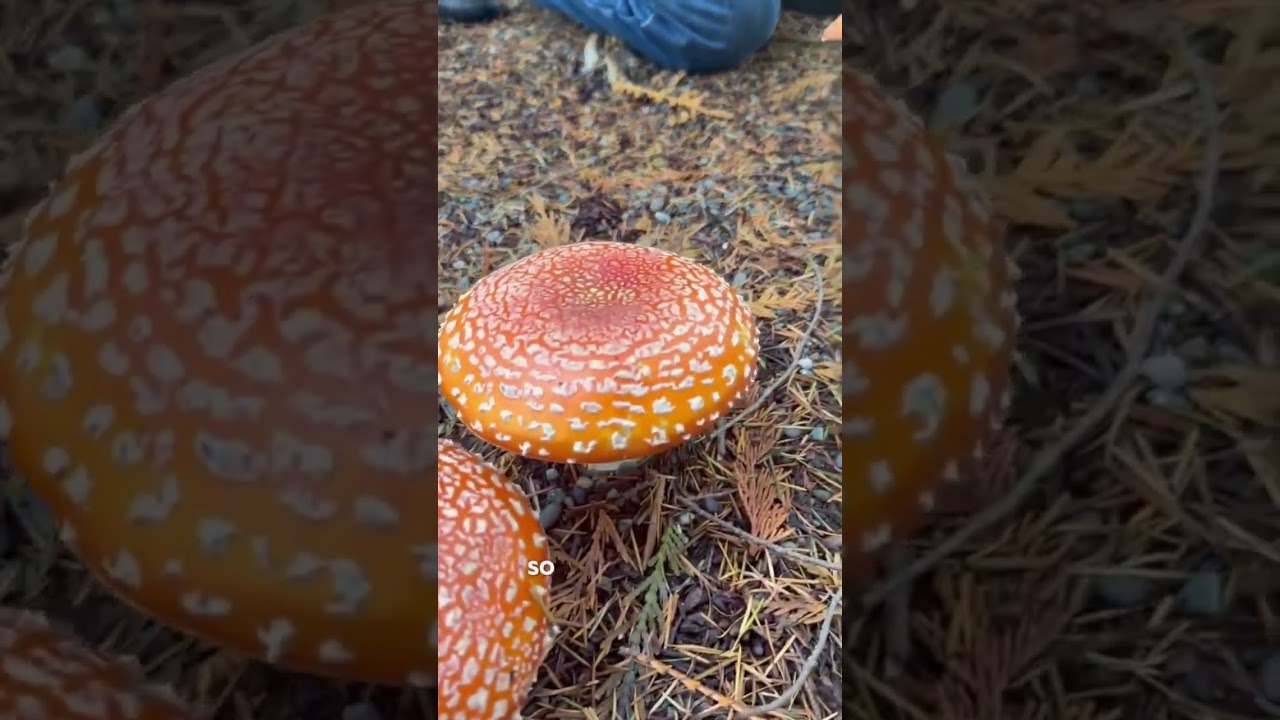
Transcript

[0:02] paul stamets fellow earthling on this

[0:04] beautiful planet we call earth our home

[0:07] on this earth day it's time for us to

[0:09] celebrate the gorgeousness of nature

[0:11] biodiversity and the fact that we've

[0:14] been an evolutionary

[0:15] success up to this point now certainly

[0:18] we face challenges but those challenges

[0:20] are self-inflicted

[0:21] the war against nature is a war against

[0:24] our own biology and survival

[0:26] this is a time for us to reframe our

[0:27] priorities so i call to all citizen

[0:29] scientists

[0:30] to invent solutions that will carry us

[0:32] into the future

[0:33] future generations depend upon us our

[0:35] ancestors are calling

[0:36] out for us to step forward we can do

[0:39] this together

[0:40] so i hope all of you have a wonderful

[0:42] earth day let's go forward with

[0:44] optimism hope courage and kindness

[0:47] i think we will create a great future

[0:50] together

[0:51] let's do this

Paul Stamets
AuteurPaul Stamets

Mycologist and advocate who has dedicated his life to studying mushrooms and their transformative potential to heal people and restore the planet through medicine, agriculture, and…

Voir le profilSite web
Explorer les thèmes
Earth-dayCitizen-scienceBiodiversityNature-biologyEnvironmental-action

Des questions ?

Questions fréquemment posées

Stamets argues that human biology evolved within nature—our immune systems, nervous systems, and gut microbiomes all depend on microbial and ecological diversity. When we destroy ecosystems through monoculture and chemical saturation, we simultaneously dismantle the living systems our bodies need to function. Environmental destruction is therefore biological self-harm.
Rather than waiting for institutional science alone, Stamets invites ordinary people equipped with curiosity and observation skills to solve problems within their own communities. Farmers tracking soil health, gardeners observing pollinators, and anyone experimenting with local food systems become citizen scientists capable of rapid innovation.
We inherit both biological legacy and knowledge from our ancestors, and we bear responsibility to future generations to leave them a livable world. This dual obligation places us at a crucial moment where invention and action—not mere tradition or resignation—are required.
Stamets identifies environmental challenges as self-inflicted, meaning they result from human choices rather than inevitable natural law. This matters because it implies solutions are also within human choice and action—change is possible if we reframe our priorities.
Instead of treating environment as separate from human welfare, Stamets calls us to recognize environmental action as identical to human survival. Every priority should be examined through the lens: Does this support or undermine our biological future?
Stamets recommends concrete actions: planting trees, planting flowers for pollination, taking yourself and children on nature walks. Beyond these specific acts, he frames every choice about food, growth, and relationship with living systems as either an act of war or an act of healing.

Continuer la lecture

More from Paul

Voir tout
Amanita Muscaria: History, Identification & Safety of Fly Agaric
Featured

Amanita Muscaria: History, Identification & Safety of Fly Agaric

Amanita muscaria, the fly agaric, has ancient roots in pest control and cultural mythology. Despite its striking beauty, this mushroom poses…

1 min read
Lactarius Deliciosus: Identifying & Foraging the Saffron Cap
Featured

Lactarius Deliciosus: Identifying & Foraging the Saffron Cap

The saffron milk cap (Lactarius deliciosus) is an easy-to-identify edible mushroom with striking green staining and orange milk. Learn how t…

1 min read
How Sitting Still Proves You're Already Awakening
Featured

How Sitting Still Proves You're Already Awakening

Most people can't sit quietly without discomfort, but if you can, you're already further along spiritually than you realize. Eckhart Tolle e…

1 min read
The Missing Piece: How Real Thinking Creates Real Results
Featured

The Missing Piece: How Real Thinking Creates Real Results

Most vision boards fail because people skip the actual thinking. Eckhart Tolle reveals the rhythm that unlocks insight and the two distinct …

1 min read

Continue d’explorer

Poursuis ton chemin

Plus de sagesse et de rassemblements dans tout l’annuaire BrightStar.

Plus d’articles

Parcours toute la bibliothèque d’enseignements, d’entretiens et de guides.

Retour à tous les articles →

Enseignants et artistes

Découvre les lignées, les musiciens et les guides du monde conscient.

Explorer les artistes →

Trouver un événement

Kirtan, retraites, bains sonores, breathwork, festivals — bientôt près de chez toi.

Parcourir les événements →