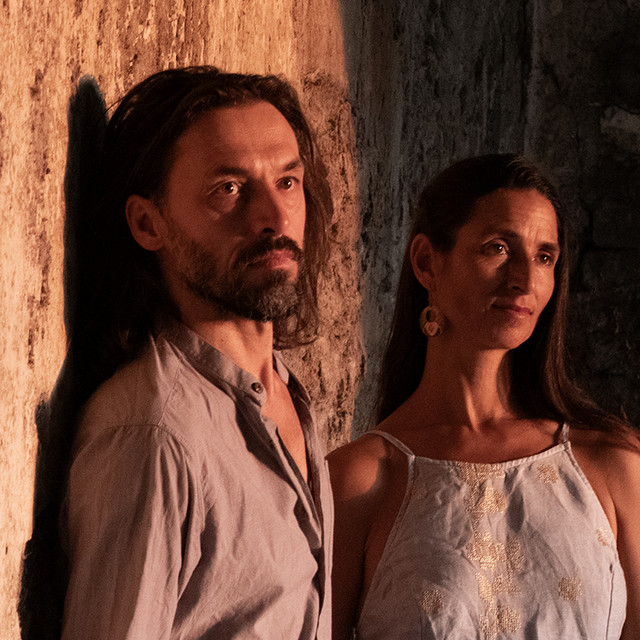
"Rain Like Tears" is a spare four-line mantra by Mirabai Ceiba—a world-music ensemble known for blending Sanskrit devotion with contemporary soundscapes—that uses elemental imagery (flight, starlight, wings, rain) to evoke spiritual liberation and emotional catharsis. The song's lyrics map a progression from upward movement (fly) through perception (eyes like stars, hands like wings) to release (rain like tears), set to a production combining violin, Ronroco, B3 organ, and subtle electronic textures. The official music video, directed by Irina Drozdova-Schastlivtseva and Liza Skvo, won Best Music Video at the Female Filmmaker Festival Berlin 2021 and uses visual abstraction and animation to reinforce the song's metaphorical language.
What Does the Four-Line Structure Accomplish?
The song's architecture is deceptively simple: four paired images, each introduced by a single word followed by a descriptive phrase. This constraint—reminiscent of haiku or aphorism—forces each line to carry maximum weight. "Fly / fly with the night" introduces movement and darkness simultaneously, suggesting motion untethered from daylight consciousness. "Eyes / eyes like stars" shifts from action to perception, equating seeing with celestial presence. "Hands / hands like wings" transforms the body's capacity for touch and creation into instruments of flight. Finally, "Rain / rain like tears" moves from the body outward into the natural world, collapsing the boundary between inner emotion and outer weather.
This progression is not accident. It moves from the imperative (fly), through sensory organs (eyes, hands), to a state of surrender or release (tears). The repetition of each word—"fly / fly," "eyes / eyes"—creates a meditative loop, the kind of return-to-center common in mantra practice. A listener is not invited to imagine flying; they are invited to inhabit the word, then to extend it into comparison.
How Do Natural Elements Anchor Spiritual Practice?
Mirabai Ceiba's work has long drawn on nature metaphors as doorways into non-dualistic experience. In "Rain Like Tears," each image is simultaneously literal and symbolic. Rain is water falling from sky; rain is also grief, release, the return of the individual drop to the ocean. Stars are burning hydrogen; they are also the eye of the universe looking back at you. This dual register—where nothing is only metaphor and nothing is only physical—is central to contemplative poetics across traditions, from the Sufi use of beloved-as-divine to the Zen poem that names a stone.
The progression from "night" to "stars" to "wings" to "rain" traces a shape: ascent, then opening, then descent-or-dissolution. It echoes cosmological patterns (night sky above, tears below) while remaining intimate enough to fit inside a single breath. A singer can embody the entire arc in ninety seconds.
Why Pair Sparse Lyrics with Dense Production?
The sonic architecture of "Rain Like Tears"—produced by Jamshied Sharifi and featuring violin, Ronroco (a traditional Andean stringed instrument), B3 organ, piano, and subtle Prophet 05 synth—creates a rich emotional container for the song's minimalist text. Vocals by Angelika Baumbach and Markus Sieber weave through this texture with the clarity of chant, even as the instrumental bed swells around them.
This tension between simplicity and sophistication serves the song's function. The lyrics are meant to be remembered, chanted, internalized—they need to be memorable and direct. The production situates them in a world of feeling: the Ronroco's plucked strings evoke water, earth, wind; the violin suggests longing; the organ provides harmonic depth that suggests spiritual vastness. Together, they do what visual art and sound design have always done in ritual: they slow time, quiet the discursive mind, and create a container where the words can take on resonance beyond their literal meaning.
What Role Does the Music Video Play?
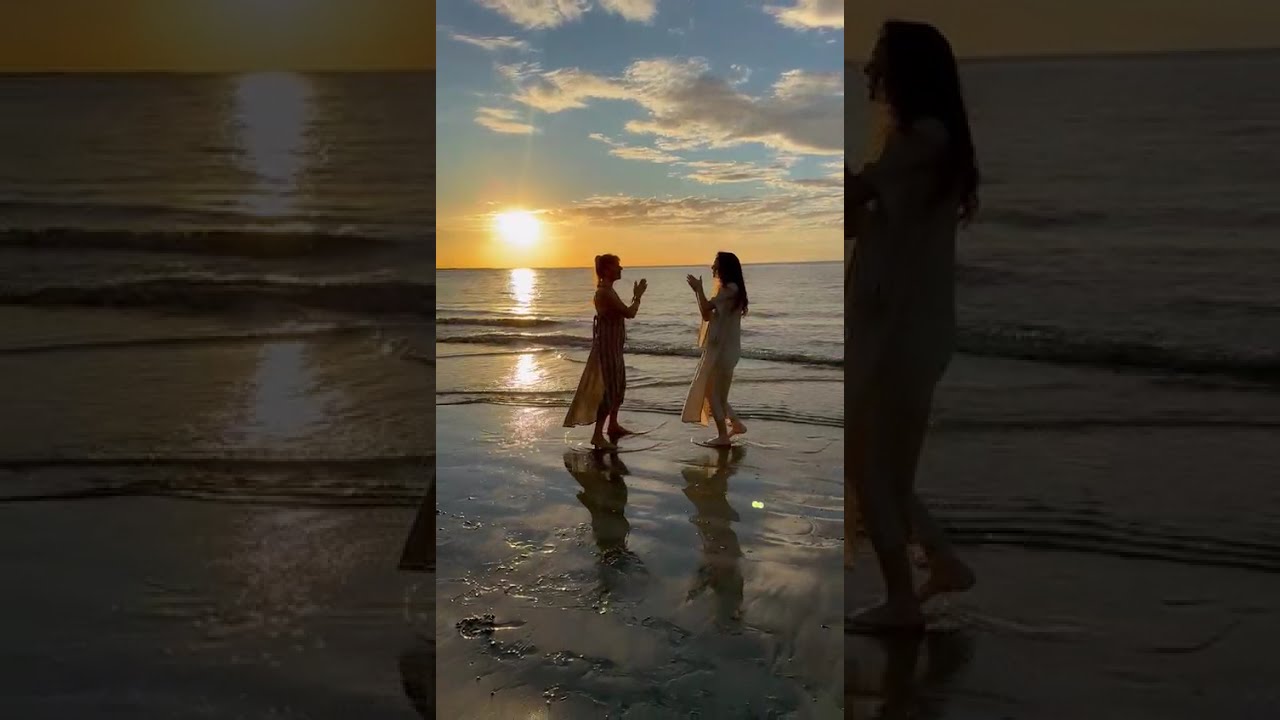
The official video, directed by Russian filmmakers Irina Drozdova-Schastlivtseva and Liza Skvo, translates the song's verbal imagery into visual language. Without access to the full visual flow, we can note that the video employs animation and art direction (with concept and design work spanning a team of animators) to render the song's natural metaphors. The fact that it won Best Music Video at a prestigious international festival suggests it achieves something beyond illustration—likely moving the viewer through states of perception and emotion that mirror the song's arc.
Music videos in the contemplative and world-music space often function as mandala or yantra: visual structures designed to redirect attention and catalyze insight rather than simply to "show" what the song is about. The video's award status indicates it succeeds at this level.
How Does This Fit Mirabai Ceiba's Larger Practice?
"Rain Like Tears" appears on the collection In Song: The Essential Mirabai Ceiba, a retrospective that spans the ensemble's career. Mirabai Ceiba has long positioned itself at the intersection of sacred music traditions—drawing on Sanskrit mantra, Sufi devotion, world-music instrumentation, and contemporary production—to create work that speaks to contemporary spiritual seekers. A four-line song about elemental metaphor is economical by comparison to some of their longer pieces, yet it carries the same DNA: a belief that poetry, music, and visual art can together create conditions for direct experience of what lies beyond words.
The simplicity of "Rain Like Tears" may be its greatest strength. In an era of lyrical density and narrative complexity in music, the song offers something closer to a koan or a prayer: a small structure through which infinite depth can be glimpsed.
Where to Go From Here
To deepen your engagement with this work, listen to the song multiple times—first attending to the words, then to the sonic textures, then to how your body and breath respond. Watch the official video with full attention, noting which images lodge in your consciousness and why. Explore Mirabai Ceiba's broader discography through their website and streaming platforms; "Rain Like Tears" is best understood as part of a larger artistic vision about how sacred sound and image can work together. Consider the role of elemental metaphor in your own spiritual or creative practice: What does "flying with the night" evoke in you? Where do you feel the tears? The song's power lies not in what it means, but in what it opens.