EveryEvent Seattle

Browse All Events

Find every event in Seattle

events

Concerts & Live Music
Festivals
Sports & Recreation
Food & Drink
Arts & Culture
Community
Family & Kids
Nightlife
Comedy
Theater
Popular Destinations
BaliSedonaLos AngelesCosta RicaNew YorkSan FranciscoAustinMiamiJoshua TreeTulum
View All CategoriesView All Destinations

Explore All Features

Powerful tools to grow your events

Platform Features

Smart Dynamic Pricing
Ticket Categories
Assigned Seating
Abandoned Cart Recovery
Visitor Recovery
Donations & Sliding Scale
Affiliate Engine
Ticket Scanner
Coupon Codes
Custom Questions
Ticket Sharing
Upsells & Add-ons
Analytics & Reporting
Email Sequences
Waitlist / Notify / Remind
Explore
Discovery HubArtists & PerformersVenuesKnowledge Base
View All FeaturesAbout Us
PricingBlog
Language
Saved events
Browse All Events

events

Concerts & Live MusicFestivalsSports & RecreationFood & DrinkArts & CultureCommunityFamily & KidsNightlife

Popular Destinations

BaliSedonaLos AngelesCosta RicaNew YorkSan Francisco

Explore

Discovery HubArtists & PerformersVenuesKnowledge Base

Platform Features

Smart Dynamic PricingTicket CategoriesAssigned SeatingAbandoned Cart RecoveryVisitor RecoveryDonations & Sliding ScaleAffiliate EngineTicket ScannerCoupon CodesCustom QuestionsTicket SharingUpsells & Add-onsAnalytics & ReportingEmail SequencesWaitlist / Notify / Remind
View All FeaturesAbout Us
PricingBlog
Log inSign UpEvent Organizers
  • Browse All Events
  • Concerts & Live Music
  • Festivals
  • Sports & Recreation
  • Food & Drink
  • Arts & Culture
  • Community
  • Family & Kids
  • Nightlife
  • All Categories →
  • Portland
  • Vancouver, BC
  • San Juan Islands
  • Olympic Peninsula
  • Leavenworth
  • All Destinations →
  • For Promoters
  • For Artists
  • For Venues
  • For Festivals
  • For Event Spaces
  • For Nonprofits
  • For Bloggers
  • For Speakers
  • Brand Ambassador
  • Case Studies
  • 350K+ Buyer Network
  • Abandoned Cart Recovery
  • Smart Dynamic Pricing
  • Ticket Categories
  • Recurring Events
  • Assigned Seating
  • Affiliate Engine
  • Waitlist / Notify
  • Ticket Scanner
  • Embed Widget
  • Event Syndication
  • Message Center
  • Integrations
  • Reports
  • All Features →
  • About
  • The Ecosystem
  • Blog
  • Glossary
  • Inspiration
  • Help Center
  • Contact
  • API Docs
  • Brand Assets
  • Careers
  • Press
  • Terms of Service
  • Privacy Policy

Events

  • Browse All Events
  • Concerts & Live Music
  • Festivals
  • Sports & Recreation
  • Food & Drink
  • Arts & Culture
  • Community
  • Family & Kids
  • Nightlife
  • All Categories →

Getaways

  • Portland
  • Vancouver, BC
  • San Juan Islands
  • Olympic Peninsula
  • Leavenworth
  • All Destinations →

For Organizers

  • For Promoters
  • For Artists
  • For Venues
  • For Festivals
  • For Event Spaces
  • For Nonprofits
  • For Bloggers
  • For Speakers
  • Brand Ambassador
  • Case Studies

Features

  • 350K+ Buyer Network
  • Abandoned Cart Recovery
  • Smart Dynamic Pricing
  • Ticket Categories
  • Recurring Events
  • Assigned Seating
  • Affiliate Engine
  • Waitlist / Notify
  • Ticket Scanner
  • Embed Widget
  • Event Syndication
  • Message Center
  • Integrations
  • Reports
  • All Features →

Company

  • About
  • The Ecosystem
  • Blog
  • Glossary
  • Inspiration
  • Help Center
  • Contact
  • API Docs
  • Brand Assets
  • Careers
  • Press
  • Terms of Service
  • Privacy Policy
EveryEvent
© 2026 EveryEvent Seattle. All rights reserved.
Inspiration

Haiku and theTraveller's Spiritual Journey

Ram Dass
Ram Dass
Nov 23, 2021
3 min read

In this brief reflection, Ram Dass uses haiku—the minimalist Japanese poetic form—as a lens to examine the interior landscape of the spiritual traveller. Rather than treating haiku as mere literary exercise, he presents it as a contemplative tool that collapses the distance between observer and observed, revealing the essence of presence that lies at the heart of the spiritual journey. The form's constraint becomes its freedom: by stripping away excess, haiku points directly to what is.

Read · 4 sections

What Is Haiku as Spiritual Practice?

Haiku, rooted in Zen Buddhism, is far more than a three-line poem. It is a distilled moment of awareness—a snapshot of reality captured with such clarity that the boundary between the perceiver and the perceived dissolves. The form's structural simplicity (5-7-5 syllables in English approximation) forces the practitioner to eliminate decoration, sentimentality, and intellectual commentary. What remains is presence itself.

For Ram Dass, haiku operates as a doorway into the here-and-now. Each haiku is an act of radical attention, a way of stopping the mind's constant chatter and settling into direct perception. This is not about creating beautiful poetry; it is about using the form as a meditation device that trains consciousness to notice what is actually present rather than what the mind thinks should be present.

Why Does the Traveller Need Haiku?

The spiritual traveller—the seeker moving along the path of consciousness—often carries a heavy load of expectations, goals, and mental constructs about what enlightenment should look like or what the journey should feel like. Haiku cuts through this. By anchoring awareness in a single, specific moment, the traveller learns to meet reality as it is, not as an idea about reality.

Ram Dass teaches that the spiritual path is not primarily about achieving something distant or becoming someone different. Rather, it is about awakening to what is already here. Haiku is a practice that embodies this teaching. Each poem is a small act of surrender—the surrender of trying to make meaning and instead receiving the meaning that is already present in the moment.

How Does Simplicity Reveal Truth?

In Western spirituality, there is often an assumption that depth requires complexity. More techniques, more knowledge, more experience. But the haiku tradition suggests the opposite: that the deepest truths are accessible only through radical simplification. The removal of everything unnecessary is not a loss; it is a clarification.

When you strip a poem down to seventeen syllables capturing a single moment, you are left with something irreducible. A frog jumps. A leaf falls. Snow settles. These are not profound ideas, yet they point to the profound nature of existence itself—the simple isness of things, untouched by interpretation. This is the spiritual traveller's ultimate discovery: that liberation is not found in accumulating more experience but in seeing clearly what already is.

Where to Go from Here

If this teaching resonates, consider engaging with haiku as a contemplative practice rather than a literary one. Spend time observing a single moment—a bird at a window, a cup of tea, the quality of light at a particular hour—and attempt to capture it in the haiku form. The goal is not to write good poetry but to use the discipline of the form as a way to train your mind to rest in direct perception. Notice how the constraint of brevity clarifies your seeing. Over time, this practice can reshape how you move through the world, teaching you to be a more awake traveller on the path.
Ram Dass
AuthorRam Dass

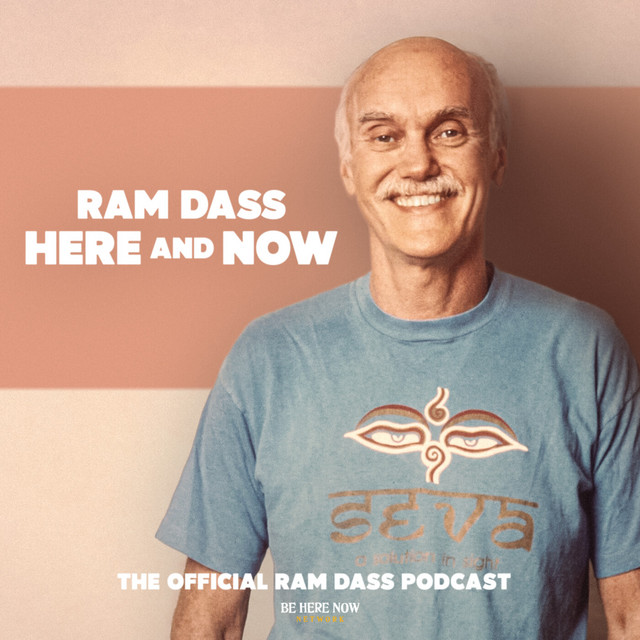
American spiritual teacher, formerly Harvard psychology professor Richard Alpert. After meeting his guru Neem Karoli Baba (Maharaj-ji) in India in 1967, he returned as Ram Dass and…

View profileWebsite
Explore Topics
HaikuZen-BuddhismPresenceSpiritual-pathContemplative-practice

Got Questions?

Frequently Asked Questions

Haiku originated in Zen practice as a way to capture moments of direct insight in the simplest possible form. By eliminating decoration and commentary, haiku points directly to what is present, mirroring the Zen emphasis on immediate, unfiltered awareness. The form itself becomes a meditation device rather than just a literary exercise.
Haiku trains the mind to stop interpreting reality and instead perceive it directly. The constraint of brevity forces you to eliminate mental chatter and focus on what is actually present in a single moment. This cultivates the awareness and simplicity that are central to spiritual awakening.
Each word you remove from a haiku forces you to choose only what is essential, which sharpens your perception of what you are trying to convey. This simplification mirrors the spiritual path itself: removing layers of mental habit and expectation reveals the clarity and presence that is always already here.
The traveller is the seeker who is consciously moving along the path of spiritual awakening. Ram Dass suggests the traveller often carries excessive expectations and goals, but haiku teaches the essential lesson: that liberation is not found by achieving something distant but by clearly seeing what is already present.
Yes. Rather than treating haiku as literary creation, it can be used as a contemplative practice. The discipline of capturing a single moment in seventeen syllables trains your mind to rest in direct perception and presence, which are core elements of meditation and spiritual practice.

Continue Reading

More from Ram

View All
Stories as Medicine: How Compassion Heals Division and Builds Connection
Inspire

Stories as Medicine: How Compassion Heals Division and Builds Connection

In this profound exploration of human connection, renowned spiritual teacher Jack Kornfield reveals how stories serve as medicine for our di…

1 min read
Walking the Tightrope: How to Serve Both Heaven and Earth Without Losing Your Balance
Inspire

Walking the Tightrope: How to Serve Both Heaven and Earth Without Losing Your Balance

Ram Dass reveals the spiritual challenge of our time: staying connected to divine consciousness while remaining present to human suffering a…

1 min read
How Sitting Still Proves You're Already Awakening
Inspire

How Sitting Still Proves You're Already Awakening

Most people can't sit quietly without discomfort, but if you can, you're already further along spiritually than you realize. Eckhart Tolle e…

1 min read
The Missing Piece: How Real Thinking Creates Real Results
Inspire

The Missing Piece: How Real Thinking Creates Real Results

Most vision boards fail because people skip the actual thinking. Eckhart Tolle reveals the rhythm that unlocks insight and the two distinct …

1 min read

Keep exploring

Continue your journey

More wisdom and gatherings from across the BrightStar directory.

More Articles

Browse the full library of teachings, interviews, and guides.

Back to all articles →

Teachers & Artists

Explore the lineages, musicians, and guides of the conscious world.

Explore artists →

Find an Event

Kirtan, retreats, sound baths, breathwork, festivals — happening soon.

Browse events →