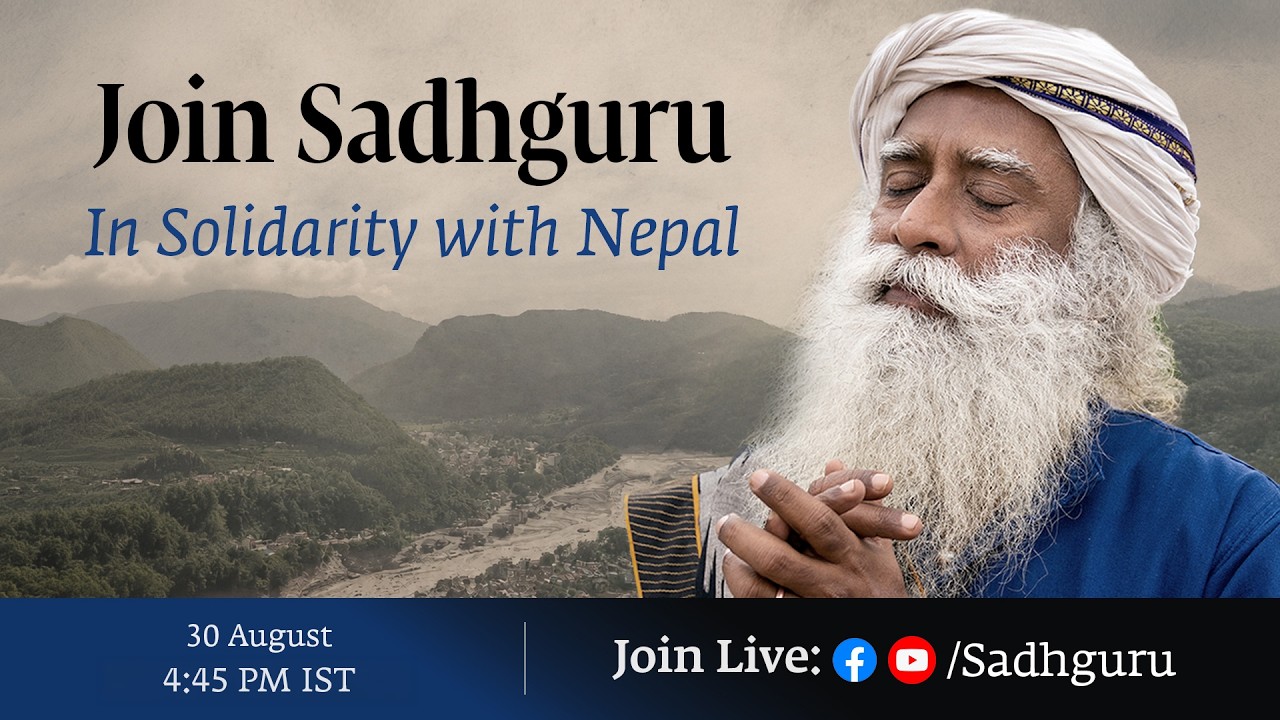
Most people attribute stress to their jobs or survival pressures, but Sadhguru argues that stress stems from how we handle our circumstances, not the circumstances themselves. Even when external survival needs are fully met, people remain unsettled. The root issue is unconscious living—operating on autopilot rather than with awareness. Blissfulness is humanity's natural state, but only when we engage with life consciously. Through the story of an Orthodox Bishop seeking guidance from an Indian Yogi, Sadhguru reveals that our inner turmoil is essentially self-created, and how we live determines whether we experience peace or chaos.
What People Get Wrong About Their Stress
When asked why they experience stress, most people point to the same culprit: their job. The work demands, the deadlines, the responsibilities—surely these are the source of their suffering. This explanation feels intuitive and almost universal in modern life. Yet Sadhguru identifies a critical flaw in this reasoning. If stress truly came from external demands, then removing those demands should eliminate the stress. But observation shows something entirely different.
Sadhguru presents a striking observation: even when survival needs are completely taken care of—when people no longer have to work, when their material security is guaranteed—they still do not settle into peace. Their inner turbulence persists. This reveals that the external circumstances, the job itself, the work pressures, are not the root cause of stress. The job becomes a convenient explanation, a place to assign blame, but it is not the actual mechanism generating the stress.
If the problem were truly external, solving the external would solve the problem. Instead, Sadhguru suggests, people carry an internal condition that remains unchanged regardless of their external situation. This inner condition is what actually determines whether someone experiences peace or turmoil.
How Unconscious Living Creates Inner Turmoil
The mechanism behind stress, according to Sadhguru's teaching, is the quality of consciousness we bring to our actions and choices. Life is not something that happens to us—it is something we actively make through how we handle each moment. This is a radical shift in responsibility: you are not a victim of circumstance, but the creator of your inner experience through the way you engage with life.
Unconscious living means operating on automatic patterns, reacting without awareness, handling situations mechanically. When you move through life this way, your "inner situation can become turmoil." The chaos is not imposed from outside; it is generated from within through inattention, through the absence of conscious choice. You may be going through the motions—doing your job, managing your responsibilities—but if you do these things without presence, without awareness of what you are actually doing and why, you generate internal stress.
Conscious living, by contrast, means engaging with each situation with full awareness. It means handling things deliberately rather than automatically. This is not about doing less or achieving less; it is about doing things with consciousness rather than on autopilot. The same action—performed consciously—produces a different inner result.
Why Blissfulness Is Your Natural State
Sadhguru's core claim is that blissfulness is not something you need to create or earn—it is your natural state of being. This is a profound reorientation. Most people believe they must achieve happiness, that it comes as a reward for success or as a result of external good circumstances. Sadhguru reverses this: blissfulness is the ground state. When you do the right things—when you handle life with consciousness and awareness—this natural state simply reveals itself.
The "right things," in this framework, are not moral commandments or external rules. They are actions taken with awareness, with presence, with consciousness. When you operate this way, you are not working against your nature; you are aligning with it. Blissfulness emerges naturally.
Conversely, when you handle things unconsciously, you are not simply missing out on happiness—you are actively creating the opposite. Turmoil, stress, and inner chaos are the natural result of unconscious action. They are not punishments imposed from outside; they are the direct outcome of how you are living.
The Bishop and the Yogi: A Story About Making Our Own Life
Sadhguru illustrates this teaching through a story involving an Orthodox Bishop who seeks out an Indian Yogi. While the description does not provide the full narrative, the story serves to demonstrate a central principle: "Life is essentially our making." The Bishop's journey to find spiritual guidance reflects the human search for answers, but the real insight Sadhguru draws from the story points to the fact that each person's life situation is fundamentally shaped by how they have engaged with their own existence.
The lesson here challenges the victim narrative. You are not a passive recipient of life—you are an active maker of it. Your inner condition reflects your choices, your awareness, and your way of handling situations. This is both a diagnosis of the problem and the key to solving it: if you made the stress through unconscious living, you can unmake it through conscious living.
The Distinction Between Circumstance and Inner Condition
A crucial part of Sadhguru's analysis is the separation between two things people often conflate: external circumstances and inner condition. People speak as if these are connected, as if external circumstances directly determine inner peace. But this misses the actual mechanism.
Two people in identical external circumstances—the same job, the same salary, the same living situation—can have completely different inner experiences. One may be stressed and turbulent; the other may be calm and present. The difference is not circumstantial; it is how they are handling that circumstance. One is unconscious; the other is conscious. One is caught in automatic patterns; the other is engaged with presence.
This distinction is liberating because it means you are not helpless. You cannot always control your external circumstances immediately, but you can control your consciousness, your awareness, your way of handling what is in front of you. You have agency over the actual source of your stress.
Reframing Survival and Stress
Society often frames stress as emerging from the need to survive and meet basic needs. The logic goes: survival is demanding, therefore people are stressed. But Sadhguru's observation breaks this chain. He notes that even when survival needs are fully handled—when people are secure, provided for, free from the need to work—stress does not disappear. This suggests that survival anxiety is not the root.
Instead, what appears to be survival-based stress is often stress rooted in how people approach their existence. They may be unconsciously driven by fear, or by conditioned patterns of striving, or by automatic reactions to situations. When survival needs are met, these unconscious patterns remain active, still generating stress even though the original "threat" is gone.
This reframing invites a different approach to stress management: not trying to engineer perfect external circumstances, but developing consciousness in how you engage with whatever circumstances exist.
Where to Go From Here
If Sadhguru's analysis is correct—that stress comes not from circumstances but from unconscious handling of life—then the path forward is to develop awareness. This might look like bringing attention to your patterns, noticing when you are operating on autopilot, pausing before reacting, and making deliberate choices about how to handle situations. It could involve practices that build presence and consciousness, whether through meditation, yoga, or simply conscious attention to daily activities.
The insight also suggests that complaining about circumstances, while sometimes justified, misses the leverage point. You have direct access to how you handle your life. You do not have direct access to everything that happens to you. Focusing energy on developing consciousness and presence addresses the root cause of stress, not just its symptoms.