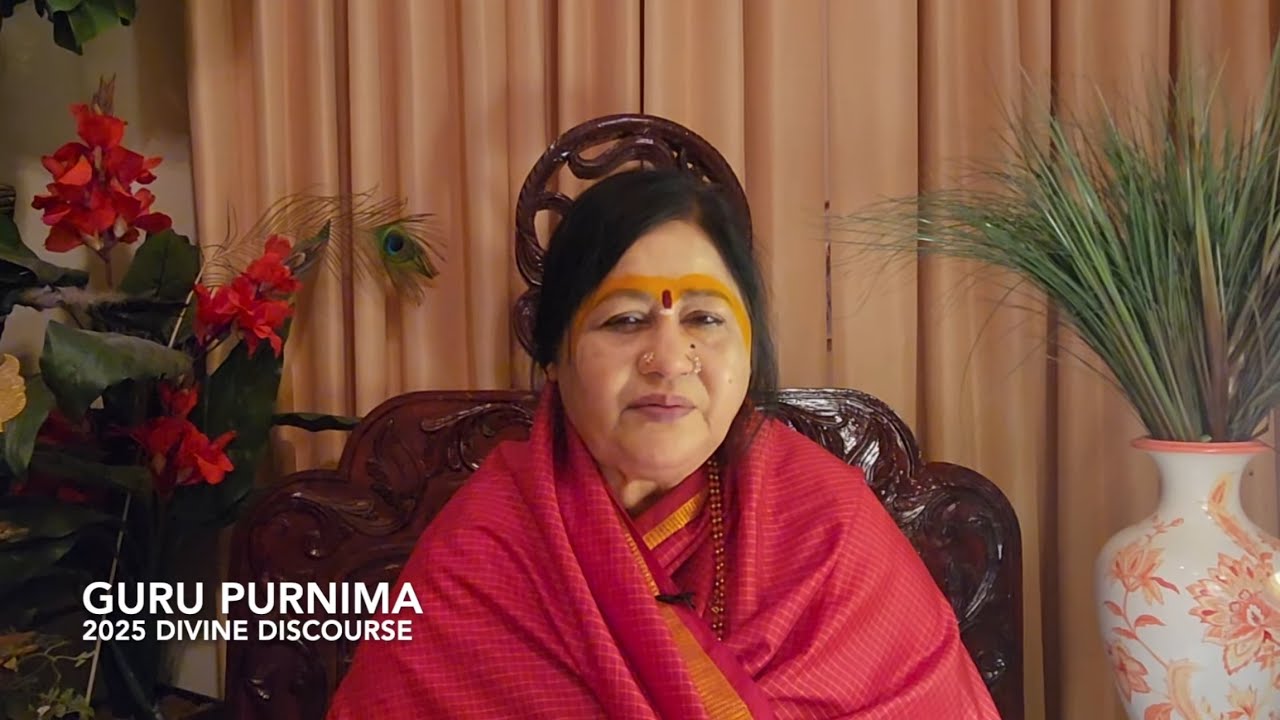
Sri Karunamayi's discourse on the Lalita Sahasranama—the thousand sacred names of Sri Lalita Tripurasundari, the supreme form of Shakti—examines why these names matter for seekers, how to approach them with proper intention, and the spiritual fruits that arise from sincere chanting. Rather than treating the names as mere sound, she connects them to the goddess's divine attributes, her cosmic role as mother of all beings, and the inner transformation that unfolds when devotion meets knowledge.
What Is the Lalita Sahasranama and Why Does It Matter?
The Lalita Sahasranama is a sacred text belonging to Hindu and Tantric tradition that enumerates one thousand names of Sri Lalita Tripurasundari, the supreme goddess and embodiment of Shakti (cosmic energy and divine power). Rather than a dry recitation of titles, each name carries a teaching. Sri Karunamayi explains that the Goddess is not separate from the practitioner but present within all creation—a truth embedded in every name chanted with awareness.
In Karunamayi's framing, the significance of Lalita Sahasranama lies in its dual function: it both honors the divine feminine principle and activates that same principle within the devotee. The thousand names are not arbitrary; they reflect her functions as creator, sustainer, destroyer, liberator, and the foundation of existence itself. When one chants these names with understanding rather than mechanical repetition, the intellect begins to grasp the Goddess's omnipresence.
Who Is Lalita Tripurasundari in Hindu Philosophy?
Sri Lalita Tripurasundari holds a particular place in Hindu and Tantric cosmology. She is described as the supreme consciousness (Param Brahman) taking feminine form—not as a consort of a male deity, but as the primary creative force. Her names often reference her abode in the Sri Chakra, her role as Jagat Janani (mother of all worlds), and her dynamic relationship with all beings.
Karunamayi points to the goddess's cosmic role: she is Annapurna (the nourishing principle that sustains all life), Kameshwari (the power that fulfills desires aligned with dharma), and Jagat Janani—the eternal mother. These are not poetic metaphors but descriptions of her actual function in creation. Understanding this context prevents the devotee from treating her names as abstract charms and instead recognizes them as keys to understanding the structure of existence and one's own consciousness.
How Should One Approach Chanting the Thousand Names?
Sri Karunamayi emphasizes that the method of chanting matters as much as the frequency. She does not advocate for mindless repetition but for chanting infused with bhakti (devotion) and buddhi (wisdom). The approach should combine three elements:
Devotional intention: Approach the names not as a transaction or a duty, but as an offering of love and surrender to the divine feminine. The heart must be involved, not merely the lips.
Intellectual engagement: Understand, to the extent possible, what each name signifies. As you chant, contemplate how that attribute manifests in creation and in your own being. For instance, when chanting a name that refers to the Goddess as nourishment, reflect on how you are sustained by forces beyond your control.
Consistent practice: Regular chanting, even if brief, plants seeds of transformation more effectively than sporadic intense practice. Karunamayi speaks of the gradual unfoldment that occurs through daily connection.
The teacher also mentions specific practices: chanting the names 108 times or in sets tied to sacred numbers (such as 20 repetitions of a single name focused on a specific quality) creates a rhythm that helps the mind settle and the heart open. The act of chanting itself becomes a form of meditation when approached with full presence.
What Are the Spiritual Benefits of Practicing Lalita Sahasranama?
According to Hindu and Tantric texts, as well as Karunamayi's own teaching, consistent chanting of the Lalita Sahasranama yields both inner and outer fruits:
Clarity and discrimination: As the names reveal the Goddess's role in creation and destruction, the mind develops clarity about the nature of reality. The practitioner begins to see beyond surface appearances and recognizes the divine order underlying all phenomena.
Dissolution of ego: Repeated meditation on names that emphasize the Goddess as the foundation of all being naturally diminishes the sense of a separate, isolated self. One recognizes oneself as a manifestation of her power, not as an independent actor.
Emotional healing and inner peace: Names associated with nourishment, compassion, and protection awaken corresponding qualities in the heart. Devotees report a quieting of anxious thoughts and an increase in inner steadiness and joy.
Protection and grace: Traditional texts suggest that sincere chanting invokes the Goddess's protection and blessings. Karunamayi frames this not as superstition but as a natural law—that focused intention and devotion create a resonance that attracts grace.
Fulfillment of dharma: As one chants names like Kameshwari, the understanding deepens that true desires are those aligned with one's purpose and cosmic order. The practice helps align one's will with divine will.
Karunamayi also notes that the benefits are not limited to the individual practitioner. When one chants with sincere heart, the vibrations of the Goddess's names are said to benefit all beings. This reflects the non-dual understanding that all consciousness is interconnected.
How Does Chanting Connect to Inner Transformation?
Sri Karunamayi's teaching suggests that the Lalita Sahasranama is not merely informational but transformative at a fundamental level. When a name is chanted with understanding and feeling, the sound vibration enters not just the ears but the subtle body. The Sanskrit syllables themselves carry frequencies that correspond to different aspects of consciousness.
For example, when one chants a name emphasizing the Goddess's role as the eternal witness to all creation, the mind begins to internalize that perspective. Instead of being lost in the drama of personal life, a part of awareness naturally withdraws and observes with detachment. Over time, this shifted perspective becomes the default mode of consciousness.
Karunamayi emphasizes that this is not imaginative thinking but a real reorganization of the nervous system and subtle body through the power of sound, intention, and focused awareness. The practice is thus both a devotional offering and a technology of consciousness.
What Role Do Names Play in Understanding Divine Feminine Power?
Each of the thousand names encodes an aspect of Shakti—the divine feminine principle. Some names emphasize creation (the Goddess as the source of all manifestation), others emphasize destruction (her power to dissolve form and ego), and still others emphasize preservation and nourishment. Together, they paint a complete portrait of feminine divinity as dynamic, multifaceted, and utterly fundamental to existence.
Karunamayi points out that in traditional Hindu philosophy, Shakti is not the power of a male God but is herself supreme consciousness taking dynamic form. The Goddess is not "his" energy but the ground of being. The thousand names, then, are a thousand ways of saying: "You are the root, the sustenance, and the ultimate reality." For the devotee, chanting these names removes the veil of forgetfulness and reconnects awareness with its source.
Where to Go From Here
For those drawn to this practice, begin with intention rather than ambition. Find a translation of the Lalita Sahasranama that includes commentary—understanding even a few names deeply is more valuable than rushing through all thousand with a closed heart. Establish a simple daily practice: perhaps chanting twenty or forty-eight names each morning, or chanting a single name repeatedly as an anchor for meditation. Over weeks and months, observe the subtle shifts in your inner life: changes in mood, clarity, resilience. Let the practice unfold at its own pace. The Goddess, in Karunamayi's view, meets the sincere seeker more than halfway. What is needed is honest engagement, consistency, and a willingness to be transformed by what you invoke.
Spiritual teacher born in 1968 in Andhra Pradesh who embodies love and compassion, conducting retreats and sharing devotional music to foster spiritual awakening and unity across t…
Chanting the Lalita Sahasranama means reciting the thousand names of the Goddess with devotion and awareness. While Sanskrit pronunciation is traditionally valued for its vibrational properties, Sri Karunamayi emphasizes that sincere intention and understanding matter more than perfect accent. Using a translation and contemplating the meaning of each name is more effective than mechanical repetition.
Regular practice—even daily chanting of a portion of the names—yields results over time. Sri Karunamayi suggests consistent, brief practice (20-50 repetitions per day) is more fruitful than occasional intensive sessions. The key is continuity rather than duration; the subtle mind responds to steady, devoted engagement.
Yes. Many of the Goddess's names refer to protection, compassion, nourishment, and dissolution of suffering. Chanting with focus on these names, combined with genuine prayer, can quiet the anxious mind and open the heart to healing. However, this is not a replacement for professional help but a complementary spiritual practice.
The Sri Chakra is a sacred geometric diagram representing the Goddess's body and the structure of the universe. She is said to reside at its center, and many of her thousand names reference the chakra's different layers and powers. Meditating on the chakra alongside the names deepens understanding of the Goddess's multidimensional nature.
While rooted in Hindu and Tantric traditions, the practice is open to anyone with sincere devotion and respect for the tradition. The benefits—clarity, inner peace, dissolution of ego—are universal outcomes of focused spiritual practice. Sri Karunamayi teaches that the Goddess transcends sectarian boundaries and welcomes all sincere seekers.
Reading and studying engage the intellect; chanting engages the heart, breath, and subtle body. The vibration of the Goddess's names, when spoken aloud with intention, is said to activate corresponding powers within the practitioner's consciousness. Study prepares the ground; chanting plants the seed.
Distraction is natural and does not invalidate the practice. Sri Karunamayi would likely advise gently returning attention to the names without judgment. Over time, the mind naturally settles as it becomes familiar with the rhythm. Using a mala (prayer beads) or counting beads helps anchor attention and is especially helpful for beginners.
While all thousand names are sacred, some—such as Jagat Janani (Mother of All Worlds), Annapurna (the Nourishing Principle), and Tripurasundari (the Beautiful One in the Three Worlds)—are particularly prominent and accessible. Starting with these while gradually expanding your practice to others is a common approach recommended by teachers.