Kirtan is a devotional chanting tradition rooted in Hindu and yogic practice that uses call-and-response singing, Sanskrit mantras, and rhythmic accompaniment to create collective spiritual experience. Krishna Das, a prominent kirtan artist and yoga teacher, has spent decades bringing this ancient practice to Western audiences through live performances that combine traditional mantras with contemporary musical arrangement, creating accessible entry points for practitioners seeking embodied devotion.
What Is Kirtan?
Kirtan is a devotional singing practice that originates from Indian spiritual traditions, particularly within bhakti (devotion) and yoga culture. Unlike meditation, which emphasizes internal quiet and stillness, kirtan is an active, communal practice that channels spiritual intention through the voice and body. The practice typically centers on repetition of mantras—sacred syllables or phrases—often sung in Sanskrit, the ancient language of Hindu texts.
The word "kirtan" itself means "narration" or "recitation" in Sanskrit, describing the act of singing the names and qualities of the divine. In traditional contexts, kirtan serves as a vehicle for expressing devotion, cultivating emotional connection to spiritual concepts, and creating synchronized group experience through shared rhythmic and vocal participation.
How Does Call-and-Response Kirtan Work?
The most recognizable structure of modern kirtan relies on a call-and-response format. A leader—in this case Krishna Das—introduces a mantra or chant line. The group then repeats that line back, creating a musical conversation between leader and participants. This structure serves multiple functions: it makes the practice accessible to people unfamiliar with Sanskrit pronunciation, it builds community through synchronized vocalization, and it creates a rhythmic momentum that deepens engagement.
The call-and-response pattern typically continues for extended periods, allowing repetition to shift the quality of consciousness and emotional state. As participants sing the same phrases repeatedly, the rational mind often quiets, and practitioners report experiences of being held within the rhythm, of boundaries between self and others softening, and of emotional opening. The practice does not require prior musical training or perfect pitch—only willingness to participate.
The Role of Sanskrit Mantras in Devotional Practice
Sanskrit mantras form the textual foundation of kirtan. Common mantras in Krishna Das's performances include invocations of Hanuman (the devoted monkey deity), Rama and Krishna (avatars of Vishnu), and the Maha Mantra (Hare Krishna, Hare Rama, and variations thereof). These are not understood as magical incantations but as concentrated expressions of specific spiritual qualities and intentions.
The repetition of mantras is believed, within yogic and tantric philosophy, to attune the nervous system and consciousness to particular frequencies or states. Practitioners report that chanting Hanuman mantras, for instance, cultivates courage, devotion, and surrender, while Krishna mantras emphasize divine play, love, and transcendence. The vibration and meaning of the Sanskrit syllables are thought to work together—the sound itself carries intention, and the meaning deepens emotional resonance.
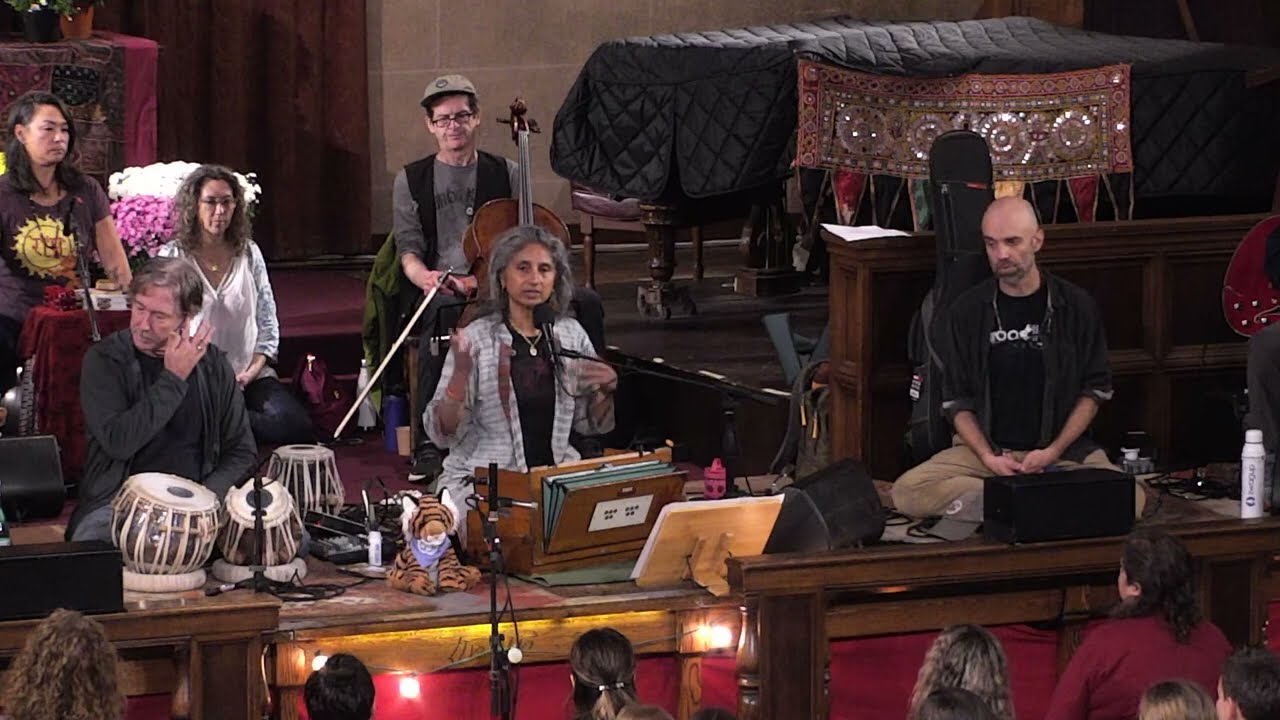
Krishna Das and other contemporary kirtan teachers often integrate Western instruments (guitar, tabla, harmonium) alongside or in place of traditional Indian instruments, making the sonic experience familiar to Western ears while maintaining the spiritual core of the practice.
How Kirtan Differs from Other Spiritual Practices
Kirtan stands apart from meditation, yoga asana, and other contemplative disciplines in its emphasis on active vocalization and communal participation. Where meditation typically emphasizes quietude and internal focus, kirtan channels energy outward through the voice and into the shared field of the group. It is a devotional practice in the bhakti tradition, meaning it works through emotion and relationship with the divine, rather than through knowledge (jnana) or action (karma) alone.
The practice can function as an entry point for people who find silent meditation difficult or who are drawn to devotional spirituality. It combines elements of singing, chanting, rhythm, and group synchrony—all of which engage different neural and emotional systems than sitting stillness does. For some practitioners, kirtan serves as a complement to asana and meditation practice within a broader yogic path.
The Physical and Psychological Effects of Chanting
Research in neuroscience and somatic psychology has begun documenting the physiological effects of sustained chanting and vocalization. Extended mantra repetition can influence heart rate variability, activate the parasympathetic nervous system (the "rest and digest" branch), and reduce markers of stress. The repetitive nature of call-and-response engages the same neural pathways as music, rhythm, and synchronized group movement, all of which have shown positive effects on emotional regulation and social bonding.
Practitioners often report emotional release during or after kirtan—tears, laughter, or a sense of profound peace emerging without cognitive explanation. This is understood within the kirtan tradition as the opening of the heart (anahata chakra), a dissolution of defended emotional states through the power of mantra and collective intention. The physical act of singing also engages the vagus nerve, a major component of the parasympathetic nervous system, which may explain reports of relaxation and emotional opening.
Krishna Das's Approach to Teaching Kirtan
Krishna Das, who has been leading kirtans since the 1990s, brings a grounded, accessible approach to the practice. Rather than presenting kirtan as exotic or esoteric, he emphasizes the simplicity and directness of chanting the divine name. His teaching integrates influences from his teacher Neem Karoli Baba, a Hindu saint, with Western sensibilities and contemporary musical idiom.
Krishna Das's West Coast tour in 2024 continued his decades-long work of bringing kirtan to broader audiences. His live performances combine traditional mantras with guitar-driven musical arrangements, creating a bridge between the ancient practice and modern Western spiritual seekers. He typically begins sessions with spoken introduction, teaching participants the melody and Sanskrit pronunciation, then leads the group in extended call-and-response chanting.
His teaching emphasizes the heart-centered quality of kirtan—the practice as a vehicle for expressing love, surrender, and connection to something beyond the individual self. He does not require participants to hold specific beliefs but invites them to sing, participate in the rhythm, and allow whatever emerges to be present without judgment.
Kirtan in Western Spiritual Contexts
Over the past two decades, kirtan has become an established element of Western yoga and spiritual communities. Studios, retreat centers, and independent teachers now regularly offer kirtan sessions, often alongside asana classes and meditation instruction. This integration reflects the broader adaptation of Eastern spiritual practices within Western contexts—practices are often taught in secular or pluralistic frameworks, stripped of specific theological attachment, yet maintaining their experiential and transformative dimensions.
The appeal of kirtan in Western contexts may relate to its combination of spiritual depth, accessibility, and communal experience. In cultures where individual meditation practice can feel isolating, and where Western religious traditions have lost resonance for many, kirtan offers structured community, emotional expression, and a sense of shared purpose. The practice requires no belief system—only participation and openness to what unfolds.
Preparation and Participation in a Kirtan Session
Attending a live kirtan requires minimal preparation. Participants typically sit on the floor or in chairs facing the leader, who introduces each mantra with explanation and melody. No prior knowledge of Sanskrit, musicality, or spiritual background is necessary. The leader typically sings a phrase slowly first, allowing the group to hear the melody and pronunciation, then begins the call-and-response, gradually building in tempo and intensity.
As the session progresses, many participants close their eyes and direct attention inward, though this is not required. Some move gently with the rhythm; others remain still. The instruction is simply to sing when the leader pauses for the group's response, joining in the words and melody. Many first-time attendees report surprise at the ease of participation and the emotional resonance that builds through sustained chanting.
Sessions typically last 60-90 minutes, though Krishna Das's longer performances may extend further. Most sessions conclude with a period of silence, allowing the activated state to settle, and often close with blessing or traditional closing chants.
Where to Go from Here
If interested in exploring kirtan, seek live sessions in your area through yoga studios, spiritual centers, or independent teachers. Krishna Das maintains an active tour schedule with events listed at krishnadas.com/events/. You can subscribe to his newsletter at krishnadas.com/sign-up/ to receive announcements. Alternatively, recorded kirtans are available on his YouTube channel and through streaming platforms, though live participation is considered essential to the experience.
For deeper engagement, consider exploring bhakti yoga texts such as the Bhagavad Gita's discussion of devotion, or reading about Neem Karoli Baba and the guru-disciple traditions that inform contemporary kirtan. Many teachers also offer workshops on mantra meaning and Sanskrit pronunciation. Most importantly, attend a session and experience kirtan directly—the practice reveals itself through participation more than through intellectual understanding.